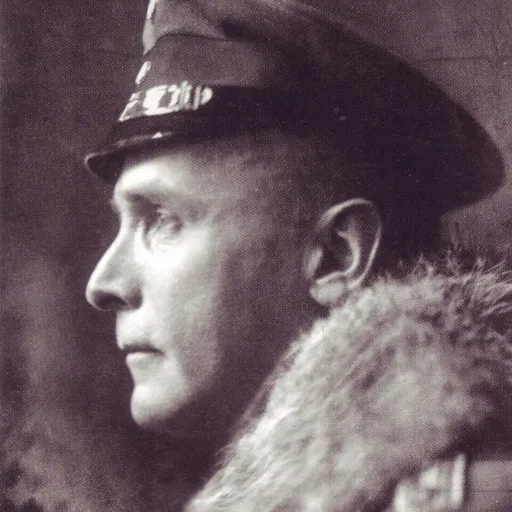
Harry von Kessler
German art collector, patron, writer, publicist and diplomat
About Harry von Kessler
Lived 1868 – 1937 (aged 69). Harry von Kessler was a politician, writer, diplomat, librettist, diarist and opinion journalist.
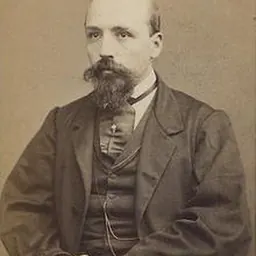
Count Harry Clemens Ulrich von Kessler (Harry Clemens Ulrich Graf von Kessler in German; 23 May 1868 – 30 November 1937), also known as Harry Graf Kessler, was an Anglo-German diplomat, writer, and patron of modern art. English translations of his diaries Journey to the Abyss and Berlin in Lights (1971) reveal anecdotes and details of artistic, theatrical, and political life in Europe, mostly in Germany, from the late 19th century through the collapse of Germany at the end of World War I until his death in Lyon in 1937.
Family
Harry Kessler's parents were the Hamburg banker Count Adolf Wilhelm von Kessler (24 November 1838 – 22 January 1895) and Alice Harriet Blosse-Lynch (born 17 July 1844 in Bombay; died 19 September 1919 in Normandy), the daughter of Anglo-Irish Henry Blosse Lynch, C.B., of Partry House, County Mayo. Kessler's parents married in Paris on 10 August 1867; Kessler was born, also in Paris, in 1868. Kessler's younger sister was born in 1877, and was named Wilhelmina after Kaiser Wilhelm I, who became the child's godfather. After marriage, her name would become Wilma de Brion.
There were many rumours about a supposed affair between Kaiser Wilhelm I and Countess Alice Kessler. The swift rise of the Kessler family led to a legend that either Harry or his sister were the illegitimate offspring of the Emperor and Countess Alice Kessler, but Harry was born two years before his mother met the Emperor, and the Emperor was eighty years old when his sister Wilhelmina was born.
Adolf Wilhelm Kessler was ennobled in 1879 and again in 1881, Harry inheriting the titles on his father's death.
Life and work
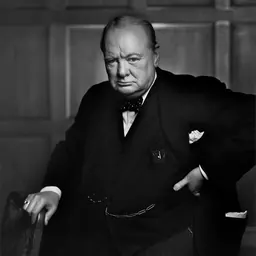
Kessler grew up in France, England and Germany. He was educated first in Paris and then, from 1880, in St. George's School, Ascot, an English boarding school where one of his classmates was Winston Churchill. His education at St. George's made him into an Anglophile, and for a time he fancied himself to be an "English gentleman". Kessler regarded himself as a "secret outsider", someone who was a member of the aristocratic elite of the German Empire, but at the same time did not share the heteronormative values of that elite. Like all other German homosexuals at the time, Kessler lived in fear of being convicted under Paragraph 175 of the German criminal code that banned homosexual acts in the Reich. A key element in Kessler's politics was a call for "a version of sexual liberation, of uninhibited sensuality" to create a society free of the "hypertrophy of shame" around human sexuality.
In 1906, an exhibition commotion gave reason to depose Kessler from his office. An exhibition of drawings at the Grand Ducal Museum by Rodin and dedicated, in error, to the Grand Duke of Sax Thuringia, was considered as a risk to the wives and daughters of Weimar. The Grand Duke was considered to be a "philistine" who was encouraged in his hostility to Kessler's artistic projects by the Emperor Wilhelm II who "loathed all innovative art". retired Prussian General and court Marshall in Weimar, but which led to Kessler's resignation. Palezieux died less than a year later on 10 February 1907 just before receipt of a challenge to a duel from Kessler.
About the Eulenburg affair sex scandal that rocked Germany in 1906-1908 when the best friend of the Kaiser Wilhelm II, Prince Philip von Eulenburg was exposed as gay, Kessler wrote in his diary that the scandal demonstrated how dangerous it was to be gay as the careers of even most highly placed homosexuals such as the Kaiser's favorite courtier, best friend and closest adviser could be destroyed if their sexuality came to public notice. Richard Strauss composed the music (but also demanded various changes in the plot). Der Rosenkavalier premiered in Dresden in 1911 under the baton of Ernst von Schuch. Kessler hoped to be named as a co-author of the libretto, but Hofmannsthal merely mentioned him in the dedication.
In 1913 Kessler founded his own company, the Cranach Press, of which he became the director. Around 1913, Kessler commissioned Edward Gordon Craig, an English theatrical designer and theoretician, to make woodcut illustrations for a sumptuous edition of Shakespeare's Hamlet for the Cranach Press. A German translation by Gerhart Hauptmann, with illustrations by Craig, was finally published in Weimar in 1928. The English version, edited by J. Dover Wilson, came out in 1930. This book, printed on fine paper, using different type-faces, with marginal notes with source quotations, and featuring Craig's woodcuts, is regarded by many as one of the finest examples of the printer's art to have been published in the 20th century. It is still sought by collectors worldwide.
Kessler's ideas of reforming culture went beyond the visual arts. He developed a reformation concept for the theatre which was supported by Edward Gordon Craig, Max Reinhardt and Karl Vollmöller. Kessler asserted that a so-called "Mustertheater" should be established. The Belgian architect Henry van de Velde sought to design the corresponding building. On the initiative of Kessler, many prominent writers were invited to introduce a literary modernity to Weimar, but the hegemonic opinions were considered too conservative and nationalistic, and the plans for the Mustertheater failed.
During his Weimar period Kessler became close friends with Elisabeth Förster-Nietzsche (1846–1935), the sister of late Friedrich Nietzsche. At the suggestion of Kessler, she chose Weimar as domicile for the Nietzsche Archive.
Later years
Kessler saw active service on the Eastern Front and the Western Front during World War I. In 1914, Kessler was caught up in the "spirit of 1914" and supported his country's war effort. In December 1918, he visited the former Imperial Palace in Berlin, which had been looted by the mutinous sailors of the High Seas Fleet who had just staged the November Revolution that had toppled the ancient House of Hohenzollern along with the rest of Germany's royal families. Kessler wrote in his diary after viewing the looted palace: "“But these private apartments, the furniture, the articles of everyday use...are so insipid and tasteless, so philistine, that it is difficult to feel much indignation against the pilferers. Only astonishment that the wretched, timid, unimaginative creatures who liked this trash, and frittered away their life in this precious palatial haven, amidst lackeys and sycophants, could ever make any impact on history.” Writing about the former Emperor, Wilhelm II, a man whom he always disliked, Kessler called him: "this nincompoop and swaggerer who plunged Germany into misfortune...Not a facet of him is capable of arousing pity or sympathy."
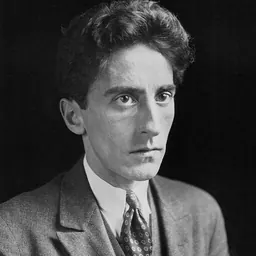
In 1919, he wrote a "plan for a League of Nations on the basis of an organization of organizations (World Organisation)", which contains the constitution of such an international confederation of states. The purpose of this covenant was above all to prevent new wars, securing human rights and the regulation of world trade. Main body of this covenant would be the "World Council", which also elected an executive committee. Under his plan a Weltjustizhof, a World Court of Arbitration and administrative authorities would be built. This ordered by paragraphs plan had the form of a state constitution. Another plan for a supranational organisation he developed in 1920 as "Guidelines for a true League of Nations" in the form of a resolution. In 1922, he served for a short time as the President of the German Peace Society, of which he was a member from 1919 to 1929. Kessler's very public support for the Weimar Republic made him into a pariah amongst the former elite circles he had once frequented as the aristocracy, the officer corps and the former members of the elite university fraternities that he once belonged to all ostracized him. However, Kessler met and was actively engaged in correspondence with a number of leading figures in Europe such as Albert Einstein, André Gide, Jean Cocteau, Virginia Woolf, Marcel Proust, George Bernard Shaw, Isadora Duncan, and Josephine Baker.
In the 1920s, Kessler as a journalist tried to influence the political debates of the Weimar Republic. He wrote essays on different social and foreign policy issues, such as socialism, or the League of Nations. He belonged to the left-liberal German Democratic Party (DDP) and wrote a biography of his 1922 murdered friend Walther Rathenau (then Foreign minister). In 1924, he was a DDP candidate for the Reichstag. When this attempt failed, he withdrew from politics. In the twenties, Kessler was frequently a guest at the Berlin SeSiSo Club. In 1932/33, material co-edited by him appeared in the magazine Das Freie Wort (The Free Word). In his diary, Kessler wrote about the Nazis: "“it is difficult to say which feeling is stronger, loathing or pity, for these brainless, malevolent creatures.".
After the Nazis' seizure of power in 1933, Kessler resigned and emigrated to Paris, then to Mallorca and finally to the southern French provinces. Kessler was openly gay, and he feared for his future in Nazi Germany. The Canadian historian Michael Kater wrote that Kessler's status as a very wealthy aristocrat might have protected him in the Third Reich despite his sexuality, but he was not willing to take the chance. From his exile, he became critical of recent German history. In 1935, he wrote by the early years of the 20th century the German middle class had become so "Bismarckian" in their political views that "a lethal atmosphere" had been created to such an extent that anyone who had any views that were even remotely critical of the state that Bismarck had created was a pariah. Kessler wrote that this extreme idolization of Bismarck as a super-human, larger-than-life leader whose legacy was not to be questioned even in the slightest had a stifling effect in Germany as it led to a mindless reverence for the Prussian-German state as it currently existed. Kessler was hurt by the news that his former lover, Dungern, had become a Nazi functionary in Berlin and was now denying that he had even known him. Kessler died in 1937 in Lyon.
It was presumed that Kessler's earlier diaries had been lost but they were found in 1983 in a safe in Mallorca. In 2004, the first definitive nine volume edition was published in Germany and the first English edition of the 1880–1918 years was published in 2011.
Don’t just read it —
keep it.
Full-length biographies made to live with: read them, listen on the way to work, watch them tonight.
- E-book
- Audio
- Video
Instant download · yours to keep · every purchase keeps this site free
Important facts
People in Harry von Kessler's life
Named in this biography and alive at the same time



Related people
Same field, nearest in time




Contemporaries
People whose lives overlapped Harry von Kessler's


Frequently asked questions
Who was Harry von Kessler?
German art collector, patron, writer, publicist and diplomat (1868-1937)
When was Harry von Kessler born?
Harry von Kessler was born on 23 May 1868 in Paris.
When did Harry von Kessler die?
Harry von Kessler died on 30 November 1937 in 7th arrondissement of Lyon.
What was Harry von Kessler's occupation?
Harry von Kessler was a politician, writer, diplomat, librettist, diarist and opinion journalist.
What nationality was Harry von Kessler?
Harry von Kessler's recorded nationality: German Reich.
Sources & further reading
· Wikipedia: Harry von Kessler
Cite this page
APA: Biography.guide. (2026). Harry von Kessler. https://biography.guide/harry-von-kessler/
MLA: "Harry von Kessler." Biography.guide, https://biography.guide/harry-von-kessler/.
Chicago: "Harry von Kessler." Biography.guide. https://biography.guide/harry-von-kessler/.
Data last updated: 2026-09-20 · Spot an error? Report a correction.
Portrait: Wikimedia Commons · author & licence
Page generated 2026-09-27 04:58 UTC