
About Harry Trihey
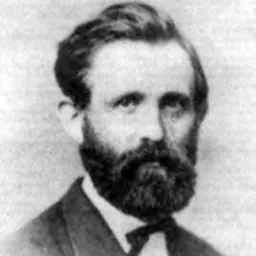
Lived 1877 – 1942 (aged 64). Harry Trihey was a Canadian ice hockey player.
Henry Judah "Flip" Trihey (December 25, 1877 – December 9, 1942) was a Canadian amateur ice hockey player and executive in the era before professional ice hockey. Trihey played the centre forward position for the Montreal Shamrocks from 1897 to 1901, and was regarded as the best forward of his day during his playing years.
After his retirement as a hockey player, Trihey became a noted lawyer in Montreal, operating his own law firm and partnering in others while serving as an executive in the Canadian Amateur Hockey League. He served in World War I first as commanding officer of the newly raised militia unit, the 55th Regiment, The Irish Canadian Rangers, then overseas with the newly raised CEF battalion, the 199th Battalion Duchess of Connaught's Own Irish Rangers, CEF, and held the post of Port Commissioner for the Montreal Harbor Commission in later years. He is an Honoured Member of the Hockey Hall of Fame.
Playing career Trihey, in the middle of the back row, with St. Mary's College team. Before making his major senior debut, Trihey starred in high school hockey with St. Mary's of Montreal between 1893 and 1896, and also appeared with the Montreal Orioles of the Quebec Amateur Hockey Association in 1896.
By the age of 17 Trihey was already well known for his playing ability and in 1897 he made his senior-level debut, playing in a single game with the Montreal Shamrocks of the Amateur Hockey Association of Canada in 1897; he secured a regular shift with the club the following year. Teamed with linemates Arthur Farrell and Fred Scanlan in 1899, Trihey was named captain of the "Fighting Irish" and had a breakout season, leading the league in scoring with 19 goals. On February 4, 1899, Trihey amassed ten goals in one game in a match versus Quebec, which remains the record for the most goals scored by a single player in a major senior regular season match. He went on to score the only goal of the second to the last game of the regular season against the perennial champion Montreal Victorias, which clinched the regular season title for the Shamrocks and earned them the right to defend the Stanley Cup. The defence took place on March 14 against Queen's University of Ontario, a match won by the Shamrocks 6–2, led by Trihey's three goals. In the off-season, he also served on the athletic club's lacrosse side.
Already respected enough to serve on a competition committee regarding the adoption of goal nets and to be quoted as the preeminent authority on forward play by his linemate Arthur Farrell in his 1899 book, His best match during the regular season came against the Victorias on January 18, when he scored five goals. After the regular season was over, the Shamrocks made a second defense as champions of the Canadian Amateur Hockey League against the Halifax Crescents in March; Trihey added five more goals to his playoff total as Montreal overwhelmed the Maritimers in 10-2 and 11-0 victories, securing the Shamrocks' third and final Cup win. The Shamrocks defended the Stanley Cup one last time, again against Winnipeg Victorias in January, but lost in two games. Trihey was again injured in the final game, scoring his last goal in that match, and retired from organized play.
Later life and legacy
Noted for being a strategic minded player, Trihey had two lasting impacts on the sport. Firstly, he was the first known player to plan advance forward line strategies rather than improvising on the ice.
Trihey served as secretary-treasurer and president of the CAHL following his retirement as a player until 1904, as well as developing a successful law practice. He also served as a referee both for league and Stanley Cup play and sat on the advisory board of the Montreal Wanderers Hockey Club. During World War I, he was a lieutenant colonel first commanding the newly raised 55th Regiment, The Irish Canadian Rangers in the Canadian Militia and soon after the 199th Battalion Irish Canadian Rangers of the Canadian Expeditionary Force. Later in life, he was a partner in the law firm of Plimsoll and Coonan from the 1920s to 1932, and served as a Port Commissioner of the Montreal Harbor Commission.
Trihey lived in Westmount after his playing days, and had three children, Harry Henry O'Neill, Elizabeth Alice Mary and Mary Patricia. He was posthumously inducted into the Hockey Hall of Fame in 1950.
Career statistics The 1899 Stanley Cup champion Montreal Shamrocks; Trihey is seated third from left. Regular seasonPlayoffs Season Team League GP G GP G 1897 Montreal Shamrocks AHAC 1 0 — — 1898 Montreal Shamrocks AHAC 8 3 — — 1899 Montreal Shamrocks CAHL 7 19 1 3 1900 Montreal Shamrocks CAHL 7 17 5 12 1901 Montreal Shamrocks CAHL 7 7 2 1 AHAC totals 9 3 — — CAHL totals 21 43 8 16 Assists were not yet awarded in this era of hockey
Don’t just read it —
keep it.
Full-length biographies made to live with: read them, listen on the way to work, watch them tonight.
- E-book
- Audio
- Video
Instant download · yours to keep · every purchase keeps this site free
Important facts
People in Harry Trihey's life
Named in this biography and alive at the same time
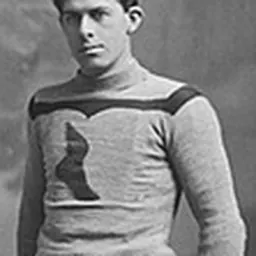
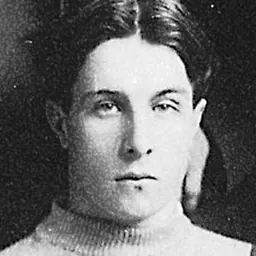

Related people
Same field, nearest in time


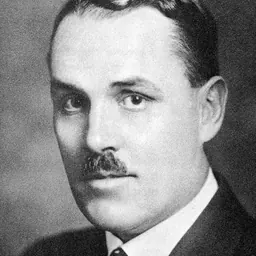
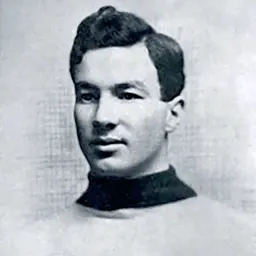

Contemporaries
People whose lives overlapped Harry Trihey's



Frequently asked questions
Who was Harry Trihey?
Canadian ice hockey player (1877-1942)
When was Harry Trihey born?
Harry Trihey was born on 25 December 1877 in Kitchener.
When did Harry Trihey die?
Harry Trihey died on 9 December 1942 in Montreal.
What was Harry Trihey's occupation?
Harry Trihey was an ice hockey player.
What nationality was Harry Trihey?
Harry Trihey was Canadian.
Sources & further reading
Cite this page
APA: Biography.guide. (2026). Harry Trihey. https://biography.guide/harry-trihey/
MLA: "Harry Trihey." Biography.guide, https://biography.guide/harry-trihey/.
Chicago: "Harry Trihey." Biography.guide. https://biography.guide/harry-trihey/.
Data last updated: 2026-09-20 · Spot an error? Report a correction.
Page generated 2026-09-27 05:32 UTC