
About Harry Swinney
Lived 1939 – 2026 (aged 87). Harry Swinney was an American physicist and university teacher, known for Chaos theory and Fluid dynamics.
Harry Leonard Swinney (April 10, 1939 – July 13, 2026) was an American physicist noted for his contributions to the field of nonlinear dynamics.
Early life and education Harry Leonard Swinney was born in Opelousas, Louisiana, on April 10, 1939. His parents were Leonard R. Swinney and Ethel Bertheaud Swinney.
Swinney attended elementary school in Austin, Texas, and in 1957 graduated from Homer Louisiana High School. In 1961 he was awarded a B.S. with honors in physics by Southwestern at Memphis (now Rhodes College), where he was inspired by his physics professor and research mentor, Jack H. Taylor. In 1968 he was awarded a Ph.D. in physics by Johns Hopkins University; his advisor was Herman Z. Cummins.
Career Swinney was an assistant professor of physics at New York University (1971–73) and was associate professor and then professor at the City College of the City University of New York (1973–78). Since 1978 Swinney joined the faculty of the University of Texas at Austin, where he became the Sid W. Richardson Foundation Regents Chair of Physics and director of the Center for Nonlinear Dynamics. He became a professor emeritus in 2018.
Personal life and death In 1967 Swinney married Gloria T. Luyas, and in 1978 they had a son, Brent Luyas Swinney. Brent died of cancer in 1995, and Gloria died of cancer in 1997. He then married Lizabeth Kelley on August 12, 2000.
Swinney died at home in Austin, Texas, on July 13, 2026, at the age of 87.
Honors Swinney was a member of the National Academy of Sciences (1992) and a fellow of the American Physical Society (1977), the American Academy of Arts and Sciences (1991), the American Association for the Advancement of Science (1999), and the Society for Industrial and Applied Mathematics (2009). He was awarded the American Physical Society Fluid Dynamics Prize (1995), the Society for Industrial and Applied Mathematics Jürgen Moser Prize (2007), the European Geosciences Union Richardson Medal (2012), and the Boltzmann Medal (2013) of the Commission on Statistical Physics of the International Union of Pure and Applied Physics. He was a Guggenheim Fellow (1983–84) and he was inducted into The Johns Hopkins University Society of Scholars (1984). He was awarded honorary doctoral degrees by Rhodes College (2002), The Hebrew University of Jerusalem (2008), and the University of Buenos Aires (2010).
Research contributions Swinney conducted research on instabilities, chaos, and pattern formation in diverse systems, including fluid, chemical, and granular media. Swinney together with his students, postdocs, and other collaborators: determined the decay rate of order parameter fluctuations for fluids near the critical point observed a transition to chaos—deterministic yet nonperiodic behavior—in experiments on a fluid flow characterized chaos from time series data by computing the largest Lyapunov exponent (rate of loss of predictability) and the mutual information (general dependence of two variables) discovered multiple transitions to different patterns of fluid flow between concentric independently rotating cylinders designed a laboratory experiment that yielded a stable vortex for conditions mimicking those on Jupiter. This result provides a plausible explanation of the stability of Jupiter's Great Red Spot, which was first observed by Robert Hooke in 1664. observed the emergence of a spatial pattern in a chemical system, as predicted in 1952 by Alan Turing determined the scaling of power dissipated in strongly turbulent flow between concentric rotating cylinders observed anomalous diffusion and Lévy flights in a fluid flow discovered localized structures, dubbed "oscillons", in an oscillating granular layer; oscillons were subsequently found in many dynamical systems. The granular experiments also investigated various extended spatial patterns, shock waves, and fluctuations. observed resonant pattern formation with frequency locking in chemical systems found fractal cascades of waves on the edges of leaves, flowers, and garbage bags found a resonance in internal wave boundary currents generated by tidal flow on a slope; this resonance apparently selects the angle (typically three degrees) of the continental slopes of the oceans discovered a new protein, Slf, which is produced by neighboring colonies of Paenibacillus dendritiformis bacteria. Slf is lethal to bacteria near the edge of a colony that faces another P. dendritiformis colony. found that fluctuations in the number N of bacteria swimming in a volume varied as N^(3/4), in contrast to the N^(1/2) scaling of fluctuations for systems in thermodynamic equilibrium
Other Swinney, together with Rajarshi Roy and Kenneth Showalter, founded a two-week Hands-On Research School for early career scientists from developing countries: handsonresearch.org. The schools, sponsored by the International Centre for Theoretical Physics, are described in a 3-minute video here.
Don’t just read it —
keep it.
Full-length biographies made to live with: read them, listen on the way to work, watch them tonight.
- E-book
- Audio
- Video
Instant download · yours to keep · every purchase keeps this site free
Important facts
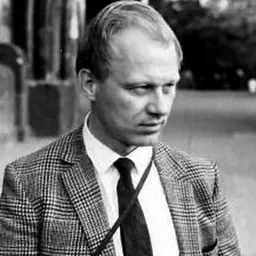
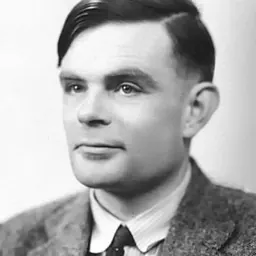
People in Harry Swinney's life
Named in this biography and alive at the same time


Related people
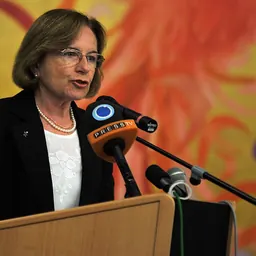
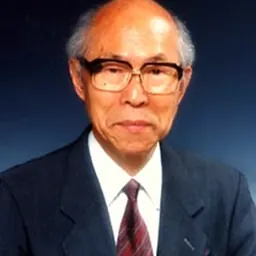
Same field, nearest in time



Contemporaries
People whose lives overlapped Harry Swinney's




Frequently asked questions
Who was Harry Swinney?
American physicist
When was Harry Swinney born?
Harry Swinney was born on 10 April 1939 in Opelousas.
When did Harry Swinney die?
Harry Swinney died on 13 July 2026.
What was Harry Swinney's occupation?
Harry Swinney was a physicist and university teacher.
What was Harry Swinney known for?
Harry Swinney was known for Chaos theory and Fluid dynamics.
What nationality was Harry Swinney?
Harry Swinney was American.
Sources & further reading
Cite this page
APA: Biography.guide. (2026). Harry Swinney. https://biography.guide/harry-swinney/
MLA: "Harry Swinney." Biography.guide, https://biography.guide/harry-swinney/.
Chicago: "Harry Swinney." Biography.guide. https://biography.guide/harry-swinney/.
Data last updated: 2026-09-25 · Spot an error? Report a correction.
Page generated 2026-09-27 05:09 UTC