
About Harry Nelson Atwood
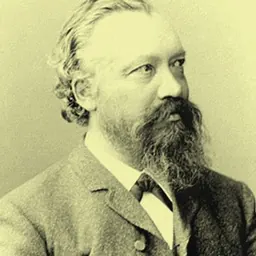
Lived 1883 – 1967 (aged 83). Harry Nelson Atwood was an American aircraft pilot.
Harry Nelson Atwood (November 15, 1883 – July 14, 1967) was an American engineer and inventor known for pioneering work in the early days of aviation, including setting long-distance flying records and delivering the first air mail in New England.
Early life Atwood was born on November 15, 1883, in Roxbury, Boston, Massachusetts.
He trained at the Wright Flying School at Huffman Prairie, near Dayton, Ohio, with fellow students Thomas D. Milling, Calbraith Perry Rodgers and Henry H. Arnold. Within three months of his first lesson he flew a record-breaking from Boston to Washington, D.C., and on July 14, 1911, landed on the White House lawn. A prize of $10,000 was offered to Atwood to fly between Chicago and Milwaukee on August 10. Between August 14, 1911, and August 25, 1911, he flew from St. Louis to New York City, making 11 stops and spending 28 hours 31 minutes in the air. Atwood funded his flying activities with the sale of two different electric meter designs to General Electric. Atwood served as the chief instructor of the company's flight instruction school there from the time it opened until he quit on June 10, 1912, because he could make more money in exhibition flights and because he was disenchanted with fellow instructor Arch Freeman. On May 31, 1912, Atwood made the first airmail delivery in New England. He flew about five miles (8 km) from Atwood Park to the Lynn Common in Lynn, Massachusetts where he dropped a sack of mail from the plane. The sack was then retrieved by a Lynn postal employee and driven to the post office.
Plastic planes Harry Atwood was also a pioneer whom the Massachusetts Institute of Technology and other authorities called "The Father of Plastic Planes." He introduced a somewhat revolutionary method of constructing a plane by molding wood veneers treated with cellulose acetate. He began working on his in 1912 when he was searching for aircraft materials that were cheap and abundant, possessed essential strength-to-weight requirements, and lent themselves to mass production of the larger aircraft assemblies such as complete wings and hole fuselages, as an integral one-piece structure.
The monocoque, or single shell, fuselage was one of his great hopes. The general idea of his thinking was a practice used by the ancient Egyptians. Skilled cabinet makers employed plywood and glue which produced a light, strong, and durable wood by taking two thin flat panels of wood, laying the grain of each sheet at right angles to each other, and then sticking them together with a bonding agent. Atwood experimented with wood processed in a similar manner forming the wood into complex shapes using molds and mandrels. The plane he successfully completed and flew in 1912 used this technique, but it failed in one important respect. The strongest albumen glue of the time was used as the bonding agent but did not hold up well in weather and came apart in the rain.
Eight years later, Atwood unveiled his second plastic plane. Great improvements had been made in albumen glues such as the waterproof albumen glue made by Henry L. Haskell, but there were still bonding problems. He and his followers of this technique for aircraft manufacturing felt that a plastic or synthetic resin would solve the bonding problems. Others continued Atwood's vision which led to improvements in glues and molding, including Virginius E Clark's Duramold process, Gene Vidal's Weldwood process, and Timm Aircraft's Aeromold process.
Personal life Atwood was married five times. His first marriage was to Sarah Jenkins of Lynn, Massachusetts. The union resulted in two children: Edgar, who died at the age of 3 days, and Bethany. The couple later divorced.
On March 2, 1914, Atwood married Ruth Satterthwaite in a courthouse ceremony in her hometown of Reading, Pennsylvania. The couple had three children, Katrina, Gene, and Ruth. Atwood and his wife remained wed until she died in October 1920 at the age of 27.
His third wife, Helen Satterthwaite, was the widow of Ruth's brother. They were married for 90 days before divorcing. His fourth wife, Mary Dalton died shortly after giving birth to their son, Harry, Jr., in 1930. Harry, Jr. was raised by a minister and his wife. His fifth wife was his housekeeper Nellie Pickens. They had one daughter, Nelda Stiles.
Don’t just read it —
keep it.
Full-length biographies made to live with: read them, listen on the way to work, watch them tonight.
- E-book
- Audio
- Video
Instant download · yours to keep · every purchase keeps this site free
Important facts
People in Harry Nelson Atwood's life
Named in this biography and alive at the same time

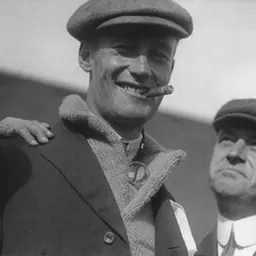



Related people
Same field, nearest in time


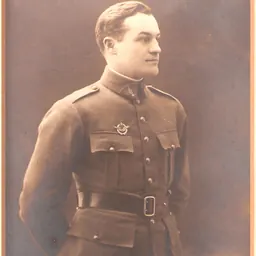
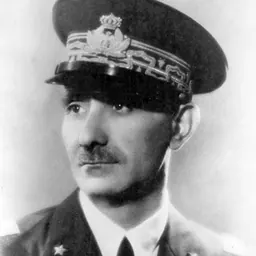
Contemporaries
People whose lives overlapped Harry Nelson Atwood's


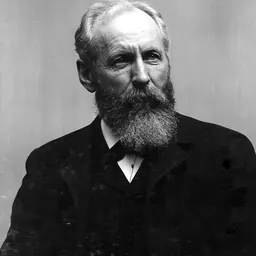

Frequently asked questions
Who was Harry Nelson Atwood?
American aviator (1883–1967)
When was Harry Nelson Atwood born?
Harry Nelson Atwood was born on 15 November 1883 in Roxbury.
When did Harry Nelson Atwood die?
Harry Nelson Atwood died on 14 July 1967 in Murphy.
What was Harry Nelson Atwood's occupation?
Harry Nelson Atwood was an aircraft pilot.
What nationality was Harry Nelson Atwood?
Harry Nelson Atwood was American.
Sources & further reading
· Wikipedia: Harry Nelson Atwood
Cite this page
APA: Biography.guide. (2026). Harry Nelson Atwood. https://biography.guide/harry-nelson-atwood/
MLA: "Harry Nelson Atwood." Biography.guide, https://biography.guide/harry-nelson-atwood/.
Chicago: "Harry Nelson Atwood." Biography.guide. https://biography.guide/harry-nelson-atwood/.
Data last updated: 2026-09-20 · Spot an error? Report a correction.
Page generated 2026-09-27 05:22 UTC