
About Harry Lee
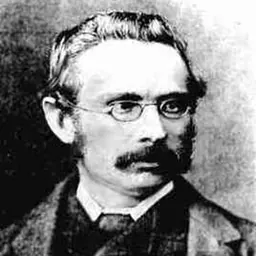
Lived 1890 – 1981 (aged 90). Harry Lee was a British cricketer.
Henry William "Harry" Lee (26 October 1890 – 21 April 1981) was a professional English cricketer who played first-class cricket for the Marylebone Cricket Club (MCC) and Middlesex County Cricket Club between 1911 and 1934. He made one Test appearance for England, in 1931. An all-rounder, Lee was a right-handed batsman and bowled both off break and slow-medium pace bowling with his right arm. He scored 1,000 runs in a season on thirteen occasions. Part of the County Championship winning sides in 1920 and 1921, Lee aggregated 20,158 runs and took 401 wickets in first-class cricket.
The son of a greengrocer, Lee worked hard to earn himself a place in the Middlesex side in the years before the First World War, eventually getting his chance in 1914 when other players had joined the early war effort. Lee enlisted in the army in September 1914 and served until December 1915; although shot in the leg, declared dead and taken prisoner of war, he survived and returned to play for Middlesex in 1919. He secured his place in the team with three strong all-round seasons, and was twice part of a top four when each batsman scored a century in the same innings—he shares this achievement with Jack Hearne. Less prolific through the mid-1920s, he scored runs heavily once again towards the end of the decade. He made his only Test appearance in 1931, drafted into the England team after injuries and illness depleted the squad. He continued playing county cricket until 1934, when he was released by Middlesex aged 44, to allow the county to develop younger players. He umpired first-class cricket from his retirement until the Second World War, standing in 153 matches.
Lee's career was overshadowed by more attractive, faster-scoring batsmen in the team, such as Hearne and Patsy Hendren. His two younger brothers also played first-class cricket; both Jack and Frank moved to Somerset after failing to break into the Middlesex team. All three brothers scored centuries during the 1931 season, the first instance of three professional brothers doing so in first-class cricket. Two years later, all three were involved in a single dismissal: Harry was caught by Frank off the bowling of Jack in a county match. At the time of his death in 1981, Lee was the second-oldest living Test cricketer.
Early years Lee was born in Marylebone, London on 26 October 1890, the eldest of three boys, all of whom progressed to play first-class cricket. His father was a greengrocer and a coal merchant who followed cricket closely in the London evening papers. During Lee's youth, he developed his cricket by playing against lamp-posts, and reflected in his autobiography that: "If a bowler can clean bowl a man nine times out of ten against a lamp-post, he will not miss a full-sized wicket when he gets the chance." When Lee left school, he worked with his father as a greengrocer, a job he liked, but not enough to stop him writing a letter to the Marylebone Cricket Club, asking for a job on the ground staff at Lord's Cricket Ground.
Along with approximately 25 other boys, Lee was invited for a trial at Lord's early in 1906, and bowled under the observation of Alfred Atfield and the head groundsman, Tom Hearne. Lee described his first over as "six of the worst balls that anyone can ever have pitched", but as his nerves calmed, he improved, and was eventually selected as one of the five ground staff boys by Hearne. As a ground boy, Lee had numerous tasks; sweeping, dusting and cleaning the seats, preparing nets, marking the pitch, weeding and similar. On a match day, jobs included selling scorecards, operating the score-board or fielding in the practice nets. All of this left little time for the boys to practise their own game. No formal coaching was in place, but Lee was guided by a few different players; England internationals Teddy Wynyard and Albert Trott among them. In the 1909 and 1910 seasons, Lee started to gain some attention from Middlesex County Cricket Club: he scored 39 runs in a match for the Middlesex Colts in 1909, and 60 runs against Reading Cricket Club in 1910. He was making more appearances for the Marylebone Cricket Club (MCC), collecting runs and wickets regularly, but not prolifically. Placed at number eleven in Middlesex's batting order, Lee batted once in a rain-affected match against Somerset, remaining four not out, and was not required to bowl. Lee did bowl against Gloucestershire, but remained wicketless from nine overs in the match.
Lee was given greater opportunities in 1912, appearing seven times for Middlesex in the Championship. The first of these appearances, against Warwickshire at Edgbaston, brought Lee his first wicket in first-class cricket when he caught Charles Baker off his own bowling. He claimed five wickets in the match, and another three against Nottinghamshire a month later, to total eight wickets for the season at 9.50 runs apiece and finish technically at the top of the county's bowling averages for the season. Lee joined the MCC bowling staff in 1913 at the invitation of A. J. Webbe, but he was used sparingly in first-class cricket that season, playing just three times, all for Middlesex. In the first of these matches, Lee scored 35 not out at the end of Middlesex's innings, helping his side to avoid the follow-on. His "plucky knock" was praised by captain Pelham Warner, who promoted him to bat at number five in the fourth innings, by which stage the game was heading for a draw. During 1913, although certainly not a regular in the Middlesex team, Lee asked his captain for his county cap, a request which Warner responded to with surprise that he had not already received it, and promptly asked for one to be sent down. He played just twice in the County Championship prior to August, both times against Warwickshire. The start of the First World War in early August initially resulted in the cancellation of Middlesex's tour of the northern counties, Yorkshire and Lancashire, but this decision was later reversed, and Middlesex took a heavily weakened side on the tour. Due to regular opening batsman William Robertson being unavailable, Lee was promoted to open the batting alongside Frank Tarrant. He scored 30 and 16 against Yorkshire, followed by 1 and 44 not out against Lancashire. Lee and Tarrant continued to open for Middlesex for the remainder of the season, and against Nottinghamshire, Lee scored his first century in first-class cricket. Having been dismissed for 17 in the first innings, Lee scored 139 runs in the second, and shared a partnership of 183 runs with Patsy Hendren, who also reached his century.
First World War
Prisoner of war Initially, even after the declaration of war, Lee did not feel that there would be any impact on his life, and was looking forward to playing cricket in the 1915 season. After learning that the MCC and Middlesex County Cricket Club were keen to support the war effort, and encountering members of the Territorial Force marching through London, Lee changed his mind and enlisted into 13th (County of London) Battalion (part of the all-Territorial Force London Regiment) in Kensington (the battalion was usually known as "The Kensingstons" as it recruited largely from that area of London) on 1 September 1914. At this time the pre-war battalion had been split into two, with the "first line", 1/13th Battalion, of men who had volunteered for overseas service then being based in Abbots Langley, Hertfordshire, this unit would be sent to France in November 1914. The "second line", 2/13th Battalion, of men who had not volunteered for overseas service and new recruits was initially at White City, London prior to moving to Maidstone, Kent in January 1915. In December 1914 a "third line" battalion, 3/13th Battalion, was formed as an additional training unit. This was based at Richmond Park. The surviving portions of Lee's service record are unclear as to which of these units he spent time with during his training. Lee participated in the Battle of Neuve Chapelle in mid-March, an Allied offensive to regain the French village of Neuve-Chapelle. The village was retaken from the Germans, but the plan to press on and also capture Aubers was abandoned. Following this attack, the Germans heavily refortified the area and were expecting further attacks. The battle, part of a larger offensive known as the Battle of Aubers Ridge, commenced on 9 May. The Kensingtons formed part of 25th Brigade, and were one of the lead infantry units in the northern pincer of the attack, targeting Fromelles. Lee was part of D Company, which along with C Company led the Kensingtons during the assault. During the attack, the initial objectives were achieved, but at heavy cost. However, the attacking forces soon ran out of ammunition and retreated the following morning. Of the 550 men that the Kensingtons had engaged, there were 499 casualties, including 13 officers; in total the British casualties numbered over 11,000 men.
During the attack Lee was shot in the leg; a bullet hit his left thigh and fractured his femur. He lay for three days between the lines having been given up for dead. A memorial service was held after the announcement of his death. He began the journey on 1 October 1915, and boarded the boat for England five days later. The Nyanza was torpedoed out of Plymouth, and though it returned to port, 49 lives were lost. During the Nagoya's journey, the convoy of which it was part was attacked passing through the Mediterranean Sea by the German U-boat . One of the ships, the City of Lucknow, an 8,000 ton cargo steamer in the convoy, was sunk. The rest of the journey was completed without incident, despite a rumour that the Emden, a German light cruiser, lay in wait for the convoy. He played a few first-class matches during his time in India, and in his first match in the country, for the Maharaja's XI against Lord Willingdon's XI, Lee claimed his maiden five-wicket haul, taking five wickets and conceding eleven runs. He added another three wickets in the second innings to record the best bowling analysis of the match. In November 1918, Lee played for England against India. The Indian team did not have Test status, which was not attained until 1932, but they had a strong team, and dominated the match against an England side which was far from representative. Lee claimed four wickets in the match for the concession of 177 runs, and made scores of eight and nine with the bat. Lee's highest score, and only century in first-class cricket in India was made in a match he was playing against the Maharaja of Cooch Behar's team. Appearing instead for MC Bird's XI, Lee opened the batting and scored 104 runs. He also claimed seven wickets in the match, which his side won by an innings.
Return to county cricket Despite the injury he sustained during the war, when county cricket resumed in 1919, Lee took his leave of the Maharaja and returned to England to resume his career with Middlesex. County Championship matches were played over two days, an experiment which was unpopular with Lee, who described it as a "nightmare season". Even with these shorter matches, Lee passed 1,000 first-class runs in a season for the first time in his career, He scored four centuries during the season, including one in each innings of a charity match played against Surrey at The Oval. During the first innings, he reached 163, sharing a second wicket partnership of 226 with Jack Hearne, and in the second he scored 126. His batting average for the season was 40.76; the first of only three times that it would exceed 40 during his career. and then 119 against Sussex at the same venue. Against Sussex, each of Middlesex's top four batsmen scored centuries; in addition to Lee's 119 runs, Pelham Warner scored 139, Nigel Haig 131, and Hearne remained 116 not out when the side declared. This was the first time the feat had been achieved in first-class cricket. Lee also took eleven wickets in the match, taking five in the first innings and six in the second to complete his maiden ten-wicket haul. Playing against Hampshire at Southampton the following month, Lee scored his first double century, being 221 not out when Middlesex declared. He was also not out in the second innings, meaning that he was on the pitch for the full duration of the match. In total, Lee scored 1,518 runs at an average of 43.37 in first-class matches in 1920. which the county won narrowly, completing victory in the final session of their final match. In A History of Cricket, H. S. Altham and E. W. Swanton praise Lee's "all-round excellence" during the season:
The pavilion at Lord's Cricket Ground, Lee's home ground for Middlesex and the MCC. alt=A cricket pavilionLee's performances put him in contention for a place on the English touring party to travel to Australia that winter, but he eventually missed out on selection. For the second consecutive season, Lee scored in excess of 1,500 runs in all first-class matches in 1921, He only scored one other century during the season, 121 runs against Sussex, but passed 50 on nine occasions. Middlesex won the County Championship once more, and Lee finished third in both the batting and bowling tables, behind Hearne and Hendren amongst the batsmen, and Jack Durston and Haig, the bowlers. After the season, he travelled once more to South Africa, this time to coach at both St. Andrew's School and Grey College in Bloemfontein. His obituary in the Wisden Cricketers' Almanack states that by the end of 1921 his best years were over. In 1923, he recorded his best bowling performance, taking eight wickets for the concession of 39 runs in the first innings against Gloucestershire at Cheltenham. He took a further four wickets in the second innings to help Middlesex to an eight wicket victory. He claimed 50 wickets for the third and final time that season, He did not travel to South Africa in either of 1923–24 or 1924–25, a fact which he describes as the "cause and effect" of his poor form in 1924 and 1925. He travelled to South Africa again in 1926, spending the first of three successive winters in Cape Town, coaching at South African College Schools. This coincided with a revival in his county cricket batting form; in 1926 he passed 1,000 runs after missing out on the total for two years. In 1929, he scored a century in each innings of a match for the second time, making 124 and 105 not out against a strong Lancashire bowling attack. Later that season, he scored his third and final double century, scoring 225 runs against Surrey at The Oval, during which he shared a second wicket partnership of 319 with Gubby Allen. Lee's 1,617 runs for Middlesex in the County Championship in 1929 made him their leading run-scorer, although both Hearne and Hendren topped 1,000 runs with superior averages. The following season saw Lee accumulate 1,485 first-class runs at an average of 26.05, in the season which saw him play more matches than in any other: 34 in total. He reached a century only once,
Solitary Test For the English winter of 1930–31, Lee took on positions at both St. Andrew's College and Rhodes University, both in Grahamstown in South Africa. The MCC were touring that winter, and suffered heavily with injuries and illness. No fewer than seven players were missing at various stages, He played in three further tour matches, twice making scores in the forties, but not reaching a half-century during the tour. His only Test appearance came in the fourth Test between England and South Africa. Lee opened the innings alongside Bob Wyatt and scored 18 and 1 in his two innings of the match, which finished a draw. During the match, the MCC were contacted by one of the schools he had been coaching at, which claimed that Lee had broken his contract by leaving without permission. Jack scored 113 for Somerset against Northamptonshire, and Frank carried his bat to remain 134 not out for Somerset against Sussex. The feat was the first instance of three professional brothers all scoring first-class centuries in the same season. Though Lee passed 1,000 first-class runs in each of 1932 and 1933, he did so with averages under 25, He was briefly recalled to the Middlesex team in August, and recorded a final century, reaching 119 against Warwickshire. Although he was successful in the subsequent match against Surrey, making scores of 65 and 38 not out, Middlesex terminated his contract at the end of the season, much to his disappointment. He then returned to coaching, taking on a position at Downside School in Somerset from 1949 until 1953. and he is one of only seventeen cricketers to have scored over 5,000 runs and taken over 300 wickets for the county. H. S. Altham and E. W. Swanton suggested that figures alone do show his true worth, as at the time the Lord's pitch did not favour batsmen, and had he played his career on "some other ground where the pitch was a batsman's paradise, his figures would have borne a truer relation to his value." Lee batted with a noticeable crouch, and scored predominantly on the leg side. His style was unattractive to watch, but effective, and although Hearne and Hendren drew most of the plaudits for their more colourful methods, Lee received praise for his toughness and courage.
Notes and references
Don’t just read it —
keep it.
Full-length biographies made to live with: read them, listen on the way to work, watch them tonight.
- E-book
- Audio
- Video
Instant download · yours to keep · every purchase keeps this site free
Important facts
People in Harry Lee's life
Named in this biography and alive at the same time





Related people
Same field, nearest in time
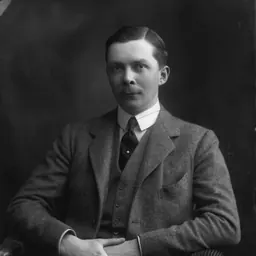

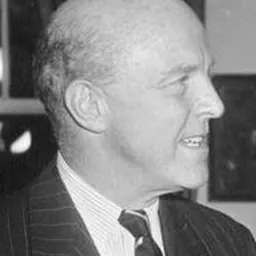
Contemporaries
People whose lives overlapped Harry Lee's
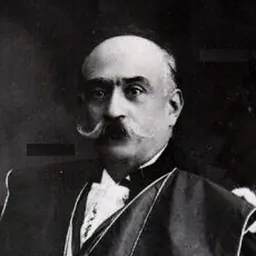
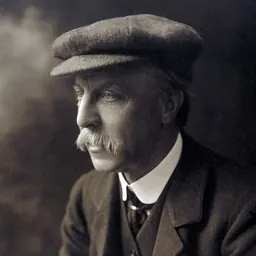


Frequently asked questions
Who was Harry Lee?
Cricket player of England. (1890-1981)
When was Harry Lee born?
Harry Lee was born on 26 October 1890 in London.
When did Harry Lee die?
Harry Lee died on 21 April 1981 in London.
What was Harry Lee's occupation?
Harry Lee was a cricketer.
What nationality was Harry Lee?
Harry Lee was British.
Sources & further reading
· DBpedia: Harry Lee (cricketer)
Cite this page
APA: Biography.guide. (2026). Harry Lee. https://biography.guide/harry-lee-cricketer/
MLA: "Harry Lee." Biography.guide, https://biography.guide/harry-lee-cricketer/.
Chicago: "Harry Lee." Biography.guide. https://biography.guide/harry-lee-cricketer/.
Data last updated: 2026-09-20 · Spot an error? Report a correction.
Page generated 2026-09-27 05:21 UTC