
About Harry Lane
Lived 1855 – 1917 (aged 61). Harry Lane was an American politician and physician.
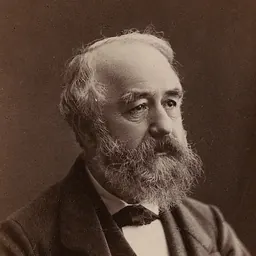
Harry Lane (August 28, 1855 – May 23, 1917) was an American politician in the state of Oregon. A physician by training, Lane served as the head of the Oregon State Insane Asylum before being forced out by political enemies. After a decade practicing medicine, the progressive Democrat won election as the mayor of Portland in 1905, gaining re-election in 1907. Lane's tenure in office was largely uneventful, although he did gain lasting recognition for having appointed the first female police officer in America in 1908 as well as for his vision that the city should host an annual Rose Festival.
In November 1912, Lane was elected to the United States Senate where he was a leading advocate for women's suffrage and a more benevolent relationship between the American government and the nation's Native American population. He voted against American participation in World War I in April 1917, an action which made him the prospective subject of a recall effort. This campaign was rendered moot when Lane died in office on May 23, 1917. The elder Lane was a successful participant in the California Gold Rush of the late 1840s who had returned to Oregon to invest his mining proceeds in construction of a lumber mill.
The Lanes were part of a prominent Oregon political family. Nathaniel Lane's father Joseph Lane had been the first territorial Governor of Oregon and was immortalized as the namesake of Lane County, Oregon. Harry continued to attend the public schools of Corvallis, graduating from Corvallis High School. Upon graduation Lane enrolled at Willamette University, located in the capital city of Salem, from which he graduated in 1876. Lane put down roots and opened a medical practice in the state's largest city, Portland, where he would eventually serve as the president of city, county, and state medical societies. The experience left Lane disgusted and distrustful of the political process.
Lane returned to medical practice in Portland, working for the next decade as a "poor people's doctor," frequently on a pro bono basis. He also helped the mayors of other cities in California and Oregon to create jobs for the homeless, instead of sending them from city to city as was a common practice at the time.
As mayor, Lane was an enthusiastic host for a national convention in support of women's suffrage in 1905, and he was thereafter recognized as a friend of the movement for equality between the sexes. He took a further step for the advance of women's rights when he swore in Lola Baldwin to the Portland Police Bureau as one of the first female police officers in the United States on April 1, 1908.
While mayor, at the end of the Lewis and Clark Centennial Exposition, he advocated for a "permanent rose carnival", leading him to be called the "Father of the Portland Rose Festival", which continues today.
Lane was an advocate of direct democracy and led an unsuccessful voter referendum to establish municipal ownership of the Portland electric system. At a 1905 unveiling of a statue of Sacajawea Mayor Lane declared that violence between native and white populations had always been the result of "white people ill-treating the Indians who had befriended them." thumb Harry Lane as he appeared in a news photo during his Senatorial term.
Member of the U.S. Senate The 1912 Oregon ballot for the United States Senate was cluttered. In addition to the Democrat Harry Lane and Ben Selling, a candidate of the conservative wing of the Republican Party, progressive Republicans had other electoral alternatives, including the Progressive Party candidate and the incumbent senator Jonathan Bourne Jr., who had failed to win the renomination of the Republican party and ran as the "Popular Government" nominee as a result. Meanwhile, Benjamin Ramp stood for the Socialists and yet another candidate was the nominee of the Prohibition Party. Astoundingly, each of these six candidates took more than 5% of the vote — which enabled Democrat Lane to win election with a plurality of the vote in solidly Republican Oregon. Lane regarded the last of these as his most important work, criticizing longstanding government policy aimed at "civilizing" the Native American population. thumb
The poverty of the Indian population was through no fault of their own, Lane declared, with the Native American people prostrate while "the white man is astride them and is at work taking everything they have."
Lane challenged white supremacist Senator Hoke Smith of Georgia on the floor of the Senate to acknowledge the successes of black farmers in the American South and protested instances of racial discrimination inserted into appropriations legislation.
It was with respect to American involvement in World War I that Lane was his most outspoken. Late in 1915 Lane joined Socialist U.S. Representative Meyer London of New York in co-sponsoring a resolution criticizing the deepening sense of war-related fear and calling upon President Woodrow Wilson to convene a conference of neutral nations with a view to ending the European conflict.
This filibuster to block Wilson's effort to expand war powers through his Armed Neutrality Bill proved successful. Lane and his co-thinkers, including Wisconsin Senator Robert M. La Follette, became the targets of intense political hostility in the aftermath, however, with President Wilson demeaning them as "a little group of willful men, representing no opinion but their own" who nevertheless "rendered the great Government of the United States helpless and contemptible." Many Oregonians were similarly incensed, and an outcry erupted for Lane's recall from office. An editorial in The Oregonian stated "Next to being ashamed of Harry Lane for what he has done ... the people of Oregon are ashamed of themselves for having sent Harry Lane to the United States Senate." Although the press lambasted him, a friend wrote in a letter that the majority of people "insist that you did exactly right ... It is the newspapers that are doing most of the kicking."
Death and legacy
Lane was a chronically ill person in 1917, suffering from Bright's disease or advanced arteriosclerosis. His precarious condition was further undermined by the intense barrage of public criticism to which he was subjected. Nevertheless, on April 4, 1917, against the advice of doctors, Lane made his way to the Senate floor to vote against the Declaration of War against Germany which had been the product of an April 2 speech by the President.
A small collection of Harry Lane papers are held by the research library of the Oregon Historical Society in Portland. The material includes a small number of letters to and from Lane, as well as a draft for an uncompleted biography prepared during the 1940s.
Footnotes
Works
Panama Canal Tolls: Speech. Washington, DC: US Government Printing Office, 1914. Child Labor and the Constitution: Speech in the Senate of the United States, August 8, 1916. Washington, DC: US Government Printing Office, 1916. One Way to Keep Out of European War: Remarks of Hon. Harry Lane of Oregon, in the Senate of the United States, February 7 and 8, 1917. Washington, DC: US Government Printing Office, 1917.
Don’t just read it —
keep it.
Full-length biographies made to live with: read them, listen on the way to work, watch them tonight.
- E-book
- Audio
- Video
Instant download · yours to keep · every purchase keeps this site free
Important facts
People in Harry Lane's life
Named in this biography and alive at the same time


Related people
Same field, nearest in time






Contemporaries
People whose lives overlapped Harry Lane's





Frequently asked questions
Who was Harry Lane?
American politician (1855-1917)
When was Harry Lane born?
Harry Lane was born on 28 August 1855 in Corvallis.
When did Harry Lane die?
Harry Lane died on 23 May 1917 in San Francisco.
What was Harry Lane's occupation?
Harry Lane was a politician and physician.
What nationality was Harry Lane?
Harry Lane was American.
Sources & further reading
Cite this page
APA: Biography.guide. (2026). Harry Lane. https://biography.guide/harry-lane-politician/
MLA: "Harry Lane." Biography.guide, https://biography.guide/harry-lane-politician/.
Chicago: "Harry Lane." Biography.guide. https://biography.guide/harry-lane-politician/.
Data last updated: 2026-09-26 · Spot an error? Report a correction.
Page generated 2026-09-27 05:14 UTC