
About Harry Graham
Lived 1874 – 1936 (aged 61). Harry Graham was a British writer, journalist, lyricist, librettist and poet.
Jocelyn Henry Clive 'Harry' Graham (23 December 1874 – 30 October 1936) was an English writer. He was a successful journalist and later, after distinguished military service, a leading lyricist for operettas and musical comedies, but he is now best remembered as a writer of humorous verse in a style of grotesquerie and black humour.
Life
Family and education Graham was the second son of Sir Henry Graham, KCB (1842–1930), Clerk of the Parliaments, and his first wife, Lady Edith Elizabeth Gathorne-Hardy, who died two weeks after Harry's birth. Graham was educated at Eton and the Royal Military College, Sandhurst.
Military career
Graham was commissioned into the Coldstream Guards as a second lieutenant on 6 March 1895, and was promoted to lieutenant on 9 January 1898. From March 1899 to 1901 and again in 1902–1904 he served as aide-de-camp to Lord Minto, Governor-General of Canada. Graham kept a journal of his trip across Canada with Minto to the Klondike Gold Rush in the Yukon in 1900, called Across Canada to the Klondyke, which he later presented to Minto, and which was eventually published. Graham retired from the army in 1904, and became private secretary to the former Prime Minister, Lord Rosebery, 1904–06.
Career as a writer
Light verse His first published works appeared during his military career. In 1906, he became a full-time writer, as a journalist and author of light verse, popular fiction and history, including A Group of Scottish Women (1908). The Oxford Dictionary of National Biography also compares his verse with that of W. S. Gilbert and suggests that his prose was an early influence on P. G. Wodehouse.
An example of a Ruthless Rhyme is: Father heard his children screamSo he threw them in the streamSaying, as he drowned the third,"Children should be seen, not heard!"
Graham's pleasure in word-play is illustrated in his poem on "Poetical Economy": When I’ve a syllable de trop, I cut it off, without apol.: This verbal sacrifice, I know, May irritate the schol.; But all must praise my dev’lish cunn. Who realise that Time is Mon.
Some of the Ruthless Rhymes involved Little Willie, a poetic personification of youthful mischief, whose gruesome acts of violence with indifferent or cheerfully inappropriate responses inspired readers to compose similar verses. The most common format of these poems was a four lines in trochaic tetrameter. Victor Hely-Hutchinson composed a series of song settings for the poems published as Ruthless Rhymes for Heartless Homes in 1945 and 1946.
When Grandmama Fell Off the Boat: The Best of Harry Graham is an anthology of Graham's verse (1986, Salem House). A 2nd edition was published by Sheldrake Press in 2009.
Lyricist and translator During the war, Graham started to write lyrics for English operettas and musical comedies, including Tina (1915), Sybil (1916), the 1917 hit operetta The Maid of the Mountains and A Southern Maid (1920), and English adaptations of European operettas such as Whirled into Happiness (1922), Madame Pompadour (1923), The Land of Smiles (1931) and many others.
His best known lyrics were "You are my heart's delight", his English version of "Dein ist mein ganzes Herz", from The Land of Smiles, composed by Franz Lehár (and made famous by the popular tenor Richard Tauber), and "Goodbye", from his English adaptation of The White Horse Inn Deportmental Ditties (1909) The Mother of Parliaments (1910) The Bolster Book (1910) Lord Bellinger An Autography (1911) Canned Classics (1911) The Perfect Gentleman (1912) The Motley Muse (1913) Splendid Failures (1913) The Cinema Star (1914) The Complete Sportsman (1914) State Secrets (1914) Tina (1915) Sybil (1916) The Maid of the Mountains (1917) Rhymes for Riper Years (1919) Biffon and His Circle (1919) Our Peg (1919) A Southern Maid (1920) A Little Dutch Girl (1920) The Lady of the Rose (1921) Whirled into Happiness (1922) Head over Heels (1923)
Madame Pompadour (1923) The World we Laugh in (1924) Our Nell (1924) The Buried Cable (or Dirty Work at the Crossroads) (1924) Toni (1924) Orange Blossom (1924) Betty in Mayfair (1924) Cleopatra (1925) Riquette (1925) The Grand Duchess (1925) Katja the Dancer (1925) Clo-Clo (1925) The Last of the Biffins (1925) Merry Molly (1926) My Son John (1926) The Blue Mazurka (1926) Strained Relations (1926) Lady Mary (1928) By Candle Light (1928) The World's Workers (1928) Hunter's Moon (1929) Adams Apples (1930) More Ruthless Rhymes for Heartless Homes (1930) The Good Companions (1931) Laiting in Waiting (1931) White Horse Inn (1931) The Land of Smiles (1931) Viktoria and her Hussar, Palace Theatre (1931) Casanova (1932) Rise and Shine (1932) Roulette (1932) Doctor Orders (1932) The Biffin Papers (1933) Happy Families (1934) The Private Life of Gregory Gorm (1936)
Posthumous publication 1984: Across Canada to the Klondyke; edited and with an introduction by Frances Bowles. Toronto: Methuen (A travel diary) Anthology 1986: When Grandmama Fell off the Boat: the best of Harry Graham inventor of ruthless rhymes; with an introduction by Miles Kington. (Methuen Humour Classics.) London: Methuen --do.--1988, Harper Collins --do.--2009, Sheldrake Press
Don’t just read it —
keep it.
Full-length biographies made to live with: read them, listen on the way to work, watch them tonight.
- E-book
- Audio
- Video
Instant download · yours to keep · every purchase keeps this site free
Important facts
People in Harry Graham's life
Named in this biography and alive at the same time


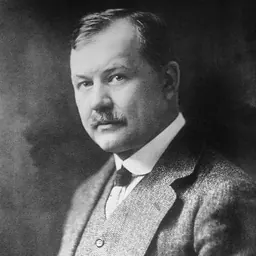
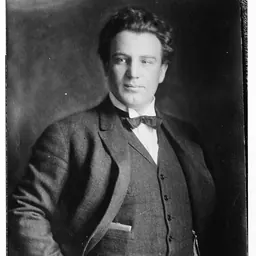
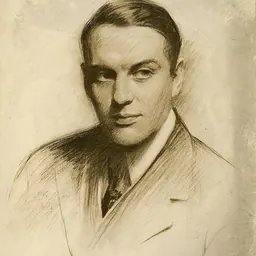


Related people
Same field, nearest in time

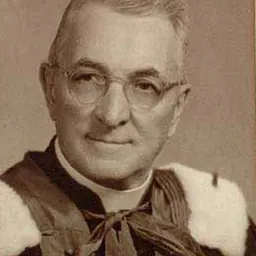

Contemporaries
People whose lives overlapped Harry Graham's

Frequently asked questions
Who was Harry Graham?
British writer (1874–1936)
When was Harry Graham born?
Harry Graham was born on 23 December 1874 in London.
When did Harry Graham die?
Harry Graham died on 30 October 1936 in London.
What was Harry Graham's occupation?
Harry Graham was a writer, journalist, lyricist, librettist and poet.
What nationality was Harry Graham?
Harry Graham was British.
Sources & further reading
· DBpedia: Harry Graham (poet)
Cite this page
APA: Biography.guide. (2026). Harry Graham. https://biography.guide/harry-graham-writer/
MLA: "Harry Graham." Biography.guide, https://biography.guide/harry-graham-writer/.
Chicago: "Harry Graham." Biography.guide. https://biography.guide/harry-graham-writer/.
Data last updated: 2026-09-20 · Spot an error? Report a correction.
Page generated 2026-09-27 05:19 UTC