
About Harry Foner
Lived 1919 – 2017 (aged 97). Harry Foner was an American social activist.
Henry Joseph Foner (March 23, 1919 – January 11, 2017) was a 20th-century Jewish-American social activist and president for more than two decades of the Joint Board, Fur, Leather and Machine Workers Union (FLM).
He and his three older brothers started careers in teaching (the older three were all rising young professors in college). In the 1940s all were banned from teaching in New York because of earlier affiliations with communist organizations. Foner became a union activist and leader, serving as FLM president from 1961 to 1988.
Background
Henry Foner was born on March 23, 1919, the youngest of four brothers. He was raised in the Williamsburg neighborhood of Brooklyn, New York. His father Abraham Foner delivered seltzer; his mother Mary Smith was a homemaker.
He attended Eastern District High School and earned a degree in business administration from the City College of New York in 1939, After passing his teaching exam, in 1948 he was blocked by the Rapp-Coudert Committee from formal appointment due to earlier involvement in the American Student Union and Young Communist League. Fear of communism in the United States was rising. "Both Philip and Jack [Foner] were fired from teaching posts in the City University of New York in 1941 during a purge by the New York State Legislature's Rapp-Coudert Committee, which also cost Moe his administrative post at City College and Henry his job as a substitute teacher in New York high schools."
With all four brothers banned from teaching, they formed a jazz band and played at Jewish resorts in the Catskill Mountains: Henry played saxophone and composed songs (see "Songs" below). ).
From 1940 to 1948, Foner was a member of the Teachers Union.
Over the years, he worked on issues from promoting civil rights to protesting the Vietnam War. In 2000, he co-founded Labor Arts. He was a long-time friend of Pete Seeger, "Seeger was a member of the New York Labor History Association. In 2009, he played his five-string banjo and other instruments at the 90th birthday celebration of his friend and comrade, Henry Foner."
In 2009, he gave an interview about his life experiences: Foner discusses his background as a political activist, musician, and teacher. At the time of his entrance into the fur and leather workers' union, Sam Burt was head of the Joint Board, and Ben Gold international president of furriers' union. He describes the leadership style and significant activities of Gold. In the late 50s, Foner was partially responsible for arranging a merger with the meat cutters' union, a move which helped to insulate the formerly Communist-led furriers from further political attacks. He discusses the political liabilities of the Communist presence in union leadership, and steps which Gold took to diffuse or preempt criticism. He describes the corruption in the labor movement in the 50s and 60s as well as the furriers' avoidance of corruption under its leftist leadership. He discusses Mayor Lindsay's campaign and administration, and the change in the Liberal Party stance on the Vietnam War, as well as the Party's decision-making dynamics and relationship with the ILGWU. He helped to organize union representation at the Labor Assembly for Peace in Chicago. He explains his own reasons for his engagement with the Liberal Party, and describes relations with politicians and labor leaders such as Lindsay, Ed Koch, David Dubinsky, Al Shanker, Victor Gotbaum, and Jack Sheinkman. Also discussed is the union's position on imports and animal rights. He compares and contrasts the policies and histories of the Amalgamated, ILGWU, and his own union. Mentioned are the Ocean Hill-Brownsville crisis and teachers' strike of 1968. The interview concludes with a discussion of the way in which the furriers' union dealt with ethnic and racial diversity in contrast to that of the ILGWU, and the unions' position on immigration, as well as Foner's own. Philip S. Foner (1910-1994), historian and political activist, twin of Jack D. Foner Moe Foner (1916-2002): trade union activist
In 1948, he married Lorraine Lieberman (March 2, 1923 – April 22, 2002).
His niece is Nancy Foner, Distinguished Professor of Sociology at Hunter College. A memorial service was held for Foner on April 4, 2017, in New York City at the Local 1199 SEIU Penthouse.
Awards For service during WWII, Fonder was awarded both the Legion of Merit and the Italian Military Valor Cross.
Legacy
Activism In his obituary of Foner for the New York Times, Sam Roberts summed up his life as follows: Henry J. Foner [was] the last of four brothers from New York City who were denied academic jobs in the 1940s for Communist ties and later were champions of organized labor, higher education and progressive political causes.
"I'm Getting an F in Romance" (1938) "Shakin' the Dies" (1938) "Confidentially, We Think" (1939) "Yes, My Darling Daughter" (1939) "Lament of the Substitute Teacher" (1940) "You're Just My Type" (1940) "'V' for Victory" (1942) "Shoot the Strudel to Me, Yudel" (1941) (song) "Thoughts on a Division Headquarters Clean-Up Detail" (1943) "The Passionate Company Clerk to His Love" (1943) "Song of the Pennies" (with Norman Franklin) (1946) "The Vibrating Rhumba" (1946) "The Co-op Housing Blues" (1947) "Thursdays Till Nine" (with Norman Franklin) (1947) "How Long the Day" (1947) "The Ballad of the Bra" (1947) "The Selling Union" (1947) "Here's Paul Robeson" (1949) "Seasons Greetings and a Happy New Year" (1980) "A Wedding Toast to Lyn Garafola and Eric Foner" (1980) "For the Brooklyn Philharmonics on its 30th Birthday" (1984) "37th Birthday Greetings to Diane Foner" (1989) "To My Brother Jack on His 85th Birthday" (1995) "To the Radiology-Oncology Personnel at St. Vincent's" (1999) "The Ode That's Owed to Keri" (2004) "A Fond Farewell to Fair Elaine" (2004) "91st Birthday Greetings for Irwin Corey" (2005) "20-20 Lines to My Ophthamologist" (2007) "Lament of an ex-Federal Prosecutor" (2007)
Poems:
"Stations in Life" (2000)
Books:
Songs and Poems: For Better or Verse (Jewish Currents, 2015)
Books edited:
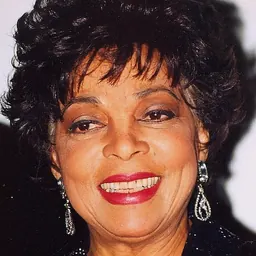
Paul Robeson: Essays on His Life and Legacy, edited by Joseph Dorinson and William Pencak, foreword by Henry Foner (Jefferson, NC: McFarland, 2002) A Song of Social Significance: Memoirs of an Activist with Dorothy Epstein and Ruby Dee (Teaneck, NJ: Ben Yehuda Press, 2007)
Articles:
"From the Bandstand" (1997) "At the Rosenberg Commemoration" (2000)
"From the Bandstand: The Odyssey of a Catskills Resort Musician" (2015)
Plays:
My Fair Chelm, script by Harold Farbstein, lyrics by Henry Foner (1971)
Don’t just read it —
keep it.
Full-length biographies made to live with: read them, listen on the way to work, watch them tonight.
- E-book
- Audio
- Video
Instant download · yours to keep · every purchase keeps this site free
Important facts
People in Harry Foner's life
Named in this biography and alive at the same time



Related people
Same field, nearest in time


Contemporaries
People whose lives overlapped Harry Foner's



Frequently asked questions
Who was Harry Foner?
American activist
When was Harry Foner born?
Harry Foner was born on 23 March 1919 in Brooklyn.
When did Harry Foner die?
Harry Foner died on 11 January 2017 in Brooklyn, New York City.
What was Harry Foner's occupation?
Harry Foner was a social activist.
What nationality was Harry Foner?
Harry Foner was American.
Sources & further reading
Cite this page
APA: Biography.guide. (2026). Harry Foner. https://biography.guide/harry-foner/
MLA: "Harry Foner." Biography.guide, https://biography.guide/harry-foner/.
Chicago: "Harry Foner." Biography.guide. https://biography.guide/harry-foner/.
Data last updated: 2026-09-22 · Spot an error? Report a correction.
Page generated 2026-09-27 05:26 UTC