
About Harry Daley
Lived 1901 – 1971 (aged 69–70). Harry Daley was a police officer.
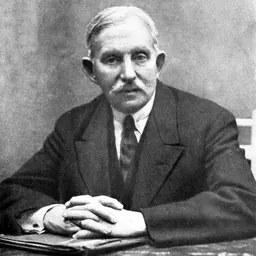
Sergeant Harry Daley (14 November 1901 – 12 March 1971) was the first known openly gay British policeman. Born in Lowestoft he later moved to Dorking and, in 1925, to London where he joined the Metropolitan Police. Soon after joining the police, he met gay writer J. R. Ackerley and, through him, a number of other literary and artistic figures. Daley became the lover of writer E. M. Forster at the age of 25, a relationship that lasted seven years. After retiring from the police in 1950 and subsequently serving in the merchant navy he returned to Dorking where he lived with his brother and his partner. Daley wrote an autobiography that was published posthumously in 1986.
Early life Harry Daley was born in Lowestoft, Suffolk on 14 November 1901, the second youngest of five children of a working-class family. He noted that "my sexual inclinations were clearly defined. I was attracted to normal men, older, rougher and stronger than myself. Youthful innocence and freshness of outlook I found delightful, but never connected it with sexual desire". At Hammersmith, Daley considered that the constables were under pressure to carry out arrests and issue summons. This resulted in many people being stopped and searched without suspicion, which Daley thought antagonised drunk members of the public and led to the arrest of persons in marginal cases such as workmen carrying home materials left-over from building sites. He stated that the policemen in Hammersmith augmented their wages by receiving bribes from bookmakers on their beat to "look the other way". Constables could receive a half crown (2.5 shillings) a day from each bookmaker at a time when weekly wages for a constable with two years service was £3 6s (66 shillings). Daley recalled collecting the half crown from the bookmaker on his beat from a window ledge. He also remembered receiving complaints when he took a day off and his replacement did not accept the bribe. Daley also described making more than 30 shillings in one day by helping motorists to park at the Olympia London exhibition centre, though a portion was passed on to his sergeant and the clerk at the police station. It depicts the unrequited love of an army captain for a fellow officer in a prisoner of war camp. The Prisoners of War was the first 20th-century play put on in the West End or Broadway to deal with homosexual desire. |group=nb While walking his beat Daley made the acquaintance of the writer one day when Ackerley was fetching the milk from his doorstep. P. N. Furbank's 1978 biography of Forster notes that Daley was "plump, curly-haired, genial and rather cocky in manner: very intelligent, with a taste for music and opera, and a brilliant raconteur. He was homosexual and made no secret of it; indeed he was wildly indiscreet. His closest friends, and lovers, were mainly criminals." Daley later acknowledged that "Bob was the man for Morgan [Forster], much more suitable than me, and I am glad that's how it ended. He was a popular character with his colleagues and the public, which may have helped him to become accepted. He observed the station officers maintained good relations with the West End prostitutes but that otherwise police corruption had markedly decreased in the area after a 1929 scandal. Daley, who was disgusted by fascism, noted that some of the younger constables were uniformed members of the British Union of Fascists and took part in distributing anti-Jewish propaganda. The journalist Peter Burton, in reviewing This Small Cloud, for the Gay Times in 1987 described it as a "rare record of working-class gay experience". Daley destroyed all his other written records before his death, leaving an estate worth £803. Candidates must be approved by a panel of experts and meet a number of criteria, including historical significance. English Heritage describe the approval process as "highly selective". |group=nb A chapter of Stephen Bourne's 2017 book, Fighting Proud: The Untold Story Of The Gay Men Who Served In Two World Wars, is about Daley.
Don’t just read it —
keep it.
Full-length biographies made to live with: read them, listen on the way to work, watch them tonight.
- E-book
- Audio
- Video
Instant download · yours to keep · every purchase keeps this site free
Important facts
People in Harry Daley's life
Named in this biography and alive at the same time


Related people
Same field, nearest in time

Contemporaries
People whose lives overlapped Harry Daley's




Frequently asked questions
Who was Harry Daley?
police officer and author
When was Harry Daley born?
Harry Daley was born in 1901.
When did Harry Daley die?
Harry Daley died in 1971.
What was Harry Daley's occupation?
Harry Daley was a police officer.
Sources & further reading
Cite this page
APA: Biography.guide. (2026). Harry Daley. https://biography.guide/harry-daley/
MLA: "Harry Daley." Biography.guide, https://biography.guide/harry-daley/.
Chicago: "Harry Daley." Biography.guide. https://biography.guide/harry-daley/.
Data last updated: 2026-09-20 · Spot an error? Report a correction.
Page generated 2026-09-27 05:09 UTC