
About Harry Buxton Forman
Lived 1842 – 1917 (aged 74). Harry Buxton Forman was a bibliographer, postal worker, writer, poet, counterfeiter and antiquarian.
Henry Buxton Forman (11 July 1842 – 15 June 1917) was a Victorian-era bibliographer and antiquarian bookseller whose literary reputation is based on his bibliographies of Percy Shelley and John Keats. In 1934 he was revealed to have been in a conspiracy with Thomas James Wise (1859–1937) to purvey large quantities of forged first editions of Georgian and Victorian authors.
Early life
Henry Buxton Forman was born in Camberwell, south London on 11 July 1842, the third son of George Ellery Forman (born Plymouth in 1800, died London in 1869), a retired Royal Naval surgeon and his Rotherhithe born wife Maria Courthope. At the age of ten months his family moved to Teignmouth in Devon and he was educated at a Royal Naval School in New Cross where Edmund Gosse was a contemporary and lifelong acquaintance although not an intimate. Whilst at school he adapted the sobriquet Harry by which he was afterwards known. He returned to London in 1860 and lived with his brothers in Stockwell in south London after joining the Post Office at 18 years of age.
Career as a civil servant
Harry Buxton Forman pursued a successful career in the Post Office starting as supplementary class clerk in the Secretary's Office at St.Martin's-le-Grand in April 1860. He served as acting surveyor of British Post Offices in the Mediterranean in 1883 and thereafter served as principal clerk from 1885 and second secretary advancing to controller of the packet services. In 1897 he received the CB for his services to the Post Office retiring in 1907 after 47 years' service. He attended as a representative of the United Kingdom four Postal Union Congresses – at Paris in 1880, at Lisbon in 1885, at Vienna in 1891, and at Washington in 1897. He was one of the earliest workers on behalf of the Post Office Library and Literary Association, and was its secretary for several years. He also contributed to the study of Shelley with an uncompleted Shelley Library that included a number of first editions and rare writings (as well as a number of his own passed-off forgeries). Other Shelley-related material included an Essay in Bibliography in 1886, the Letters of Edward John Trelawny (1910), and Thomas Medwin's Life of Shelley, the latter work being scrupulously re-edited to remove many of Medwin's inexactitudes.
He followed up his edition of Keats' poetic works with Three essays by John Keats (1889), Poetry and Prose by John Keats: a book of fresh verses and new readings (1890), and a one-volume edition of the Poetical Works of John Keats (1906). He took an active interest in the purchase and establishment of the Keats and Shelley House in Rome, and presented to it a large number of his books.
Literary forgeries
In 1887 an association with a London commodity broker and book collector Thomas James Wise saw the first of many illegal printings by Wise and Buxton Forman. The origins began in November 1886 when Edward Dowden published a biography of Shelley. It printed a considerable number of poems for the first time that Forman and Wise decided to print separately as Poems and Sonnets inventing the Philadelphia Historical Society as a cover.
Final years Forman was seriously ill in 1906 with an undisclosed malady and he retired from the Post Office in 1907. He no longer wished to continue his illegal partnership with Thomas Wise, but was in too deep to disassociate from him completely. He had several literary projects to occupy him. He published Letters of Edward John Trelawny in 1910. He transcribed the Shelley Note Books from twenty-five notebooks inherited by Sir Percy Shelley from his mother. This was a prodigious exercise in patient and meticulous transcription. Most of the notebooks ended up being sold to American collectors, a striking indication of the popularity of Shelley at the turn of the twentieth century in the USA.
Exposure as a forger
The exposure of Harry Buxton Forman as a forger in 1934 was driven by two booksellers, Graham Pollard and John Carter. They became suspicious of Browning's "Reading Sonnets," and began to gather more and more evidence that the pamphlet was not as it purported to be. Chemical analysis of the paper showed that it contained a chemically constituted wood pulp, a process that was not used in England before 1874. In addition, the typeface in minor respects indicated a late 19th Century use, and via some sterling detective work Carter and Pollard traced the printing to Richard Clay and Sons. In turn this led to further investigation into various publications being offered for sale by Herbert Gorfin, a prominent bookseller. When it became apparent that Gorfin knew nothing of the forgeries, Pollard and Carter persuaded him to expose the source of the publications. Thus Thomas Wise and Harry Buxton Forman were outed as literary forgers. Pollard and Carter published their findings in 1934 in An Enquiry into the Nature of Certain Nineteenth Century Pamphlets.
Forman bibliography (selected) Our Living Poets, Tinsley’s Magazine articles, London (1869) Our Living Poets: An Essay in Criticism, Tinsley, London (1871) Poetical works of Shelley, edited by H Buxton Forman (1880) Prose Works of Shelley, edited by H Buxton Forman (1880) Letters of John Keats to Fanny Brawne, (1878) Poetical Works and Other & Writings of John Keats (1883) An Essay in Bibliography (1886) Three Essays by John Keats (1889), Poetry and Prose by John Keats: a book of fresh verses and new readings (1890) Sir Stevenson Arthur Blackwood (1893) The Building of the Idylls; a Study in Tennyson (1896) Elizabeth Barrett Browning and her scarcer books (1896) The Books of William Morris, edited by H. Buxton Forman (1897) The Life Poetic by William Morris (1897) Sordello, Robert Browning (1902) Poetical Works of John Keats (1906) Letters of Edward John Trelawny, edited by H.Buxton Forman, OUP (1910) Note Books of Percy Bysshe Shelley (1911) Life of Shelley, Thomas Medwin, edited by H. Buxton Forman. OUP, (1913) Hitherto Unpublished Poems and Stories by Elizabeth Barrett Browning (1914)
Biography
Don’t just read it —
keep it.
Full-length biographies made to live with: read them, listen on the way to work, watch them tonight.
- E-book
- Audio
- Video
Instant download · yours to keep · every purchase keeps this site free
Important facts
People in Harry Buxton Forman's life
Named in this biography and alive at the same time

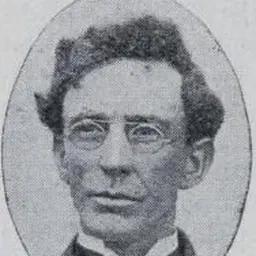



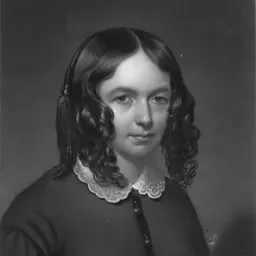
Related people
Same field, nearest in time
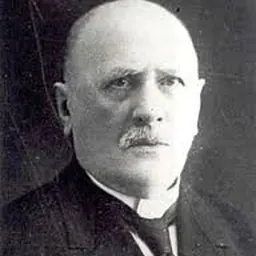

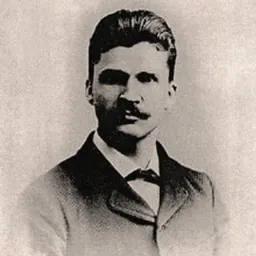

Contemporaries
People whose lives overlapped Harry Buxton Forman's


Frequently asked questions
Who was Harry Buxton Forman?
British writer (1842-1917)
When was Harry Buxton Forman born?
Harry Buxton Forman was born on 11 July 1842 in Camberwell.
When did Harry Buxton Forman die?
Harry Buxton Forman died on 15 June 1917.
What was Harry Buxton Forman's occupation?
Harry Buxton Forman was a bibliographer, postal worker, writer, poet, counterfeiter and antiquarian.
Sources & further reading
· Wikipedia: Harry Buxton Forman
· DBpedia: Harry Buxton Forman
Cite this page
APA: Biography.guide. (2026). Harry Buxton Forman. https://biography.guide/harry-buxton-forman/
MLA: "Harry Buxton Forman." Biography.guide, https://biography.guide/harry-buxton-forman/.
Chicago: "Harry Buxton Forman." Biography.guide. https://biography.guide/harry-buxton-forman/.
Data last updated: 2026-09-26 · Spot an error? Report a correction.
Page generated 2026-09-27 05:16 UTC