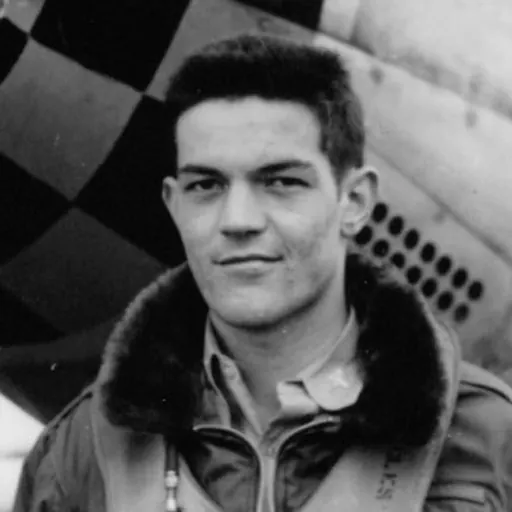
Harrison B. Tordoff
American ornithologist and conservationist
About Harrison B. Tordoff
Lived 1923 – 2008 (aged 85). Harrison B. Tordoff was an American ornithologist, conservationist, curator and environmentalist.
Harrison Bruce "Bud" Tordoff (February 8, 1923 – July 23, 2008) was an American ornithologist and conservationist. He was brought up in Mechanicville in upstate New York, hunting and fishing, and became interested in wildlife management and zoology. He studied as an undergraduate at Cornell University, returning to complete his degree after a period of military service during World War II. He had served as a fighter pilot in the United States Army Air Forces, and his five confirmed aerial victories qualified him as a fighter ace.
Tordoff completed his doctoral degree in ornithology at the University of Michigan. During his professional career, he worked as a faculty member and natural history museum curator at a number of public universities. Much of his career was spent at the University of Minnesota, where he served as director of the Bell Museum of Natural History from 1970 to 1983. He was active in ornithological and conservation organisations, and from 1978 to 1980 was president of the American Ornithologists' Union. Most of Tordoff's research was on the evolution of finches, and he is most remembered for his role in the reintroduction of the peregrine falcon in the upper Mississippi valley.
Early life and education Tordoff was born in Mechanicville, New York on February 8, 1923, the youngest and the only son among the six children of Harry and Ethel Tordoff. With his father, a stonemason, he learned to hunt and fish, and spent much of his free time observing birds and other wildlife, afield with his dog. He raised ring-necked pheasants for release, and started studying wildlife management, which he expected to be his career. He later said that shooting a black-throated blue warbler and admiring its unusual plumage sparked an interest in ornithology.
In 1940, Tordoff enrolled at Cornell University, where he found that his interest in the natural world could be pursued in a formal setting. While he was there, he met Robert M. Mengel (his lifelong best friend, later editor of the Auk), who encouraged his interest in ornithology, as did one of his professors, Arthur Augustus Allen. In 1943 he earned his wings, and joined the 352nd Fighter Squadron, 353rd Fighter Group, 8th Air Force. He flew a total of 85 missions during the war, in support of the Allied bombing of Germany, and reached the rank of captain. He was a member of the American Ornithologists' Union and served as its president from 1978 to 1980. He also helped start and raise funds for the Birds of North America encyclopedia project.
Conservation work While at the University of Michigan, Tordoff worked with Harold Ford Mayfield and the Michigan Audubon Society to protect the rare Kirtland's warbler. From 1975 to 1977, he was the first chair of the Minnesota chapter of the Nature Conservancy. Together with Carrol Henderson, he developed the non-game wildlife program at the Minnesota Department of Natural Resources. As a conservationist, Tordoff was known for his ability to engage a wide public audience, including birders and sportsmen as well as academics. Pat Redig, one of his collaborators and the founder of the Raptor Center in St. Paul, called Tordoff the "heart and soul" of the peregrine restoration effort. When he started his work, there were almost no breeding peregrines in the eastern United States, and the species was listed under the Endangered Species Act. As part of his work to reestablish peregrines, Tordoff raised funds for the Midwest Peregrine Restoration Project, and ringed hundreds of nestlings. As part of this project, 1286 peregrine chicks were hatched and by 2008 Tordoff and his colleagues had established a population of 128 breeding pairs and growing in the upper Mississippi region. A key part of their success arose from his idea to put peregrine nests on the top of skyscrapers in cities like Minneapolis. This not only increased the availability of nesting sites, but also drew the public's attention, since peregrines could be seen in cities and later on captured via webcams. Season after season, he tracked the success of peregrine falcons and created a large database to analyze the statistics of the growing population. During his retirement, he devoted much of his time to peregrine falcon work.
Personal life In 1946, he married Jean Van Nostrand, and they had three children, Jeffrey (died 2015), Judith (died 1970), and James. Tordoff continued his childhood pastimes of hunting and fishing throughout his life. He kept hunting dogs, especially English Setters, his companions whenever possible. In July 2008, Tordoff died at St. Joseph's Hospital in St. Paul at the age of 85, from the effects of Alzheimer's disease.
Aerial victory credits SOURCES: Air Force Historical Study 85: USAF Credits for the Destruction of Enemy Aircraft, World War II
Don’t just read it —
keep it.
Full-length biographies made to live with: read them, listen on the way to work, watch them tonight.
- E-book
- Audio
- Video
Instant download · yours to keep · every purchase keeps this site free
Important facts
People in Harrison B. Tordoff's life
Named in this biography and alive at the same time


Related people
Same field, nearest in time




Contemporaries
People whose lives overlapped Harrison B. Tordoff's




Frequently asked questions
Who was Harrison B. Tordoff?
American ornithologist and conservationist (1923-2008)
When was Harrison B. Tordoff born?
Harrison B. Tordoff was born on 8 February 1923 in Mechanicville.
When did Harrison B. Tordoff die?
Harrison B. Tordoff died on 23 July 2008 in St. Joseph's Hospital.
What was Harrison B. Tordoff's occupation?
Harrison B. Tordoff was an ornithologist, conservationist, curator and environmentalist.
What nationality was Harrison B. Tordoff?
Harrison B. Tordoff was American.
Sources & further reading
· Wikipedia: Harrison B. Tordoff
· DBpedia: Harrison B. Tordoff
Cite this page
APA: Biography.guide. (2026). Harrison B. Tordoff. https://biography.guide/harrison-b-tordoff/
MLA: "Harrison B. Tordoff." Biography.guide, https://biography.guide/harrison-b-tordoff/.
Chicago: "Harrison B. Tordoff." Biography.guide. https://biography.guide/harrison-b-tordoff/.
Data last updated: 2026-09-21 · Spot an error? Report a correction.
Portrait: Wikimedia Commons · author & licence
Page generated 2026-09-27 05:00 UTC