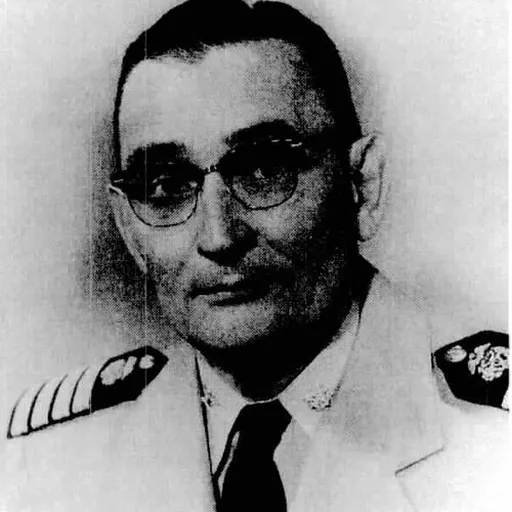
About Harris Isbell
Lived 1910 – 1994 (aged 84). Harris Isbell was an American physician and pharmacologist.
Harris Isbell (June 7, 1910 – December 23, 1994) was an American pharmacologist and the director of research for the NIMH Addiction Research Center at the Public Health Service Hospital in Lexington, Kentucky from 1945 to 1963. He did extensive research on the physical and psychological effects of various drugs on humans (imprisoned narcotics offenders, see below). Early work investigated aspects of physical dependence (an important aspect of drug addiction) with opiates and barbiturates, while later work (at least partially funded by the Central Intelligence Agency as part of the MKUltra project) investigated psychedelic drugs, including LSD. The research was extensively reported in academic journals such as the Journal of Pharmacology and Experimental Therapeutics, Psychopharmacologia, and the A.M.A. Archives of Neurology and Psychiatry.
Biography Isbell was born on June 7, 1910, in Arkansas to Francis Taylor Isbell and Celeste Mathews. He received his M.D. from Tulane University School of Medicine in 1934, and held various research positions before becoming head of the Addiction Research Center (ARC) in 1945. He was awarded the US Public Health Service Meritorious Service Award in 1962; Attorney General Robert F. Kennedy praised him as "an extraordinarily able director and coordinator of multidisciplinary research" and "an outstanding investigator in his own right whose work in clinical pharmacology has exerted far-reaching influences on medical practice". After leaving the ARC in 1963, he became Professor of Medicine and Pharmacology at the University of Kentucky School of Medicine. physical dependence on alcohol, tolerance to amphetamine,
the clinical use of opiate antagonists (e.g., nalorphine/Nalline and naloxone/Narcan) as treatment for opiate overdoses, the ability of methadone to alleviate opiate withdrawal symptoms, rapid tolerance but lack of physical dependence with LSD,
cross-tolerance between LSD and psilocybin, and the ability of pure THC to cause marijuana-like effects. New pharmaceutical substances were assayed (in the prisoner population) for their abuse and addiction (substance dependence) potential (medications for pain, cough, and diarrhea were of particular concern), and this information was utilized by groups such as the World Health Organization.
Other work at the ARC during Isbell's tenure included psychological aspects of human opiate addiction (e.g., re-arousal of craving after abstinence upon return to the addiction environment, i.e. a "conditioned" response), EEG studies of mental activity during drug use (including mescaline), and animal studies.
Isbell died on December 23, 1994, in Lexington, Kentucky.
Research Areas of interest described in Isbell's published work include physical and psychological effects of individual substances (including potential for dependence and addiction), ways to mitigate withdrawal symptoms (e.g., methadone therapy), the development of reliable rating methods and questionnaires for subjective drug effects (the Addiction Research Center Inventory), cross-drug comparisons, drug tolerance, and classification of drug groups (based on both the physiological and the subjective effects of a drug, as well as its cross-tolerance with other drugs).
"Volunteer" subjects The subjects in Isbell's experiments are described as "volunteers"; they were recruited from the associated Lexington Public Health Service Hospital. The hospital was a US Government facility for treating drug abuse; some patients were sentenced drug offenders, while others voluntarily entered for treatment. The subjects in the ARC experiments were all incarcerated male narcotics offenders with a history of drug addiction; subjects signed a simple "Consent Form". this fact is not documented in the published research articles. The separate living environment within the ARC for experimental subjects (e.g., the possibility of having a small private room) was also a motivation. The ability to induce euphoria is sometimes/often considered to be a component of addiction liability.
In the psychedelic studies, subjects had the choice of staying in an individual room or mingling with other subjects in a common area. Observations and measurements were taken before the substance of interest was ingested, and hourly thereafter (following a 10-minute rest in bed
Opioids Isbell and associates published a number of studies on morphine, methadone and assorted analgesics; much of this work was motivated by the search for a "nonaddicting analgesic"
Isbell and Vogel (1949) morning glory seeds (ololiuqui), and mescaline; these substances were sometimes described as "psychotomimetic". LSD and psilocybin for many of the experiments were supplied by Sandoz Pharmaceuticals (both of these substances were legal at the time). According to a 1986 interview with Isbell, reported that chlorpromazine (Thorazine) could either block or reverse the effects of LSD. Azacyclonol had no effect, while pre-treatment with reserpine augmented the effects of LSD (though in a manner described as "unpleasant"). Isbell et al. (1959b) reported that pre-treatment with scopolamine (an acetylcholine antagonist), phenoxybenzamine (an adrenergic alpha blocker) or "BAS" (a 5-methoxytryptamine based serotonin antagonist) had little effect on a subsequent LSD dose. They attempt to explain these results within the neurotransmitter ("neurohumors") knowledge of the period.
Psilocybin Isbell (1959) reported that mescaline and LSD had similar effects (although with different time course and potency), that direct tolerance could be induced by mescaline, and that each substance induced cross-tolerance to the other. This was particularly interesting, since LSD (and psilocybin) are indole compounds, while mescaline is not. Contrasting with the psilocybin and mescaline results, Isbell et al. (1964) found that tolerance to intramuscular LSD did not provide tolerance to an intramuscular injection of the indole hallucinogen DMT. Isbell et al. (1959c) investigated the psychological and physical effects of 13 different congeners of LSD, and correlated these effects with their potency as a serotonin antagonist in smooth muscle. With the exception of "ALD-52", all of the substances were less potent than LSD. There was low correlation between the smooth muscle and the "psychotomimetic" effects.
THC (marijuana) Starting in 1967, Isbell and associates published a few studies on THC and marijuana (cannabis).
Isbell et al. (1967) compared LSD (1.5 micrograms per kilogram of body weight, injected intramuscularly) and smoked THC (225 or 250 micrograms per kilogram of body weight, added to a tobacco cigarette). Physical symptoms were quite different (e.g., tachycardia with THC, dilated pupils with LSD), and tolerance to LSD did not cause tolerance to THC, suggesting different mechanisms of action. Their data do not show a statistical difference in the psychological effects of the two substances; this is somewhat surprising since cannabis is not usually considered to be a psychedelic drug. Whether this result is due to the small number of subjects, an inappropriate rating scale, the use of pure THC, or an exceedingly high THC dose (they report that some subjects had "hallucinations", and two subjects withdrew after experiencing "psychotic reactions" to THC) is unclear. Jasinski, Haertzen, and Isbell (1971) describe some of the subjective and physiological effects of the synthetic cannabinoids parahexyl and dimethylheptylpyran.
Isbell also investigated dosage effects of THC, and reported that low doses (4–6 mg) produced a pleasurable state (euphoria, perceptual distortion, and change of mood); this dosage was described by subjects as "good reefer". However, higher doses (18 milligrams of THC) reliably produced what Isbell referred to as a "psychotic reaction" (e.g., "all of a sudden [the subject] was on a trip and watching his own burial. The smoker will swear that what hit him never came from marijuana"). Isbell also commented on the potency of street marijuana of that time ("the local grass is probably pretty weak stuff").
Drug policy
In 1951 Isbell testified to Congress before the passage of the Boggs Act of 1952 that "smoking marijuana has no unpleasant aftereffects, no dependence is developed on the drug, and the practice can easily be stopped at any time."
Isbell (1971b) (p 903) provides a liberal view of drug policy. He observes that the drug laws of the time are "excessively rigid and extremely punitive", and have not had any proven effect on the drug problem. He then states that "simple possession of a drug for one's own use should be a civil offense punishable only by a fine", and suggests the possibility that marijuana of low or moderate potency could be legalized and regulated like tobacco, while also observing that maintenance on barbiturates, cocaine, or amphetamine would not be "pharmacologically sound". However, Isbell rejected removing controls on marijuana, which would "open the way to more potent stuff" such as hashish, with the consequent risk of high-dose effects.
Don’t just read it —
keep it.
Full-length biographies made to live with: read them, listen on the way to work, watch them tonight.
- E-book
- Audio
- Video
Instant download · yours to keep · every purchase keeps this site free
Important facts
People in Harris Isbell's life
Named in this biography and alive at the same time

Related people
Same field, nearest in time


Contemporaries
People whose lives overlapped Harris Isbell's





Frequently asked questions
Who was Harris Isbell?
American pharmacologist
When was Harris Isbell born?
Harris Isbell was born on 7 June 1910 in Arkansas.
When did Harris Isbell die?
Harris Isbell died on 23 December 1994 in Lexington.
What was Harris Isbell's occupation?
Harris Isbell was a physician and pharmacologist.
What nationality was Harris Isbell?
Harris Isbell was American.
Sources & further reading
Cite this page
APA: Biography.guide. (2026). Harris Isbell. https://biography.guide/harris-isbell/
MLA: "Harris Isbell." Biography.guide, https://biography.guide/harris-isbell/.
Chicago: "Harris Isbell." Biography.guide. https://biography.guide/harris-isbell/.
Data last updated: 2026-09-21 · Spot an error? Report a correction.
Portrait: Wikimedia Commons · author & licence
Page generated 2026-09-27 05:00 UTC