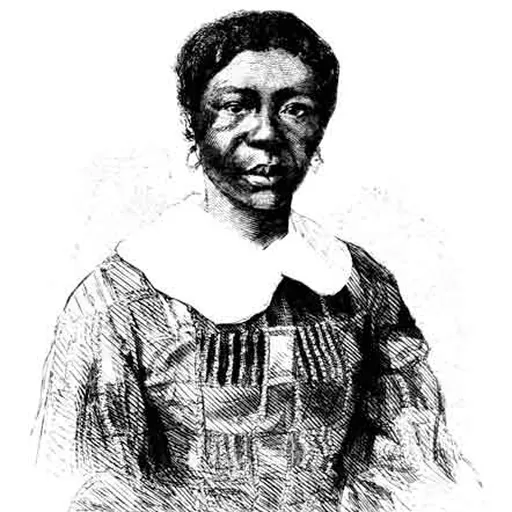
Harriet Robinson Scott
African American abolitionist wife of Dred Scott
About Harriet Robinson Scott
Lived 1815 – 1876 (aged 60–61). Harriet Robinson Scott was an American laundress, known for Dred Scott v. Sandford.
Harriet Robinson Scott ( – June 17, 1876) was an African American woman who fought for her freedom alongside her husband, Dred Scott, for eleven years. Their legal battle culminated in the infamous United States Supreme Court decision Dred Scott v. Sandford in 1857. On April 6, 1846, attorney Francis B. Murdoch had initiated Harriet v. Irene Emerson in the Circuit Court of St. Louis County, making the Scotts the first and only married couple to file separate freedom suits in tandem.
Born into slavery in Virginia, Harriet Robinson lived briefly in the free state of Pennsylvania before being taken to the Northwest Territory by Indian agent and slaveholder Lawrence Taliaferro. In 1836 or 1837, Harriet married Etheldred, an enslaved man who had been brought to Fort Snelling in present-day Minnesota by Dr. John Emerson, a military surgeon. Their civil wedding ceremony was officiated by justice of the peace Taliaferro, who never actually sold Harriet to Dr. Emerson, since slavery was illegal there.
In 1838, she gave birth to their first child on the steamboat Gipsey as it traveled north on the Mississippi River, in free territory, back to Fort Snelling. In 1840, the Scott family moved to St. Louis in the slave state of Missouri with Irene Emerson, who eventually hired them out to her brother-in-law, Captain Henry Bainbridge, at Jefferson Barracks. After Dr. Emerson's death in 1843, Dred accompanied Captain Bainbridge to Louisiana and Texas, leaving Harriet and their two daughters behind in St. Louis. Harriet was hired out to Adeline Russell, wife of grocery wholesaler Samuel Russell, most likely working as a laundress.
In 1846, Dred Scott returned to St. Louis and tried to purchase his freedom from Mrs. Emerson, who refused. The Scotts then decided to pursue their freedom through the courts. By then, Harriet, a member of the Second African Baptist Church, was aware of the many freedom suits that had been won by enslaved women in St. Louis.
Based on legal precedents set by Winny v. Whitesides in 1824 and Rachel v. Walker in 1836, the Scotts had a strong case and should have won easily. After losing their first trial in 1847 on a technicality, the Scotts were granted a new trial, but were taken into custody by the sheriff on the orders of Mrs. Emerson, to be hired out by him while their cases were still pending. Dred Scott won his second trial in the state court in 1850, briefly winning freedom for his family, but Mrs. Emerson appealed. Lawyers for both sides then agreed to advance only Dred's case with the understanding that the outcome of his case would apply to Harriet's suit as well. Legal historians have argued that this was an error on the part of the Scotts' lawyers, as Harriet's claim to freedom was stronger than that of Dred, and the legal status of children was determined by the status of their mother. As their case progressed through the Missouri Supreme Court, the United States Circuit Court for the District of Missouri, and the Supreme Court of the United States, it became clear that the courts would no longer uphold legal precedent.
On March 6, 1857, the United States Supreme Court led by Chief Justice Roger Taney ruled that the Scotts were not American citizens due to their race, and therefore had no legal rights. It also declared the Northwest Ordinance of 1787 and the Missouri Compromise unconstitutional. Although they failed to win their freedom through the courts, the Scotts were finally emancipated on May 26, 1857, after nationwide media coverage of their high-profile loss caused public embarrassment to Massachusetts Congressman Calvin C. Chaffee, an abolitionist who had married Eliza Irene Sanford Emerson. The Supreme Court ruling ultimately triggered a constitutional crisis, rallied abolitionists, and set the stage for the events leading to the American Civil War, the emancipation of enslaved African Americans, and the Thirteenth, Fourteenth, and Fifteenth Amendments to the U.S. Constitution.
Dred Scott died in 1858, but Harriet survived the Civil War and lived out her days in the company of their two daughters, as well as their grandchildren who had been born into freedom.
The Harriet Scott Memorial Pavilion at Greenwood Cemetery in Hillsdale, Missouri is dedicated to her memory. The Dred and Harriet Scott Statue at the Old Courthouse in St. Louis commemorates where their quest for freedom began.
Early life Harriet Robinson was born into slavery around 1820 in Virginia, after which she lived briefly in Pennsylvania. Details of her early life are largely unknown.
Her first-known slaveholder was Major Lawrence Taliaferro, who was originally from Virginia. The name Robinson may have come from the family that enslaved her mother. There was a Robinson family living near the home where Lawrence Taliaferro had grown up in King George County, Virginia, but there is no known record connecting them to Harriet.
Move to Minnesota country St. Peter's Agency house (left in white fence) near Fort Snelling above the joining of the Mississippi and Minnesota Rivers (c.1850) In 1835, Lawrence Taliaferro moved his entire household to join him at St. Peter's Indian Agency near Fort Snelling in present-day Minnesota. He had lived and worked there since 1820 as the Indian agent to the Dakota as well as the Ojibwe, and had been reappointed for another term by President Andrew Jackson.
Fourteen-year-old Harriet was taken along as a servant to work at the Taliaferros' agency house. They traveled from western Pennsylvania to St. Louis, Missouri, where they took the steamboat Warrior up the Upper Mississippi River to St. Peter's Agency. Over the years, he became the largest slaveholder in the area. He enslaved at least 21 black servants over his lifetime. Taliaferro hired many of them out to officers at Fort Snelling, and kept a few servants in the agency house, which was located about half a mile outside the walls of the fort. Furthermore, slave labor on United States military installations was often tolerated or even encouraged prior to the Civil War. At Fort Snelling, United States Army officers received a stipend to pay for servants, but often used enslaved labor instead, keeping the extra money for themselves. Throughout the 1820s and 1830s, there were an estimated 15 to 30 enslaved men and women working at Fort Snelling at any given time. The absence of a cash crop economy also meant that enslaved blacks were generally able to exercise more freedoms than in the plantation South.
In the months that followed, Dr. Emerson and Agent Taliaferro established a collegial working relationship. In late June 1836, they worked together to vaccinate nearly 1,000 Dakota men, women and children against smallpox, and were probably assisted by Etheldred. It was the second marriage for Dred.
Civil wedding ceremonies were unusual at the time for enslaved couples. Taliaferro had previously hired his servant Eliza out to Plympton, and now Plympton paid Dr. Emerson for Harriet's services.
Birth of Eliza Map of "free states" (blue) and "slave states" (red) in the United States as of 1837. Eliza Scott was born north of Missouri and hence in "free territory." In the fall of 1838, Harriet Scott gave birth to her first child, a baby girl named Eliza. She gave birth while on board a steamboat heading north up the Mississippi River from St. Louis back to Fort Snelling. where they might have been able to live in freedom. Historian Lea VanderVelde argues that the Scotts simply had no other viable option. who lived in separate slave quarters where the Scott family was most likely expected to stay.
At the same time, Harriet was aware of the many freedom suits that had been won by enslaved women in Missouri From 1824 to 1844, the Missouri Supreme Court had often decided in favor of slaves suing for their freedom, and this period would later become known as the "golden age" of freedom suits in Missouri. They certainly would not have foreseen that they would be embarking on an eleven-year struggle that would take their case from the circuit court of St. Louis County all the way to the United States Supreme Court. that freedom suits had been conducted. Her married name "Scott" did not appear, because Missouri slave law prohibited enslaved people from entering into legal contracts, including marriages. Murdoch was also very familiar with Pennsylvania law, because he had studied law in Bedford, Pennsylvania; he probably even knew Harriet's enslaver, Lawrence Taliaferro. The jury decided in favor of the defendant, Irene Emerson, based on a technicality. The retrial was delayed for many reasons, including the St. Louis fire of 1849 and a cholera epidemic after the fire. As before, Judge Hamilton was presiding. Nevertheless, Harriet and Dred did not give up. Pierre Chouteau Jr. was the wealthiest man in St. Louis, Harriet and Dred Scott appeared in the St. Louis Circuit Court, together with Taylor Blow, before Judge Alexander Hamilton. Dred's fame continued to grow after his death, but his grave in St. Louis remained unmarked. One entry listed her as "Scott, Harriet, widow of Dred, (colored), alley near Carr between 6th and 7th." Known to relatives only as "Aunt Lizzie," she helped Scott family descendants with child care and household chores, well into her eighties.
The location of her unmarked grave had been forgotten for many years, until it was re-discovered by Etta Daniels of the Greenwood Cemetery Preservation Association in 2006. The pavilion was dedicated in 2010. In addition, in 2012, a bronze statue of Dred and Harriet Scott was dedicated on the south lawn of the Old Courthouse. Commissioned by the Dred Scott Heritage Foundation, the Dred and Harriet Scott Statue depicts them standing close together, holding hands, with their heads held high. The statue marks the starting point of the Scotts' long legal battle, and represents "a fight for liberty and dignity, through grace and perseverance."
Don’t just read it —
keep it.
Full-length biographies made to live with: read them, listen on the way to work, watch them tonight.
- E-book
- Audio
- Video
Instant download · yours to keep · every purchase keeps this site free
Important facts
Family & relationships
People in Harriet Robinson Scott's life
Named in this biography and alive at the same time

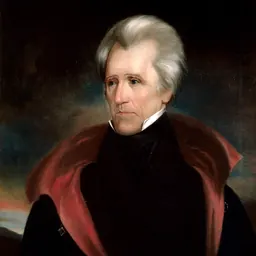

Contemporaries
People whose lives overlapped Harriet Robinson Scott's




Frequently asked questions
Who was Harriet Robinson Scott?
African American abolitionist wife of Dred Scott
When was Harriet Robinson Scott born?
Harriet Robinson Scott was born in 1815 in Virginia.
When did Harriet Robinson Scott die?
Harriet Robinson Scott died on 17 June 1876 in Missouri.
What was Harriet Robinson Scott's occupation?
Harriet Robinson Scott was a laundress.
What was Harriet Robinson Scott known for?
Harriet Robinson Scott was known for Dred Scott v. Sandford.
What nationality was Harriet Robinson Scott?
Harriet Robinson Scott was American.
Sources & further reading
· Wikipedia: Harriet Robinson Scott
· DBpedia: Harriet Robinson Scott
Cite this page
APA: Biography.guide. (2026). Harriet Robinson Scott. https://biography.guide/harriet-robinson-scott/
MLA: "Harriet Robinson Scott." Biography.guide, https://biography.guide/harriet-robinson-scott/.
Chicago: "Harriet Robinson Scott." Biography.guide. https://biography.guide/harriet-robinson-scott/.
Data last updated: 2026-09-22 · Spot an error? Report a correction.
Page generated 2026-09-27 05:10 UTC