
About Harriet Brooks
Lived 1876 – 1933 (aged 56). Harriet Brooks was a Canadian physicist and nuclear physicist, known for Atomic Recoil.
Harriet Brooks (July 2, 1876 – April 17, 1933) was a Canadian nuclear physicist. She is most famous for her research in radioactivity. She discovered atomic recoil, and transmutation of elements in radioactive decay. Ernest Rutherford, who guided her graduate work, regarded her as comparable to Marie Curie in the calibre of her aptitude. She was among the first to discover radon and to try to determine its atomic mass. to George and Elizabeth Warden Brooks. She was the third of nine children. Her father, George Brooks, worked at his own flour mill until it burned down and was not covered by insurance. He then supported the family by working as a commercial traveler for a flour firm. Brooks moved around Quebec and Ontario with her family during her childhood. At some point, she attended the Seaforth Collegiate Institute in Ontario. Her family finally settled in Montreal.
Undergraduate education Harriet Brooks entered McGill University in 1894, the only one beside her sister Elizabeth who would attend university and six years after McGill graduated its first female student. While Brooks won a scholarship for the final two years of her Bachelor's degree, gender discrimination disqualified her from receiving a scholarship for her first two years. Brooks graduated with a first-class honours B.A. in mathematics and natural philosophy in 1898, and was awarded the Anne Molson Memorial prize for outstanding performance in mathematics.
Graduate research
Brooks was the first graduate student in Canada of Sir Ernest Rutherford, under whom she worked immediately after graduating. With Rutherford, she studied electricity and magnetism for her master's degree. In 1899, even before her thesis was completed, her work on damping of electrical oscillations was published in the Transactions of the Canadian Section of the Royal Society. The same year, Brooks received an appointment as nonresident tutor at the newly formed Royal Victoria College, the women's college of McGill University. In 1901, she became the first woman at McGill University to receive a master's degree.
After her master's degree in 1901, she did a series of experiments to determine the nature of the radioactive emissions from thorium. These experiments served as one of the foundations for the development of nuclear science. Papers by Rutherford and Brooks in 1901 and 1902 were published in Royal Society Transactions and in the Philosophical Magazine. While her research at Cambridge on the radioactive decay of radium and thorium was successful,
In 1903, Brooks returned to her position at Royal Victoria College and rejoined Rutherford's group, carrying out research that was published in 1904. and a former McGill physics instructor, and settled in Montreal. She had three children, two of whom tragically died in their teens. Her life revolved around domestic life, organizing the activities of household servants. presumably leukaemia caused by radiation exposure.
The obituary in The New York Times on April 18, 1933 credited her as the "Discoverer of the Recoil of a Radioactive Atom."
Rutherford wrote a her obituary in the journal Nature.
Legacy
Firsts Brooks achieved a series of significant firsts during the early development of nuclear science:
First Canadian woman nuclear physicist. Brooks is widely recognized as the first woman in Canada to conduct research in nuclear physics. Her experiments on radioactivity at McGill University placed her among the earliest contributors to the study of radioactive materials.
First woman to earn a master's degree from McGill University (1901). Brooks became the first woman to receive a McGill M.A. after completing research on electrical oscillations and thorium emissions under Ernest Rutherford. This milestone helped establish the presence of women in advanced scientific study in Canada.
First graduate student in Canada supervised by Ernest Rutherford. Brooks joined Rutherford's laboratory immediately after her undergraduate degree, becoming his first Canadian graduate student. Her work with him contributed to early understandings of radioactive behavior.
First woman permitted to carry out research at the Cavendish Laboratory. With the support of the Bryn Mawr European Fellowship, Brooks became the first woman to conduct research at the Cavendish Laboratory at the University of Cambridge. Her admission to this leading physics laboratory marked an important step toward including women in advanced research environments.
Among the first scientists to show that radioactive decay transforms one element into another. Brooks's thorium experiments provided early evidence for elemental transformation, helping establish the idea that radioactive decay occurs through a sequence of changes.
Among the earliest researchers to identify and measure radon. In 1901 and 1902, Brooks isolated the gas now called radon and produced one of the first recorded measurements of its half-life. Her estimate for the half-life of thoron (radon 220) was close to the modern accepted value.
Among the first researchers to observe radioactive recoil. Brooks described the behavior of the active material that recoiled from surfaces after alpha emission. This early observation helped clarify how particles move during radioactive decay.
One of the first to demonstrate induced radioactivity. Brooks showed that non-radioactive materials became radioactive when stored in a radioactive container. This discovery helped scientists understand how decay products transfer between substances.
One of the earliest women appointed to a physics faculty in the United States. In 1904, Brooks joined the physics faculty at Barnard College. Her attempt to continue academic work after becoming engaged raised public debate about whether women could combine marriage with a scientific career, illustrating the social pressures she faced.
One of the first women outside the Curie laboratory to be credited in published radium research. While working at the Curie Institute in Paris, Brooks was acknowledged in scientific publications that reflected her contributions to studies of radioactive materials.
One of the first Canadian women scientists whose contributions were recovered through archival research. After being largely forgotten for decades, Brooks's scientific work was reconstructed by historians in the late twentieth century, revealing the extent of her influence on early nuclear science.
Awards and honours
Academic and scientific recognition Received the President's European Fellowship, an academic scholarship that supported research at the Cavendish Laboratory. Elected as a member of the McGill University Physics Society in recognition of her research at McGill University. Honoured with the naming of the Harriet Brooks Building at Chalk River Laboratories, an environmentally certified research facility opened in 2016. Commemorated by the Government of Canada with a national scientific computing system named "Harriet Brooks" in 2017.
Public and cultural recognition Featured on the cover of the Canadian Journal of Physics in January 2015. Highlighted in modern educational and historical materials produced by institutions such as McGill University.
Historical and archival recognition Described in her 1933 New York Times obituary as the "Discoverer of the Recoil of a Radioactive Atom". Honoured in a 1933 obituary written by Ernest Rutherford in Nature. Recognized through late twentieth century archival research that restored her place in early nuclear history.
Don’t just read it —
keep it.
Full-length biographies made to live with: read them, listen on the way to work, watch them tonight.
- E-book
- Audio
- Video
Instant download · yours to keep · every purchase keeps this site free
Important facts
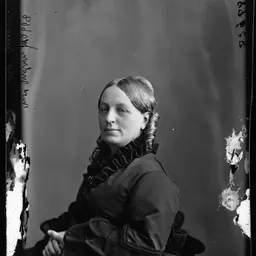
People in Harriet Brooks's life
Named in this biography and alive at the same time


Related people
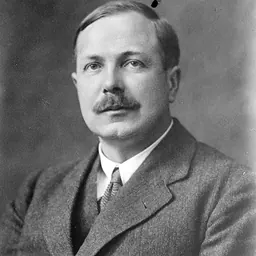
Same field, nearest in time


Contemporaries
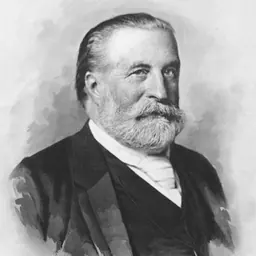
People whose lives overlapped Harriet Brooks's

Frequently asked questions
Who was Harriet Brooks?
Canadian nuclear physicist (1876–1933)
When was Harriet Brooks born?
Harriet Brooks was born on 2 July 1876 in Exeter.
When did Harriet Brooks die?
Harriet Brooks died on 17 April 1933 in Montreal.
What was Harriet Brooks's occupation?
Harriet Brooks was a physicist and nuclear physicist.
What was Harriet Brooks known for?
Harriet Brooks was known for Atomic Recoil.
What nationality was Harriet Brooks?
Harriet Brooks was Canadian.
Sources & further reading
Cite this page
APA: Biography.guide. (2026). Harriet Brooks. https://biography.guide/harriet-brooks/
MLA: "Harriet Brooks." Biography.guide, https://biography.guide/harriet-brooks/.
Chicago: "Harriet Brooks." Biography.guide. https://biography.guide/harriet-brooks/.
Data last updated: 2026-09-27 · Spot an error? Report a correction.
Page generated 2026-09-27 05:17 UTC