
About Harrie Massey
Lived 1908 – 1983 (aged 75). Harrie Massey was an Australian physicist.
Sir Harrie Stewart Wilson Massey (16 May 1908 – 27 November 1983) was an Australian mathematical physicist who worked primarily in the fields of atomic and atmospheric physics.
A graduate of the University of Melbourne and the University of Cambridge, where he earned his doctorate at the Cavendish Laboratory, Massey became an independent lecturer in Mathematical Physics at the Queen's University of Belfast in 1933. He was appointed Goldsmid Professor of Applied Mathematics at University College London, in 1938. During the Second World War, Massey worked at the Admiralty Research Laboratory, where he helped devise countermeasures for German magnetic naval mines, and at the Admiralty Mining Establishment in Havant, where he helped develop British naval mines. In 1943, Mark Oliphant persuaded the Admiralty to release Massey to work on the Manhattan Project. He joined Oliphant's British Mission at the Radiation Laboratory, where they worked on the electromagnetic isotope separation process. When Oliphant returned to Britain in 1945, Massey took over the Berkeley Mission.
Massey returned to University College London, in October 1945 to find it badly damaged by bombing, and the Mathematics Department in dingy temporary accommodation. In 1950 he was appointed Quain Professor of Physics and head of the University College London Physics Department. The department was merged with Astronomy in 1973, but he remained its head until he retired in 1975. Under his direction, the Physics Department was reoriented towards particle physics and upper atmosphere physics. He worked with the Woomera Rocket Range to develop British Skylark rocket, and was on the governing board of the Anglo-Australian Telescope. He was the chairman of the Committee on Space Research (COSPAR) from 1959 to 1978, and of its British national chapter. He was also the first chairman of the European Space Sciences Committee, and helped found the European Space Research Organization and the Mullard Space Science Laboratory at University College London.
Early life
Harrie Stewart Wilson Massey was born in Invermay, Victoria, Australia,#tag:ref |Bibliographical Memoirs of the Royal Society says he was born in St Kilda, Victoria, He grew up in the rural community of Hoddles Creek, and enrolled in the local state school in 1913. He received his Merit Certificate, normally awarded after completing the eighth grade, when he was nine, but due to his age he still had to stay there for another three years. He won a scholarship to University High School, and moved to Parkville with his mother in 1920. At University High School he was president of the Science Club and vice captain of the cricket team.
Career At the age of 16, Massey won a scholarship to the University of Melbourne, which he entered in 1925. He had thoughts of studying chemistry, but was impressed by the physics lectures given by Eric Hercus. This was a stroke of luck; first year physics lectures were normally given by Thomas Laby. Massey recalled in 1980 that "in a fairly wide experience I would rate [Laby] the worst lecturer I have heard".
In 1929, with the benefit of an Aitchison travelling scholarship from the University of Melbourne, Massey went to Trinity College, Cambridge to perform research at the Cavendish Laboratory led by Ernest Rutherford. The scholarship expired after two years, but he was awarded an 1851 Exhibition Scholarship in 1931. At this time the Cavendish Laboratory was one of the leading centres of physics in the world. In 1932, Cavendish laboratory scientists John Cockcroft and Ernest Walton split the atomic nucleus, James Chadwick discovered the neutron, and Patrick Blackett and Giuseppe Occhialini confirmed the existence of the positron. Shortly afterwards, he co-authored a book on atomic collision processes with Nevill Mott, Theory of Atomic Collisions (1933). He also applied the theory of collisions to models of neutron structure. At the Cavendish laboratory, he also played hockey with Cockcroft, and cricket for the Cavendish Cricket Club, becoming team captain in his final year there. Frustrated with the tiresome and time-consuming process of calculation, he had his physics workshop superintendent, John Wylie, build him a small-scale differential analyzer, an analog computer that could solve differential equations, for just £50. This was used to solve problems related to low temperature helium, and the photo-ionisation of oxygen in the upper atmosphere.
Massey was appointed Goldsmid Professor of Applied Mathematics at University College London, in 1938, following the death of L. N. G. Filon the previous year. He brought with him Buckingham, now an 1851 Exhibition Scholar himself, and David Bates, a promising graduate student. They brought the differential analyser with them to London, where it was destroyed by an air raid during the Second World War. The nature of the mines was initially unknown, but on 23 November 1939, a bomb disposal team under Lieutenant Commander J. G. D. Ouvry recovered an intact aerial mine from a mudflat at Shoeburyness, and the threat was revealed to be a magnetic mine.
In December 1939, Massey joined a group at the Admiralty Research Laboratory in Teddington led by Stephen Butterworth. They were soon joined by a number of other physicists, including Bates, Buckingham, Francis Crick and John Gunn. Together, they came up with a series of countermeasures that enable the Navy to successfully sweep the mines. With this in hand, Massey became deputy chief scientist to the Scientific Section of Mine Design Department at the Admiralty Mining Establishment in Havant in early 1941. This time, the job was to create mines as good as the German ones. Massey brought his team with him. While Bates worked on packaging to protect the mine when it was dropped from an aircraft, Buckingham and Gunn calculated its theoretical effectiveness, and Crick designed the circuitry. Their mine codenamed MX, was soon in service, and the group turned its attention to developing acoustic or pressure mines. On the retirement of A. B. Wood in 1943, Massey became chief scientist at Havant. The Radiation Laboratory's part was to develop an electromagnetic isotope separation process. Massey was in charge of its Theoretical Group, which included American David Bohm and Australian Eric Burhop. They studied the characteristics of electric discharges in magnetic fields, today known as Bohm diffusion, and studied the ionization of uranium compounds used as feed in the electromagnetic uranium enrichment process such as uranium tetrachloride (UCl4) and uranium hexafluoride (UF6). Oliphant returned to Britain in March 1945, Wartime papers produced by the group were collected and published in The Characteristics of Electrical Discharges in Magnetic Fields (1949).
Later life
Massey returned to University College London, in October 1945 to find it badly damaged by bombing, and the Mathematics Department in dingy temporary accommodation. He was allowed to pick his own lecturers, so he chose Bates, Burhop, Buckingham and Gunn. While they had to teach mathematics, they were free to choose their own research topics, so they chose to research physics, carrying out physical experiments. He also served as University College London's Vice-Provost from 1969 to 1973. Under Massey, the Physics Department moved away from researching the physics of metals and liquids, and focused on particle physics and upper atmosphere physics. He was also a member of both the American Philosophical Society and the United States National Academy of Sciences.
Rockets had seen enormous development for military purposes during the Second World War, and Massey saw their potential for studying the upper atmosphere. He became a major supporter of space science, and wrote a book on the subject, History of British Space Science (1984). He was the chairman of the Committee on Space Research (COSPAR), which was established by the International Council of Scientific Unions, from its founding in 1959 until 1978, and also of the British National Committee for Space Research, its British national chapter. He was also the first chairman of the European Space Sciences Committee, and helped found the European Space Research Organization and the Mullard Space Science Laboratory at University College London. He was involved in the negotiations leading to the establishment of the Anglo-Australian Telescope at Siding Spring Mountain in New South Wales. He was a United Kingdom member and deputy chairman of the telescope's governing board from 1975 to 1980, and chairman from 1980 to 1983. and Heriot-Watt University (1975).
Death and legacy
After a long illness, Massey died at his home in Esher, Surrey, as is the Harrie Massey Lecture Theatre and Harrie Massey Prize at University College London, and the Harrie Massey Medal and Prize, jointly awarded by the Australian Institute of Physics and British Institute of Physics. His papers are in the University College London archives.
Hoddles Creek Primary School, the state school attended by Massey during his childhood, named Massey House (one of the school's four houses) in his honour. A pine tree planted by Massey on the school grounds in 1937 remains, as well as a plaque commemorating Massey's achievements.
Don’t just read it —
keep it.
Full-length biographies made to live with: read them, listen on the way to work, watch them tonight.
- E-book
- Audio
- Video
Instant download · yours to keep · every purchase keeps this site free
Important facts
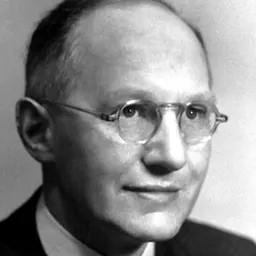
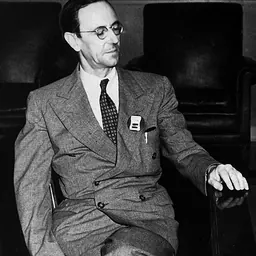
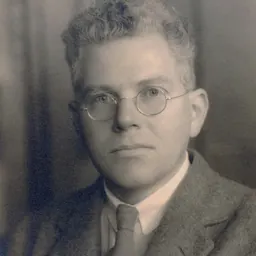
People in Harrie Massey's life
Named in this biography and alive at the same time





Related people
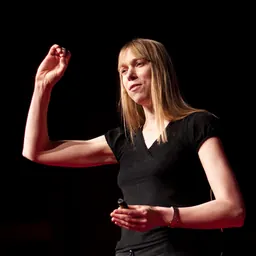
Same field, nearest in time


Contemporaries
People whose lives overlapped Harrie Massey's

Frequently asked questions
Who was Harrie Massey?
Australian physicist (1908-1983)
When was Harrie Massey born?
Harrie Massey was born on 16 May 1908 in St Kilda.
When did Harrie Massey die?
Harrie Massey died on 27 November 1983 in Cambridge.
What was Harrie Massey's occupation?
Harrie Massey was a physicist.
What nationality was Harrie Massey?
Harrie Massey was Australian.
Sources & further reading
Cite this page
APA: Biography.guide. (2026). Harrie Massey. https://biography.guide/harrie-massey/
MLA: "Harrie Massey." Biography.guide, https://biography.guide/harrie-massey/.
Chicago: "Harrie Massey." Biography.guide. https://biography.guide/harrie-massey/.
Data last updated: 2026-09-26 · Spot an error? Report a correction.
Page generated 2026-09-27 05:15 UTC