
About Harold St. Maur
Lived 1869 – 1927 (aged 57). Harold St. Maur was a British politician.
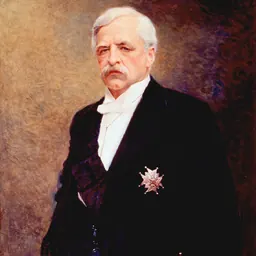
Lieutenant Colonel Richard Harold St Maur JP DL (pronounced "Seemer"; 6 June 1869 – 5 April 1927) was an unsuccessful claimant to the Dukedom of Somerset and briefly a Liberal Member of Parliament for Exeter, being unseated on an election petition by a single vote.
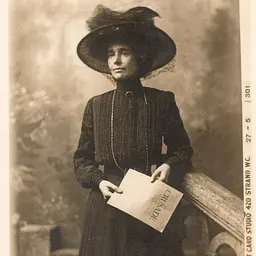
Early life St Maur was born in Brighton in 1869, the illegitimate son of Edward Seymour, Earl St Maur, and grandson of Edward Seymour, 12th Duke of Somerset. He had a sister, Ruth Cavendish Bentinck, who was a noted suffragist. His mother was a 19-year-old half-gipsy maid named Rosina Elizabeth Swan of Higham, near Bury St. Edmunds; St Maur's father died within months of his birth.
He was educated at Wellington College and Sandhurst, and served with the 14th Hussars and later with the Royal 1st Devon Yeomanry. He was appointed a second lieutenant in the Reserve on 21 February 1900. He fought in the Boer War at Natal with the 7th Remounts and the Royal 1st Devon Imperial Yeomanry. St Maur wrote a book which he titled "Notebook for Officers and Non-Commissioned Officers of the Yeomanry".
Brief political career St Maur had been identified with radical and Labour politics in Mid Devon and had given campaign donations to Labour candidates. The Conservatives launched an election petition, which was heard at the Exeter Guildhall over a period of a week in April 1911, before Mr. Justice Ridley and Mr. Justice Channell.
Election petition The first day of the petition concerned fourteen votes which were disputed by either side. On the first scrutiny of the votes, St Maur's majority of four votes was eliminated, placing the candidates level. Then St Maur went ahead again by two votes, only to fall back to level pegging again. However, Henry Duke's lawyers established a case of personation, which gave Duke a lead of one vote at the end of the first day.
On the second day, two of Duke's votes were disallowed, putting St. Maur back into the lead by one vote. On the fifth day, the Judges struck five votes off St. Maur's total, putting Duke ahead by four votes, although Mr. Justice Channell said if he had been hearing the case alone he would not have disallowed so many. On the other hand, he opined that if Mr. Justice Ridley had been acting alone he would have disallowed more.
On the sixth day two of Duke's votes were disallowed, on the grounds that the voter had been paid to distribute cards, or in the latter case the voter's son had been paid to run messages on polling day. A further two votes in Duke's column were disallowed when it was proved in Court that the voters were underage. Thus at the end of the sixth day the candidates were level again on 4,777 votes apiece.
On the seventh day, the Court heard evidence that a man named Pannell or Purnell had been paid five shillings by the Liberals to act as a tally clerk. The Judges disallowed this vote, and since St. Maur's lawyers had indicated no further challenges, Henry Duke was declared elected by a single vote.
Later career St Maur served in the First World War, at Gallipoli, then in the campaign against the Senussi, and finally as liaison officer between Lord Allenby and the French Forces. For this work he was awarded the Legion of Honour and the Croix de Guerre with palms. He was Master of the South Devon Foxhounds for many years.
Peerage claim In 1925, after the death of the 15th Duke of Somerset, St. Maur petitioned the House of Lords Committee for Privileges to safeguard his claim to the Dukedom, in the hope that he might find proof that his parents were married before his birth.
Death and memorial St Maur died at Kipipiri, Gilgil, Kenya, in 1927, aged 57. There is a mural monument to him in Teigngrace church inscribed as follows:
Don’t just read it —
keep it.
Full-length biographies made to live with: read them, listen on the way to work, watch them tonight.
- E-book
- Audio
- Video
Instant download · yours to keep · every purchase keeps this site free
Important facts
People in Harold St. Maur's life
Named in this biography and alive at the same time

Related people
Same field, nearest in time





Contemporaries
People whose lives overlapped Harold St. Maur's
Frequently asked questions
Who was Harold St. Maur?
British politician (1869–1927)
When was Harold St. Maur born?
Harold St. Maur was born on 6 June 1869.
When did Harold St. Maur die?
Harold St. Maur died on 5 April 1927.
What was Harold St. Maur's occupation?
Harold St. Maur was a politician.
What nationality was Harold St. Maur?
Harold St. Maur was British.
Sources & further reading
Cite this page
APA: Biography.guide. (2026). Harold St. Maur. https://biography.guide/harold-st-maur/
MLA: "Harold St. Maur." Biography.guide, https://biography.guide/harold-st-maur/.
Chicago: "Harold St. Maur." Biography.guide. https://biography.guide/harold-st-maur/.
Data last updated: 2026-09-20 · Spot an error? Report a correction.
Page generated 2026-09-27 05:30 UTC