
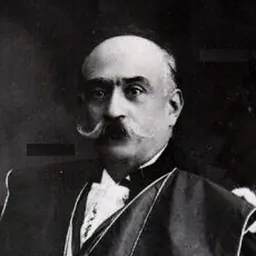
Harold Saxton Burr
American medical researcher and painter
About Harold Saxton Burr
Lived 1889 – 1973 (aged 83). Harold Saxton Burr was an American neuroscientist, university teacher and artist.
Harold Saxton Burr (April 18, 1889 – February 17, 1973) was E. K. Hunt Professor of Anatomy at Yale University School of Medicine and researcher into bio-electrics.
Early life He was born in Lowell, Massachusetts in 1889, to parents Hanford Burr and Clara Saxton. He studied in public schools and at the Technical High School in Springfield, Massachusetts. In 1908 he was admitted to the Sheffield Scientific School at Yale and received his Ph.B. in 1911.
Burr's research contributed to the electrical detection of cancer cells, experimental embryology, neuroanatomy, and the regeneration and development of the nervous system. He also contributed a few papers on the history and sociology of his field.
Burr's book, The Nature of Man and the Meaning of Existence (1962) was an attack against materialist philosophy. In the book Burr wrote there is order in the universe, unity in the organism and man is endowed with a soul. His book Blueprint for Immortality, published late in his career though he based it upon work carried out over decades, contended that the electro-dynamic fields of all living things, which may be measured and mapped with standard voltmeters, mold and control each organism's development, health, and mood. He named these fields fields of life or L-Fields.
Burr compared the L-field to the entelechy of Hans Driesch and the morphogenetic field of Hans Spemann and Paul Weiss. Burr used the L-field to explain cellular differentiation and the form of living organisms. According to writer Ruby Khoo in the New Straits Times, Burr's theory has been rejected by "most scientists." Burr's research was continued by Leonard J. Ravitz, a physician who had worked with Burr at Yale. Ravitz has written that ovulation, illness, cuts and scratches can affect readings of the L-field.
Personal life Burr was a keen amateur painter of waterscapes and landscapes. His early work shows the influence of his friend George Bruestle while his later paintings, now often in pastel rather than oil, became more abstract in design. He exhibited at the Lyme Art Association from 1926 to 1946 and at the New Haven Paint and Clay Club from 1930 to 1946.
Selected publications — (1932). An Electro-Dynamic Theory of Development Suggested by Studies of Proliferation Rates in the Brain of Amblystoma. Journal of Comparative Neurology 56: 347–371. —; Northrop, F. S. C. (1935). The Electro-Dynamic Theory of Life. Quarterly Review of Biology 10: 322–333. —; Lane, C. T. (1935). Electrical Characteristics of Living Systems. Yale Journal of Biology and Medicine 8: 31-35 —; Lane, C. T; Nims, L. F. (1936). A Vacuum Tube Micro-voltmeter for the Measurement of Bio-electric Phenomena. Yale Journal of Biology and Medicine 10: 65–76. —; Hovland, C. I. (1937). Bio-Electric Potential Gradients in the Chick. Yale Journal of Biology and Medicine 9: 247–258. —; Northrop, F. S. C. (1939). Evidence for the Existence of an Electro-Dynamic Field in Living Organisms. Proceedings National Academy of Science 25: 284–288. — (1947). Field Theory in Biology. The Scientific Monthly 64: 217–225. — The Nature of Man and the Meaning of Existence. (1962). Thomas. — Blueprint for Immortality. (1972). Neville Spearman. — The Fields of Life. Our Links with the Universe. (1973). Ballantine Books.
Don’t just read it —
keep it.
Full-length biographies made to live with: read them, listen on the way to work, watch them tonight.
- E-book
- Audio
- Video
Instant download · yours to keep · every purchase keeps this site free
Important facts
People in Harold Saxton Burr's life
Named in this biography and alive at the same time



Related people
Same field, nearest in time
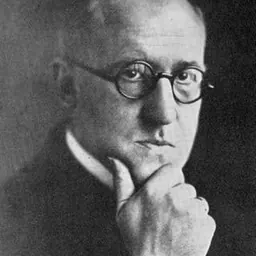

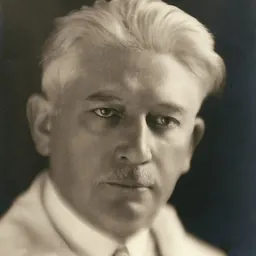
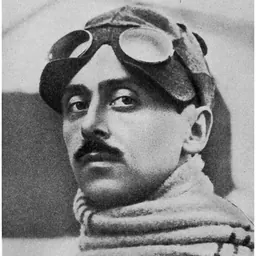
Contemporaries
People whose lives overlapped Harold Saxton Burr's
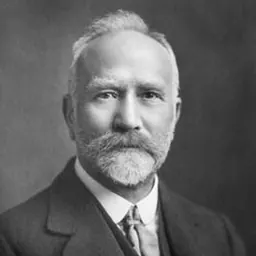




Frequently asked questions
Who was Harold Saxton Burr?
American medical researcher and painter (1889-1973)
When was Harold Saxton Burr born?
Harold Saxton Burr was born on 18 April 1889 in Lowell.
When did Harold Saxton Burr die?
Harold Saxton Burr died on 17 February 1973.
What was Harold Saxton Burr's occupation?
Harold Saxton Burr was a neuroscientist, university teacher and artist.
What nationality was Harold Saxton Burr?
Harold Saxton Burr was American.
Sources & further reading
· Wikipedia: Harold Saxton Burr
Cite this page
APA: Biography.guide. (2026). Harold Saxton Burr. https://biography.guide/harold-saxton-burr/
MLA: "Harold Saxton Burr." Biography.guide, https://biography.guide/harold-saxton-burr/.
Chicago: "Harold Saxton Burr." Biography.guide. https://biography.guide/harold-saxton-burr/.
Data last updated: 2026-09-22 · Spot an error? Report a correction.
Page generated 2026-09-27 05:27 UTC