
About Harold Rawdon Briggs
Lived 1894 – 1952 (aged 58). Harold Rawdon Briggs was a British military personnel.
Lieutenant-General Sir Harold Rawdon Briggs, (24 July 1894 – 27 October 1952) was a senior British Indian Army officer, active during the First World War, Second World War and the Malayan Emergency.
Briggs was highly regarded by his superiors, among them being Field Marshal Sir William Slim, who is perhaps most famous as being the commander of the British Fourteenth Army during the Burma campaign. Of Briggs, who commanded the 5th Indian Infantry Division during the campaign, Slim wrote: "I know of few commanders who made as many immediate and critical decisions on every step of the ladder of promotion, and I know of none who made so few mistakes".
Early life and military career Born in Pipestone, Minnesota, to English parents who returned to England a few years after his birth, Briggs was an American citizen until receiving British naturalisation papers in 1914. Educated at Bedford School, he then became a cadet at the Royal Military College, Sandhurst. In 1915, several months after the British entry into the First World War, and after an initial appointment to the British Indian Army was cancelled, he was commissioned into the King's Regiment (Liverpool) of the British Army and fought with the regiment in France.
In 1916, Briggs transferred to the Indian Army, joining the 31st Punjabis (which in 1922 became the 2nd Battalion, 16th Punjab Regiment), fighting in Mesopotamia and later in Palestine. In September 1917 he was appointed to command one of the 31st Punjabi's companies in the rank of acting captain, and was attached to the 152nd Punjabis in May 1918 in the same role.
In 1924, Briggs transferred to the 1st Battalion, 10th Baluch Regiment with which he saw two periods of action in the North-West Frontier of India in the 1930s. After attending the Staff College, Quetta from 1927 to 1928, Briggs was promoted to major in August 1932 (having been made a brevet-major in January ) and then lieutenant colonel in September 1937 when given command of the 2nd Battalion, 10th Baluch Regiment (now the 7th Battalion, Baloch Regiment).
Western Desert The brigade was shipped to join Indian 4th Infantry Division, which was forming in Egypt to face the Italian threat from Libya. The brigade was not involved in the fighting during Operation Compass but in December 1940 was detached from the division and sent to Port Sudan near the border with northern Eritrea while the rest of the division (plus one battalion of 7th Brigade) was sent to join Indian 5th Infantry Division on Eritrea's western border with Sudan.
East Africa During the East African Campaign, Briggs commanded Briggsforce – a brigade group composed of two battalions from the 7th Indian Infantry Brigade, one Senegalese battalion officered by Free French officers and a French Foreign Legion battalion from Chad together with a battery of field artillery and a company of engineers. Operating independently from the main force, Briggsforce advanced from Sudan and, under the direct orders of Lieutenant General William Platt, entered Eritrea from the north through the border town of Karura. The force then continued southwards and fought its way to the defences of Keren.
During the Battle of Keren in March 1941, Briggsforce drew off a significant part of the Italian garrison of Keren even though it lacked the artillery for a major offensive action itself. The attacks by Briggsforce aided Platt's main offensive from the west. Briggs also posed a threat to Massawa, Eritrea's main port, on the coast to the east. This obliged the Italians to maintain reserves on the coast which could have been better employed at Keren.
Following Keren's capture, Briggsforce cut across country to play a significant role in the capture of Massawa on 9 April. For his actions in East Africa, Briggs was awarded his first Distinguished Service Order (DSO) on 30 December 1941.
Persia In the autumn of 1942 5th Indian Division was sent to Persia to form part of XXI Corps within the Tenth Army. The Tenth Army was in place to defend against the threat of a German breakthrough in the Caucasus. The Soviet victory at the Battle of Stalingrad, however, made this only a very remote possibility and so Briggs, together with his division, was sent in June 1943 to India to join Indian XV Corps then commanded by William Slim, who was shortly to be promoted to command the Fourteenth Army. Briggs was mentioned in despatches in August 1943 for his service in Persia-Iraq.
Burma campaign In early 1944 Briggs was with Indian 5th Infantry Division in the Arakan in Burma. XV Corps' offensive in January was held by the Japanese who went on the offensive in February, attempting to cut off 5th and 7th Indian Infantry Divisions. Briggs' 9 Indian Brigade, cut off but supplied by air, held off the Japanese during the Battle of the Admin Box and the two divisions were able to turn the tables on the Japanese and with the help of Indian 26th Infantry Division and British 36th Infantry Division to the north, inflict a heavy defeat on the Japanese.
In March 1944 the bulk of Briggs' division was airlifted north to Imphal while 161st Indian Brigade was sent to Kohima to become heavily involved in the Battle of Kohima. At Imphal the division was heavily involved in fighting from the end of March until late June when it made contact with British 2nd Infantry Division advancing from Kohima. Following this Briggs was rested and posted to administrative jobs in India, having been awarded a second bar to his DSO in May 1944. He was mentioned in despatches in April 1945 and appointed as a Commander of the Order of the British Empire in May 1945 for services in Burma.
Having commanded a division since May 1942 as an acting major general, Briggs was only promoted substantive major general in July 1945, after he had relinquished command. Unusually, he never held the substantive rank of brigadier, being promoted from colonel directly to major general.
Post War and retirement He was appointed lieutenant-general in 1946 when he became Commander in Chief, Burma Command. He was made a Companion of the Order of the Bath in June 1946. He retired in January 1948 to live in Cyprus having been made Knight Commander of the Order of the Indian Empire in August 1948. Although only a substantive major general on retirement, he was given the honorary rank of lieutenant general in July 1948.
Malaya In 1950, Briggs was recalled to active duty by Slim, who was by that time Chief of the Imperial General Staff (CIGS), to become Director of Operations in Malaya where the Malayan Emergency was in progress. The implementation of the Briggs Plan is considered an important factor in the authorities' victory over the Malayan Communist Party rebels. The Briggs Plan called for the creation of a type of internment camps known as a New village and for many of these villages to hold populations of largely ethnic Malaysian Chinese villagers against their will. This was done with the intention of cutting off contact between the civilian population and the communist guerrillas who lived in rural areas of Malaya. He was advanced to Knight Commander of the British Empire in the 1952 New Year Honours.
In 1951, Briggs once again retired to Cyprus but, his health destroyed by his period in Malaya, he died in 1952. The role of Director of Operations in Malaya was assumed by Sir Gerald Templer who oversaw the successful implementation of Briggs' plan.
Summary of military career Commissioned into Kings (Liverpool) Regiment, France – 1915 Transferred to 31st Punjabis, Mesopotamia – 1916 Transferred to 1st Battalion, 10th Baluch Regiment – 1923 Commanding Officer 2nd Battalion, 10th Baluch Regiment – 1937 to 1940 Commander 7th (Poona) Brigade, 4th Indian Infantry Division, North Africa, East Africa – 1940 to 1942 GOC 5th Indian Infantry Division, North Africa, Iraq, Burma – 1942 to 1944 GOC-in-C Burma Command – 1946 to 1948 Director of Operations, Malaya – 1950 to 1951
Don’t just read it —
keep it.
Full-length biographies made to live with: read them, listen on the way to work, watch them tonight.
- E-book
- Audio
- Video
Instant download · yours to keep · every purchase keeps this site free
Important facts
People in Harold Rawdon Briggs's life
Named in this biography and alive at the same time

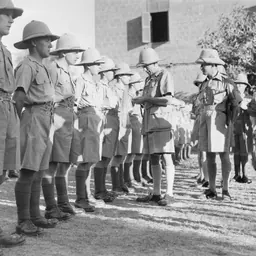

Related people
Same field, nearest in time
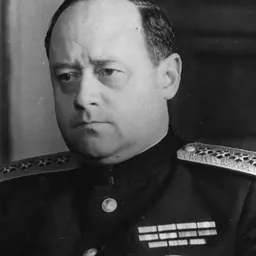




Contemporaries
People whose lives overlapped Harold Rawdon Briggs's

Frequently asked questions
Who was Harold Rawdon Briggs?
British Army general (1894–1952)
When was Harold Rawdon Briggs born?
Harold Rawdon Briggs was born on 24 July 1894 in Pipestone.
When did Harold Rawdon Briggs die?
Harold Rawdon Briggs died on 27 October 1952 in Limassol.
What was Harold Rawdon Briggs's occupation?
Harold Rawdon Briggs was a military personnel.
What nationality was Harold Rawdon Briggs?
Harold Rawdon Briggs was British.
Sources & further reading
· Wikipedia: Harold Rawdon Briggs
· DBpedia: Harold Rawdon Briggs
Cite this page
APA: Biography.guide. (2026). Harold Rawdon Briggs. https://biography.guide/harold-rawdon-briggs/
MLA: "Harold Rawdon Briggs." Biography.guide, https://biography.guide/harold-rawdon-briggs/.
Chicago: "Harold Rawdon Briggs." Biography.guide. https://biography.guide/harold-rawdon-briggs/.
Data last updated: 2026-09-20 · Spot an error? Report a correction.
Page generated 2026-09-27 05:04 UTC