
About Harold Ramis
Lived 1944 – 2014 (aged 69). Harold Ramis was an American comedian, film director, writer, screenwriter, television actor and film actor.
Harold Allen Ramis ( ; November 21, 1944 – February 24, 2014) was an American actor, comedian, and filmmaker. His film acting roles include Egon Spengler in Ghostbusters and Ghostbusters II (1989), and as Russell Ziskey in Stripes (1981); he also co-wrote those films. As a director, his films include the comedies Caddyshack (1980), National Lampoon's Vacation (1983), Groundhog Day (1993), Analyze This (1999) and Analyze That (2002). Ramis was the original head writer of the television series SCTV, on which he also performed, as well as a co-writer of Groundhog Day and National Lampoon's Animal House (1978). The final film that he wrote, produced, directed, and acted in was Year One (2009).
Ramis's films influenced subsequent generations of comedians, comedy writers and actors.
Early life Ramis was born on November 21, 1944, in Chicago, Illinois, the son of Ruth (née Cokee) (1919–2001) and Nathan Ramis (1915–2009), who owned the Ace Food & Liquor Mart on the city's West Side. which continued to shape his identity and comedic sensibilities into adulthood. He graduated from Stephen K. Hayt Elementary School in June 1958 and Nicholas Senn High School in 1962, both Chicago public schools, and in 1966 from Washington University in St. Louis, Missouri, where he studied English literature and was a member of the Alpha Xi chapter of Zeta Beta Tau fraternity.
Afterward, Ramis worked in a mental institution in St. Louis for seven months. He later said of his time working there that it:
…prepared me well for when I went out to Hollywood to work with actors. People laugh when I say that, but it was actually very good training. And not just with actors; it was good training for just living in the world. It's knowing how to deal with people who might be reacting in a way that's connected to anxiety or grief or fear or rage. As a director, you're dealing with that constantly with actors. But if I were a businessman, I'd probably be applying those same principles to that line of work.
Following his work in St. Louis, Ramis returned to Chicago, where by 1968, he was a substitute teacher at schools serving the inner-city Robert Taylor Homes public housing development. He also became associated with the guerrilla television collective TVTV, headed by his college friend Michael Shamberg, and wrote freelance for the Chicago Daily News. "Michael Shamberg, right out of college, had started freelancing for newspapers and got on as a stringer for a local paper, and I thought, 'Well, if Michael can do that, I can do that.' I wrote a spec piece and submitted it to the Chicago Daily News, the Arts & Leisure section, and they started giving me assignments [for] entertainment features." Additionally, Ramis had begun studying and performing with Chicago's Second City improvisational comedy troupe.
Ramis's newspaper writing led to him becoming joke editor at Playboy magazine.
National Lampoon, SCTV, and The Top After leaving Second City for a time and returning in 1972, having been replaced in the main cast by John Belushi, Ramis worked his way back as Belushi's deadpan foil. In 1974, Belushi brought Ramis and other Second City performers, including Ramis's frequent future collaborator Bill Murray, to New York City to work on The National Lampoon Radio Hour. Later, Ramis became a performer on, and head writer of, the Canadian sketch-comedy television series SCTV during its first three years (1976–1979). At this juncture, SCTV was seen mainly in Canada, and also via syndication in scattered markets in the US. He was soon offered work as a writer at Saturday Night Live but chose to continue with SCTV. In 1984, Ramis collaborated with Dan Aykroyd on the screenplay for Ghostbusters, which became one of the biggest comedy hits of all time, in which he also starred as Dr. Egon Spengler. He reprised the role for the 1989 sequel, Ghostbusters II (which he also co-wrote with Aykroyd). His later film Groundhog Day has been called his "masterpiece".
His films have been noted for attacking "the smugness of institutional life…with an impish good [will] that is unmistakably American." They are also noted for "Ramis's signature tongue-in-cheek pep talks." Sloppiness and improv were also important aspects of his work. Ramis frequently depicted the qualities of "anger, curiosity, laziness, and woolly idealism" in "a hyper-articulate voice".
In 2004, Ramis turned down the opportunity to direct the Bernie Mac-Ashton Kutcher film Guess Who, then under the working title "The Dinner Party", because he considered it poorly written. That same year, he began filming the low-budget The Ice Harvest, "his first attempt to make a comic film noir." Ramis spent six weeks trying to get the film greenlit because he had difficulty reaching an agreement about stars John Cusack's and Billy Bob Thornton's salaries. The film received mixed reviews. In 2004, Ramis's typical directing fee was $5 million. but that none of the film studios were interested and that it would have been difficult to raise the funding.
Despite some hesitation about making sequels, Ramis consistently said that he was open to making a third Ghostbusters film, as long as the script was strong enough to honor the franchise. In 2009, he said that a third film was set for release either in mid-2011 or for Christmas 2012. A reboot to the franchise, also called Ghostbusters, was eventually made and released in 2016, directed and co-written by Paul Feig. In this film, a bronze bust of Ramis can be seen when Erin Gilbert leaves her office at Columbia University. Later, the second sequel to the original film, Ghostbusters: Afterlife, was released in 2021 and posthumously dedicated to him.
Personal life Ramis was married twice and had four children. On July 2, 1967, Actor and Ghostbusters co-star Bill Murray is her godfather.
In 1989, Ramis married Erica Mann, daughter of director Daniel Mann and actress Mary Kathleen Williams. Together they had two sons. Erica's Buddhist upbringing greatly influenced his philosophies, and he carried a pocket-sized primer on Buddhism and spent time with the Dalai Lama.
Ramis was a Chicago Cubs fan, and when he moved back from Los Angeles to Chicago in the late 1990s, he would attend games at Wrigley Field, sometimes taking part of the seventh-inning stretch of "Take Me Out to the Ball Game". His pastimes included fencing, ritual drumming, acoustic guitar, and making hats from felted fleece; additionally, he taught himself to ski by watching skiers on television. Ramis died on February 24, 2014, at his home on Chicago's North Shore, at age 69. A private funeral was held for him two days later with family, friends, and several collaborators in attendance, including Dan Aykroyd, Chevy Chase, Eugene Levy, Dave Thomas, David Pasquesi, Andrew Alexander, and the widows of John Belushi and Bernard Sahlins. He is buried at Shalom Memorial Park in Arlington Heights.
Upon Ramis's death, then-President Barack Obama released a statement, saying, "When we watched his movies—from Animal House and Caddyshack to Ghostbusters and Groundhog Day—we didn't just laugh until it hurt. We questioned authority. We identified with the outsider. We rooted for the underdog. And through it all, we never lost our faith in happy endings." He ended his statement by saying he hoped Ramis "received total consciousness", in reference to a line from Caddyshack.
Ramis and longtime collaborator Bill Murray had a falling out during the filming of Groundhog Day, which Ramis attributed to problems that Murray had in his own life at the time, plus creative differences between the two about the overall direction and mood of the film. Afterwards, they did not speak for more than 20 years, nor did they ever collaborate in any films. Shortly before Ramis's death, Murray, encouraged by his brother Brian Doyle-Murray, visited him to make amends with a box of doughnuts and a police escort, according to Ramis's daughter Violet. At that point, Ramis had lost most of his ability to speak, so Murray did most of the talking over several hours, as the two finally made peace. Murray gave a tribute to Ramis at the 86th Academy Awards.
Stephen Colbert paid tribute to Ramis on an episode of his show The Colbert Report. Colbert said: "as a young, bookish man with glasses looking for a role model, I might have picked Harold Ramis". He ended the show by thanking him.
Awards and honors In 2004, Ramis was inducted into the St. Louis Walk of Fame. In 2005, he received the Austin Film Festival's Distinguished Screenwriter Award. In 2010, he received a lifetime achievement award from the Chicago Improv Festival. In 2015, the Writers Guild of America posthumously honored him with their lifetime achievement award, the Laurel Award for Screenwriting Achievement.
In 2016, two years after his death, The Second City founded the Harold Ramis Film School, the first film school to focus solely on film comedy, in his honor.
The 2016 film Ghostbusters, a reboot of the series Ramis co-created and starred in, was posthumously dedicated to him. A bust of Ramis appears in the film. In the 2021 movie Ghostbusters: Afterlife, the age-progressed image of Ramis appears as the ghost of Egon Spengler; a dedication before the end credits also reads "for Harold."
On February 2, 2024, Chicago declared every February 2 going forward to be "Harold Ramis Day".
Collaborations Ramis frequently collaborated with director Ivan Reitman. He co-wrote National Lampoon's Animal House, which Reitman produced, then co-wrote the Reitman comedy Meatballs; he co-wrote and appeared in the Reitman films Stripes, Ghostbusters and Ghostbusters II.
Filmography Film Year Title Director Writer Producer 1978 National Lampoon's Animal House 1979 Meatballs 1980 Caddyshack 1981 Stripes 1983 National Lampoon's Vacation 1984 Ghostbusters 1986 Back to School Armed and Dangerous Club Paradise 1988 Caddyshack II 1989 Ghostbusters II 1991 Rover Dangerfield 1993 Groundhog Day 1995 Stuart Saves His Family 1996 Multiplicity 1999 Analyze This 2000 Bedazzled 2002 Analyze That 2005 The Ice Harvest 2009 Year One
Executive producer The First $20 Million Is Always the Hardest (2002) I Want Someone to Eat Cheese With (2006) Archie's Final Project (2009)
Television Year Title Director Writer Notes 1979 Delta House Pilot episode 1982 The Rodney Dangerfield Show: It's Not Easy Bein' Me 2006–2010 The Office 4 episodes
Acting roles
Video games Year Title Voice role Notes 2009 Ghostbusters: The Video Game Dr. Egon Spengler Also writer
Archival appearances Year Title Role Notes 2015 Lego Dimensions Dr. Egon Spengler Voice role 2019 Ghostbusters: The Video Game RemasteredCleanin' Up the Town: Remembering GhostbustersHimselfDocumentary film 2021 Ghostbusters: Afterlife Dr. Egon SpenglerDigital likeness superimposed on Bob Gunton and Ivan Reitman, Also archival footage and photographs 2024 Ghostbusters: Frozen EmpireArchival footage and photographs
Don’t just read it —
keep it.
Full-length biographies made to live with: read them, listen on the way to work, watch them tonight.
- E-book
- Audio
- Video
Instant download · yours to keep · every purchase keeps this site free
Important facts
People in Harold Ramis's life
Named in this biography and alive at the same time

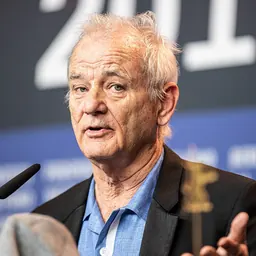

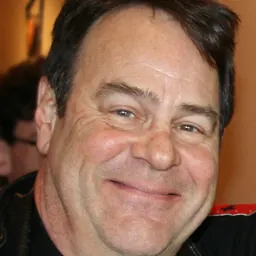

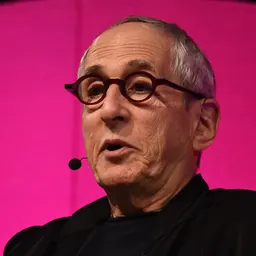
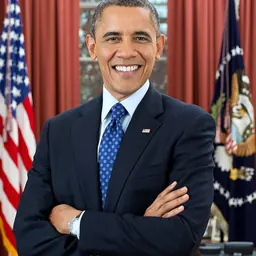
Related people
Same field, nearest in time



Contemporaries
People whose lives overlapped Harold Ramis's



Frequently asked questions
Who was Harold Ramis?
American actor, comedian, and filmmaker (1944–2014)
When was Harold Ramis born?
Harold Ramis was born on 21 November 1944 in Chicago.
When did Harold Ramis die?
Harold Ramis died on 24 February 2014 in Chicago.
What was Harold Ramis's occupation?
Harold Ramis was a comedian, film director, writer, screenwriter, television actor and film actor.
What nationality was Harold Ramis?
Harold Ramis was American.
Sources & further reading
Cite this page
APA: Biography.guide. (2026). Harold Ramis. https://biography.guide/harold-ramis/
MLA: "Harold Ramis." Biography.guide, https://biography.guide/harold-ramis/.
Chicago: "Harold Ramis." Biography.guide. https://biography.guide/harold-ramis/.
Data last updated: 2026-09-20 · Spot an error? Report a correction.
Page generated 2026-09-27 05:18 UTC