
About Harold Darke
Lived 1888 – 1976 (aged 88). Harold Darke was a British composer, organist and choir director.
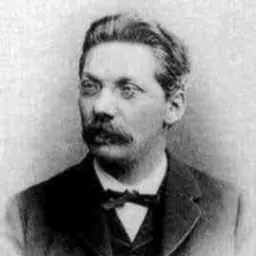
Harold Edwin Darke (29 October 1888 – 28 November 1976) was an English composer and organist. He is particularly known for his choral compositions, which are an established part of the repertoire of Anglican church music. Darke had a fifty-year association with the church of St Michael, Cornhill, in the City of London.
Life before Cornhill Darke was born in Highbury, north London, the youngest son of Samuel Darke and Arundel Bourne. He attended Dame Alice Owen's School in Islington.
In 1903 he gained a scholarship to the Royal College of Music where his teachers were Frank Bridge, Walter Parratt, Hubert Parry, Charles Villiers Stanford, Charles Wood, and Herbert Sharpe.
His first organist post came in 1904 at the Stoke Newington Presbyterian Church. From 1906 to 1911 he was the organist at Emmanuel Church, West Hampstead. He became a Fellow of the Royal College of Organists (FRCO) in 1907. Between 1911 and 1916 he was the organist at St James's Church, Paddington.
He served in the Royal Air Force during World War I. He married Dora Garland, at St Michaels Church, Cornhill, on 25 July 1918. Dora was a violinist and was the first woman to lead the Queen's Hall Orchestra. except for a brief war-time interregnum in 1941 to deputise for Boris Ord as Director of Music at King's College, Cambridge.
It is widely accepted that the Cornhill Lunchtime Organ Recitals series begun by Darke in 1916 is the longest-running lunchtime organ concert series in the world. His midday recitals each Monday, playing Bach in the legato style of Schweitzer, made him a City institution. The series has flourished under his successors Richard Popplewell 1966–1979 and the present organist, Jonathan Rennert, from 1979. Darke also served as organ professor at the Royal College of Music from 1919 to 1969. Hierusalem by George Dyson, and A Vision of Aeroplanes by Ralph Vaughan Williams.
Life after Cornhill Darke continued to be active in his later years. He recorded Elgar's Organ Sonata in his early 70s and gave recitals at the Royal Festival Hall to mark his 75th, 80th and 85th birthdays.
Compositions
His 1909 setting of Christina Rossetti's "In the Bleak Midwinter" is often sung at the service of Nine Lessons and Carols at King's College, Cambridge, and at similar services around the world.
In a poll of choral experts and choirmasters that was published in BBC Music Magazine on 7 December 2008, "In the Bleak Midwinter" was voted the greatest Christmas carol of all time. Comparing Darke's setting to another popular setting by Gustav Holst, Deputy Editor Jeremy Pound expressed the view that "While Gustav Holst's charming setting of 1909 is rightly loved by millions worldwide, it is the less well known but infinitely more stylish setting by Harold Darke from two years later that convincingly won the day in our poll." Together with ‘Cradle Hymn’ and ‘A Christmas Carmen’, it is dedicated to Margaret Agnes Calkin.
Most of Darke's other compositions that are still performed are settings of the Anglican liturgy, especially his three Communion Services in E minor, F, and A minor; and his Magnificat and Nunc Dimittis in F. The short cantata As the Leaves Fall, (1917), setting words by the soldier poet Joseph Courtney (1891-1973), has been recorded by the Guildford Cathedral Choir, along with a later cantata, The Kingdom of God (1921), setting Francis Thompson.
Organ Suite in D minor: Prelude, Pastorale, Toccata Prelude and Fugue on "Heinlein" Rhapsody in E, Op. 4 Prelude on "Windsor" Prelude in Memory of Parry Three Hymn Preludes, Op. 20: St. Peter, Darwall's 148th, On a Theme of Tallis Fantasy in E, Op. 39 Meditation on Brother James' Air Retrospection Bridal Procession
Choir As the Leaves Fall, Op. 26 (1917), soprano solo, SATB choir and orchestra Be strong and of good courage (1964) O gladsome light, Op. 38 No 2 (1929) Psalm 10 Te Deum for chorus & organ in F major
Don’t just read it —
keep it.
Full-length biographies made to live with: read them, listen on the way to work, watch them tonight.
- E-book
- Audio
- Video
Instant download · yours to keep · every purchase keeps this site free
Important facts
People in Harold Darke's life
Named in this biography and alive at the same time

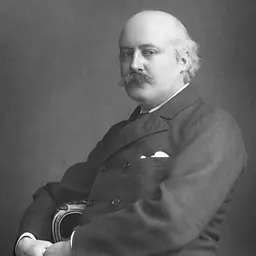
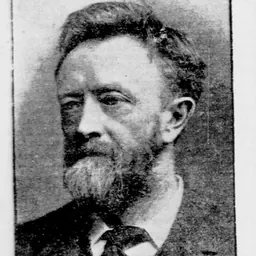
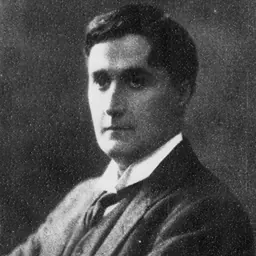
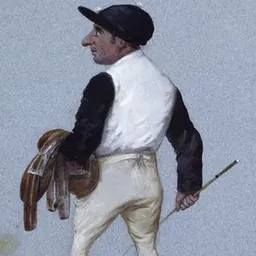

Related people
Same field, nearest in time


Contemporaries
People whose lives overlapped Harold Darke's



Frequently asked questions
Who was Harold Darke?
English composer and organist (1888–1976)
When was Harold Darke born?
Harold Darke was born on 29 October 1888 in London Borough of Islington.
When did Harold Darke die?
Harold Darke died on 28 November 1976 in Cambridge.
What was Harold Darke's occupation?
Harold Darke was a composer, organist and choir director.
What nationality was Harold Darke?
Harold Darke was British.
Sources & further reading
Cite this page
APA: Biography.guide. (2026). Harold Darke. https://biography.guide/harold-darke/
MLA: "Harold Darke." Biography.guide, https://biography.guide/harold-darke/.
Chicago: "Harold Darke." Biography.guide. https://biography.guide/harold-darke/.
Data last updated: 2026-09-20 · Spot an error? Report a correction.
Page generated 2026-09-27 05:18 UTC