
About Harmon Craig
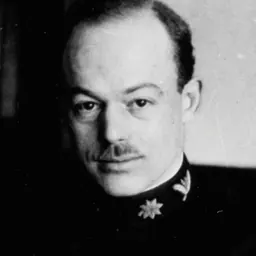
Lived 1926 – 2003 (aged 76). Harmon Craig was an American chemist, climatologist and geochemist, known for Geochemistry.
Harmon Craig (March 15, 1926 – March 14, 2003) was an American geochemist who worked briefly for the University of Chicago (1951-1955) before spending the majority of his career at Scripps Institution of Oceanography (1955-2003).
Craig was involved in numerous research expeditions, which visited the Great Rift Valley of East Africa,
Craig made many significant discoveries in geochemistry. He is credited with establishing the field of carbon isotope geochemistry by characterizing carbon's stable isotopic signatures in various natural materials. In addition, from 1969 to 1989, Harmon Craig served as an editor for Earth and Planetary Science Letters.
Family and early life Harmon Craig was born in Manhattan, in New York City, He was named after his uncle, Harmon Bushnell Craig (1895–1917), but does not use his middle name. John Craig, Jr. received a French Croix de Guerre
In November 1924, John Craig, Jr. married Virginia Stanley of Wichita, Kansas. They had three children.
Harmon Craig's mother, Virginia Stanley, was descended from Quakers who helped found schools for freed slaves. His mother's involvement with the Quakers was a strong influence on Harmon Craig. Craig credits Urey with giving him valuable advice on how to choose scientific problems: "If you go into a project, it's got to be a scientific problem that has rooms that continue into other rooms." Craig's thesis intended to determine the temperature of ancient seas. Craig used the carbon dioxide released from calcium carbonate fossils as a basis for future research involving the carbon system. The masses of carbon dioxide that are produced by 18O and 16O were used to calculate respective masses. Craig's study of carbon isotopes produced corrections that address mass fractionation and radiocarbon ages. Craig's thesis work is considered a foundational accomplishment for its studies of 13C and 12C in a wide range of natural materials, including everything from ocean water to the atmosphere; volcanic gases; plants, coal, diamonds, and petroleum; sediments, igneous rocks and meteorites. It led to a better understanding of the materials and processes involved in forming planets.
Scripps Institution of Oceanography In 1955, Harmon Craig was recruited to Scripps Institution of Oceanography by Roger Revelle. As a professor of geochemistry and oceanography at Scripps, Craig developed new methods in radiocarbon dating and applied radioisotopes and isotope distributions to various topics in marine-, geo-, and cosmochemistry. Craig produced fundamental findings about how the deep earth, oceans and atmosphere work. Craig also established the oxygen isotope shift in geothermal and volcanic fluids, demonstrating that the water is meteoric. His discovery outlined the relation between rocks and water in geothermal systems. The work he presented with Louis I. Gordon on isotopic fractionation of the phase changes in water is known as the Craig-Gordon Model. It has been called "a cornerstone of isotope geochemistry."
During the Nova Expedition of 1967, Craig and colleagues W. Brian Clarke (1937–2002) and M.A. Beg from McMaster University in Canada observed the Kermadec Trench in the Pacific Ocean. They found unexpectedly high proportions of the helium-3 isotope in the ocean waters. Craig concluded that the isotope was present within the Earth's mantle and theorized that it was leaking into sea water through cracks in the sea floor.
Craig and coworkers studied the isotopic composition of atmospheric and dissolved oxygen in the composition of dissolved gases, where he discovered the biochemical oxygen demand and the intake in the ocean mixed layer. Craig determined by measuring that the element, 210Pb is rapidly scavenged by sinking particulate matter.
In 1970, Craig teamed up with colleagues at Scripps, Columbia University's Lamont–Doherty Earth Observatory and the Woods Hole Oceanographic Institution to direct the GEOSECS Programme (geochemical ocean sections study) to investigate the chemical and isotopic properties of the world's oceans.
During the 1970s, Craig examined the relationship of gases such as radon and helium to earthquake prediction, developing a monitoring network at thermal springs and wells near major fault lines in southernmost California. In 1979, he detected an increase in radon and helium as a precursor to an earthquake near Big Bear Lake, California.
Craig discovered submarine hydrothermal vents by measuring helium 3 and radon emitted from seafloor spreading centers. He made 17 dives to the bottom of the ocean in the ALVIN submersible, including the first descent into the Mariana Trough. There he discovered hydrothermal vents nearly 3700 m deep.
Craig led 28 oceanographic expeditions and travelled to the East African Rift Valley, the Dead Sea, Tibet, Yunnan (China) and many other places to sample volcanic rocks and gases. He visited all the major volcanic island chains of the Pacific Ocean and Indian Ocean to collect lava samples. He identified 16 mantle hotspots where volcanic plumes rise from the Earth's outer core through the deep mantle by measuring their helium 3 to helium 4 ratio, identifying the higher helium 3 content present in the hotspots as primordial helium, trapped in the Earth's core when it was first formed. Craig reported that the methane in the atmosphere had increased twice due to human day-to-day activities in the last 300 years.
Awards and honors Craig was elected to the National Academy of Sciences in 1979. Craig won the VM Goldschmidt Medal of the Geochemical Society in 1979, the National Science Foundation's Special Creativity Award in Oceanography in 1982 and the Arthur L. Day Prize and Lectureship of the National Academy of Sciences in 1987. He shared the Vetlesen Prize with Wallace S. Broecker in 1987.
In 1998, he was awarded the Balzan Prize for Geochemistry, from the International Balzan Foundation of Milan, Italy. The Foundation commended him as "a pioneer in earth sciences who uses the varied tools of isotope geochemistry to solve problems of fundamental scientific importance and immediate relevance in the atmosphere, hydrosphere and solid earth." a day before his seventy-seventh birthday.
Don’t just read it —
keep it.
Full-length biographies made to live with: read them, listen on the way to work, watch them tonight.
- E-book
- Audio
- Video
Instant download · yours to keep · every purchase keeps this site free
Important facts
People in Harmon Craig's life
Named in this biography and alive at the same time




Related people
Same field, nearest in time



Contemporaries
People whose lives overlapped Harmon Craig's


Frequently asked questions
Who was Harmon Craig?
American chemist (1926-2003)
When was Harmon Craig born?
Harmon Craig was born on 15 March 1926 in New York City.
When did Harmon Craig die?
Harmon Craig died on 14 March 2003 in La Jolla.
What was Harmon Craig's occupation?
Harmon Craig was a chemist, climatologist and geochemist.
What was Harmon Craig known for?
Harmon Craig was known for Geochemistry.
What nationality was Harmon Craig?
Harmon Craig was American.
Sources & further reading
Cite this page
APA: Biography.guide. (2026). Harmon Craig. https://biography.guide/harmon-craig/
MLA: "Harmon Craig." Biography.guide, https://biography.guide/harmon-craig/.
Chicago: "Harmon Craig." Biography.guide. https://biography.guide/harmon-craig/.
Data last updated: 2026-09-20 · Spot an error? Report a correction.
Page generated 2026-09-27 05:33 UTC