
About Harlow S. Orton
Lived 1817 – 1895 (aged 77). Harlow S. Orton was an American lawyer, politician and judge.
Harlow South Orton (November 23, 1817 – July 4, 1895) was an American lawyer and judge. He was the 8th Chief Justice of the Wisconsin Supreme Court and served on the court from 1878 until his death. He is chiefly remembered as the author of the Wisconsin Supreme Court opinion Vosburg v. Putney, an important torts case in establishing the scope of liability from battery. Earlier in his career, he served three non-consecutive terms in the Wisconsin State Assembly, representing Madison and central Dane County.
Background Orton was born in Niagara County, New York, on November 23, 1817, and was educated at the Hamilton Academy and then at Madison University (which later changed its name to Colgate University).
Orton's father was a physician who had been one of the early pioneer settlers of a region of Niagara County, New York that had been part of the Holland Purchase.
In 1837, Orton moved to Kentucky, where he spent a year as a school teacher, before joining his brother Myron, who was a lawyer, in Indiana. Harlow Orton was called to the bar in 1838. Orton practiced law for five years. In 1843, Indiana Governor Samuel Bigger (a Whig) appointed Orton circuit judge for Porter County, Indiana.
Orton served as an Indiana judge for four years. In 1847, he moved to Milwaukee, in the Wisconsin Territory, and again established himself as a private lawyer. In 1852, Orton moved to Madison, Wisconsin, to serve as legal counsel and private secretary for Whig Governor of Wisconsin Leonard J. Farwell.
Orton's brothers John Jay Orton and Myron Orton similarly relocated to Wisconsin.
U.W. Law School and elected offices Orton served as dean of the University of Wisconsin Law School from 1869 to 1874. He was elected a final time to the Assembly in 1870, this time unopposed, as one of several "people's" candidates; he described himself as "a conservative democrat, or democratic-whig, or independent, [who] believes in a strong government of the people". (Democratic incumbent Alden Sanborn was not running for re-election.) He was succeeded in 1871 (the Assembly having been redistricted in the meantime) by Democrat John D. Gurnee. Orton ran for Congress in 1876 as a Democrat, against Republican incumbent Lucien B. Caswell, but lost by 348 votes (0.55% of the vote); and served one term as mayor of Madison in 1877.
Supreme Court In 1877, Wisconsin amended its constitution to create two additional seats on the Supreme Court, and Orton was elected. Orton became the chief justice when Chief Justice William Lyon retired in 1894.
Orton served on the Supreme Court until he died on July 4, 1895. He and his wife, Elizabeth Cheney, had four children.
Don’t just read it —
keep it.
Full-length biographies made to live with: read them, listen on the way to work, watch them tonight.
- E-book
- Audio
- Video
Instant download · yours to keep · every purchase keeps this site free
Important facts
People in Harlow S. Orton's life
Named in this biography and alive at the same time

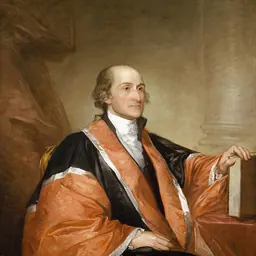
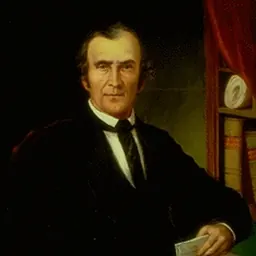

Related people
Same field, nearest in time


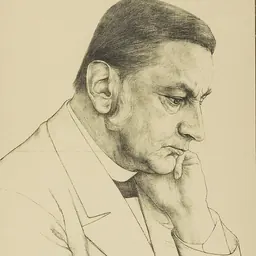


Contemporaries
People whose lives overlapped Harlow S. Orton's


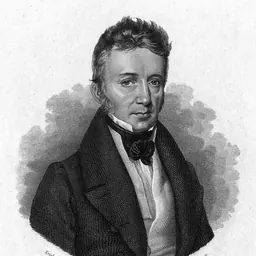
Frequently asked questions
Who was Harlow S. Orton?
American politician (1817–1895)
When was Harlow S. Orton born?
Harlow S. Orton was born on 23 November 1817 in Niagara County.
When did Harlow S. Orton die?
Harlow S. Orton died on 4 July 1895 in Dane County, Wisconsin.
What was Harlow S. Orton's occupation?
Harlow S. Orton was a lawyer, politician and judge.
What nationality was Harlow S. Orton?
Harlow S. Orton was American.
Sources & further reading
Cite this page
APA: Biography.guide. (2026). Harlow S. Orton. https://biography.guide/harlow-s-orton/
MLA: "Harlow S. Orton." Biography.guide, https://biography.guide/harlow-s-orton/.
Chicago: "Harlow S. Orton." Biography.guide. https://biography.guide/harlow-s-orton/.
Data last updated: 2026-09-20 · Spot an error? Report a correction.
Page generated 2026-09-27 05:30 UTC