
About Harland Bartholomew
Lived 1889 – 1989 (aged 100). Harland Bartholomew was an American urban planner.
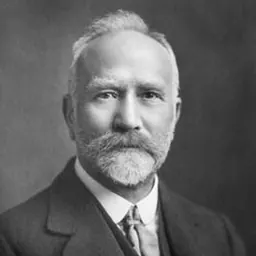
Harland Bartholomew (September 14, 1889 – December 2, 1989) was the first full-time urban planner employed by an American city. A civil engineer by training, Harland was a planner with St. Louis, Missouri, for 37 years.
Career In 1914, the Newark, New Jersey plan commission retained Bartholomew as the first full-time, public-sector city planner in the U.S. The following year, prominent civic reform advocate Luther Ely Smith, on the advice of the architect Henry Wright, recruited Bartholomew to serve as the first planner of St. Louis, Missouri. In 1917, Bartholomew was a founding member of the American City Planning Institute and headed one of the largest planning consulting firms in the United States. In 1919, he established Harland Bartholomew and Associates; he served as its chairman until his retirement in 1962. His career was noted particularly by the Eisenhower administration for his work on the Washington Metro, as chairman of the National Capital Planning Commission, and as a leading advocate of society-first planning for freeways.
Many of Bartholomew's views are discredited today. For example, he pioneered urban renewal through eminent domain in 1938 to clear the St. Louis Waterfront for the Gateway Arch National Park, then known as the Jefferson National Expansion Memorial. He advanced the concept of identifying "obsolete neighborhoods" through cost accounting (amount of taxes garnered versus city services expended), and was a major advocate for functional single-use zoning and for automobile-oriented planning. Bartholomew also drew upon racially-inequitable metaphors in the 1947 St. Louis city plan to spur residents to accept the necessity of his planning recommendations. His exclusionary approach, if adopted, meant that only whites would see the promising future that he envisioned.
In St. Louis, Bartholomew said an important goal was to prevent movement "by colored people" into "finer residential districts." He estimated where blacks were likely to live and created restrictions to keep them out of white areas.
Don’t just read it —
keep it.
Full-length biographies made to live with: read them, listen on the way to work, watch them tonight.
- E-book
- Audio
- Video
Instant download · yours to keep · every purchase keeps this site free
Important facts
People in Harland Bartholomew's life
Named in this biography and alive at the same time



Related people
Same field, nearest in time


Contemporaries
People whose lives overlapped Harland Bartholomew's




Frequently asked questions
Who was Harland Bartholomew?
American urban planner
When was Harland Bartholomew born?
Harland Bartholomew was born on 14 September 1889 in Stoneham.
When did Harland Bartholomew die?
Harland Bartholomew died on 2 December 1989 in Clayton.
What was Harland Bartholomew's occupation?
Harland Bartholomew was an urban planner.
What nationality was Harland Bartholomew?
Harland Bartholomew was American.
Sources & further reading
· Wikipedia: Harland Bartholomew
· DBpedia: Harland Bartholomew
Cite this page
APA: Biography.guide. (2026). Harland Bartholomew. https://biography.guide/harland-bartholomew/
MLA: "Harland Bartholomew." Biography.guide, https://biography.guide/harland-bartholomew/.
Chicago: "Harland Bartholomew." Biography.guide. https://biography.guide/harland-bartholomew/.
Data last updated: 2026-09-20 · Spot an error? Report a correction.
Page generated 2026-09-27 05:31 UTC