
About Harbaksh Singh
Lived 1913 – 1999 (aged 86). Harbaksh Singh was an Indian military personnel.
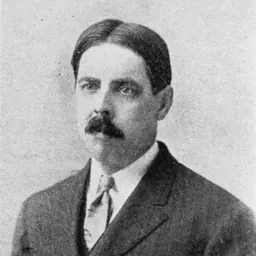
Lieutenant General Harbaksh Singh, (1 October 1913 – 14 November 1999) was a highly decorated senior general officer in the Indian Military. As the commander of the Western Command, Singh commanded the Indian Army and played a key role during the India–Pakistan war of 1965. For his role in the war, he was awarded the Padma Vibhushan in 1966.
Early life and education Harbaksh Singh was born on 1 October 1913 in a wealthy Madahar Jat Sikh family, the youngest of seven siblings, in Badrukhan village near Sangrur, the capital of the Jind State. His father, Dr Harnam Singh Madahar, was the first person from the village to become a doctor. Dr Madahar joined the Jind Infantry and participated in the Tirah campaign in 1897–98. He later served in the East African campaign during World War I. The Jind Infantry later was amalgamated into the Indian Army in 1952, into the Punjab Regiment. Harbaksh attended the Ranbir High School in Sangrur before joining the Government College, Lahore. Always good at sports, Singh was a part of the college hockey team. As a citizen of a princely state, he had to take the permission of the Governor of Punjab, Sir Geoffrey Montmorency to sit for the entrance examinations and enrol into the Indian Military Academy (IMA), which had been set up the previous year. In March 1933, Singh arrived at Dehradun and joined the IMA.
Military career Singh was commissioned on 15 July 1935 and started his career with a year's post-commission attachment with the 2nd battalion, Argyll and Sutherland Highlanders, then stationed at Rawalpindi. It was standard practice for newly commissioned Indian officers to be initially attached to a British regiment before being sent to an Indian unit. He saw service on the North West Frontier during the Mohmand campaign of 1935. After a year's attachment with the Highlanders, Singh joined the 5th battalion, 11th Sikh Regiment (previously 47th Sikhs) at Aurangabad, on 19 August 1936. By 1937, Singh was commanding a signal platoon, in the headquarter company of the battalion. In September 1938, the battalion, under the command of Lieutenant Colonel Charles Ford moved to Razmak in the North-West Frontier Province (NWFP). Singh took over command of Alpha company of the battalion at Razmak.
During the Indian National Army in Singapore between 1943 and 1945, his brother Lieutenant Colonel Gurbaksh Singh (not to be confused with INA officer Gurbaksh Singh Dhillon) became commander of the INA force housed at Tyersall Park, one of the seven INA military camps, constituted from the POWs of Jind State force, who were jats and other troops mainly from Haryana and Punjab.
By the end of year, Harbaksh Singh joined the Unit's Commanders' Course in Dehradun and in April 1945, was posted as the second-in-command of the 4th battalion, 11th Sikh Regiment (4/11 Sikh) at Campbellpur (now Attock). In February 1947, he was selected to join the first long course at Staff College, Quetta.
The citation for the Vir Chakra reads as follows:
After the Kashmir operations, he went on to serve as the Deputy Commandant of the Indian Military Academy, at the western command headquarters, director of infantry at the Army headquarters, and in 1957 attended a course at the Imperial Defence College (now Royal College of Defence Studies) in the United Kingdom. In January 1959, he became the first foreign officer to go on attachment with German Army's first division to be raised after their disbandment at the end of World War II.
He returned to India to take over as General Officer Commanding (GOC) of the 27 Infantry Division, and later as GOC 5 Infantry Division. From July 1961 to October 1962, he was Chief of Staff at the Western Command headquarters.
When the Chinese invaded NEFA and Ladakh, he was moved from Shimla to take over the command of IV Corps. He later became GOC XXXIII Corps.
Indo–Pakistani War of 1965
In 1964, he was promoted to Army Commander and took over as General Officer Commanding-in-Chief (GOC-in-C) of the Western Command whose area of responsibility spanned from Ladakh to Punjab. He led the Western Command successfully during victory against the Pakistan Army along the entire border in the India–Pakistan war of 1965.
Around 12 May 1965, Brigade Commander, Vijey Ghai in Kargil convened a conference at HQ. The agenda was not revealed but it started with him reading out the contents of Lt. Gen Harbaksh Singh GOC-in-C Western Command, DO (demi official note) to the forces. The Army Commander had reviewed recent skirmishes in Rann of Kutch and commented that the Pakistanis were continuing with their belligerent attitude and spoke about cultivating a more aggressive spirit in out troops. He also remarked pointedly “has the martial blood in the veins of the Indian Army soldiers dried up” or words to the similar effect. The operations that followed including the Taking of Point 13620 and Black Rocks was a major boost for the Indian forces. Per the official account of the War, this was the first counter-offensive undertaken by Indian troops in years. Its success had a good effect on the morale of the troops in Jammu and Kashmir, and in the Army as a whole. Politically it bolstered the image of the country. The leadership of Lt Gen Harbaksh Singh had played a key role in boosting the morale of a defeated army turning it into a striking force within just three years of the Chinese encounter thereby ensuring a memorable victory in the 1965 war.
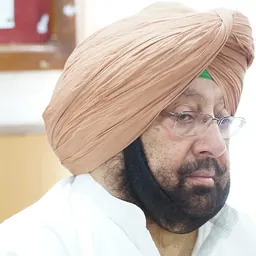
After serving as General-Officer-Commanding-in-Chief of the Western Army Command from 1964 to 1969, the General retired in September 1969. Captain Amarinder Singh (later Chief Minister of Punjab) of Patiala served him as his ADC.
Later life and death Harbaksh Singh died on 14 November 1999.
Publications
War Despatches: Indo-Pakistan Conflict of 1965 In the Line of Duty: A Soldier Remembers
Awards and decorations
Don’t just read it —
keep it.
Full-length biographies made to live with: read them, listen on the way to work, watch them tonight.
- E-book
- Audio
- Video
Instant download · yours to keep · every purchase keeps this site free
Important facts
People in Harbaksh Singh's life
Named in this biography and alive at the same time



Related people
Same field, nearest in time


Contemporaries
People whose lives overlapped Harbaksh Singh's


Frequently asked questions
Who was Harbaksh Singh?
Recipient of Vir Chakra (1913–1999)
When was Harbaksh Singh born?
Harbaksh Singh was born on 1 October 1913 in Badrukhan.
When did Harbaksh Singh die?
Harbaksh Singh died on 14 November 1999 in New Delhi.
What was Harbaksh Singh's occupation?
Harbaksh Singh was a military personnel.
What nationality was Harbaksh Singh?
Harbaksh Singh was Indian.
Sources & further reading
Cite this page
APA: Biography.guide. (2026). Harbaksh Singh. https://biography.guide/harbaksh-singh/
MLA: "Harbaksh Singh." Biography.guide, https://biography.guide/harbaksh-singh/.
Chicago: "Harbaksh Singh." Biography.guide. https://biography.guide/harbaksh-singh/.
Data last updated: 2026-09-20 · Spot an error? Report a correction.
Page generated 2026-09-27 05:32 UTC