
About Hanuš Wihan
Lived 1855 – 1920 (aged 64). Hanuš Wihan was an Austrian musician, music educator, university teacher, cellist, teacher and music teacher.
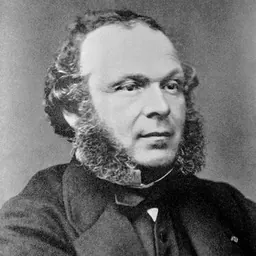
Hanuš Wihan (5 June 1855 – 1 May 1920) was a Czech cellist. Some considered him the greatest of his time. He was strongly associated with the works of Antonín Dvořák, whose Cello Concerto in B minor, Rondo in G minor, and the short piece Silent Woods were all dedicated to him. He was the founder and later cellist of the Czech String Quartet, which was world-famous throughout its 40-year existence.
Early life Hanuš Wihan was born in Police nad Metují and studied with František Hegenbarth (1881–1887) at the Prague Conservatory from the age of 13, finishing his studies with Karl Davydov at the St. Petersburg Conservatory. He became a teacher at the Mozarteum in Salzburg at 18. He joined the private orchestra of a Russian patron in Nice and Lugano, then went to Benjamin Bilse’s orchestra in Berlin (the forerunner of the Berlin Philharmonic) for a year, where the leader was his compatriot Karel Halíř; then to Prince Schwarzenburg's orchestra in Sondershausen, where he became a close friend of Franz Liszt, and to the court orchestra in Munich, in which Franz Strauss was the first horn. who had given it its first performance. Strauss also dedicated to Wihan his Cello Sonata in F, Op. 6 (which Wihan premiered in Nuremberg on 8 December 1883). He also wrote the Romance for Cello and Orchestra for Wihan, but did not dedicate it to him; Wihan premiered it on 15 February 1884 in Baden-Baden. There is no evidence that the affair was consummated or was ever going to be, but Wihan was very jealous by nature and it led to Dora's and Hanuš's marriage breaking up. Wihan made various suggestions for improvement, some of which Dvořák accepted. But he would not accept Wihan's suggested cadenza for the final movement as it clashed with his idea of the movement as a tribute to his seriously ill sister-in-law.
Wihan had been playing with the Czech String Quartet for some years, and in the latter stages of his career he reduced his appearances as soloist and chamber musician and appeared with the Quartet exclusively. In 1906 Lionel Tertis worked with the Quartet, and noticed Wihan's habit of spitting on the floor during rehearsals.
Don’t just read it —
keep it.
Full-length biographies made to live with: read them, listen on the way to work, watch them tonight.
- E-book
- Audio
- Video
Instant download · yours to keep · every purchase keeps this site free
Important facts
People in Hanuš Wihan's life
Named in this biography and alive at the same time

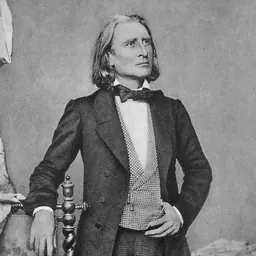
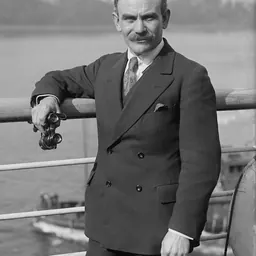


Related people
Same field, nearest in time

Contemporaries
People whose lives overlapped Hanuš Wihan's




Frequently asked questions
Who was Hanuš Wihan?
Czech violoncellist (1855–1920)
When was Hanuš Wihan born?
Hanuš Wihan was born on 5 June 1855 in Police nad Metují.
When did Hanuš Wihan die?
Hanuš Wihan died on 1 May 1920 in Prague, New Town.
What was Hanuš Wihan's occupation?
Hanuš Wihan was a musician, music educator, university teacher, cellist, teacher and music teacher.
What nationality was Hanuš Wihan?
Hanuš Wihan was Austrian.
Sources & further reading
Cite this page
APA: Biography.guide. (2026). Hanuš Wihan. https://biography.guide/hanus-wihan/
MLA: "Hanuš Wihan." Biography.guide, https://biography.guide/hanus-wihan/.
Chicago: "Hanuš Wihan." Biography.guide. https://biography.guide/hanus-wihan/.
Data last updated: 2026-09-26 · Spot an error? Report a correction.
Page generated 2026-09-27 05:13 UTC