
About Hans-Wilhelm Ebeling
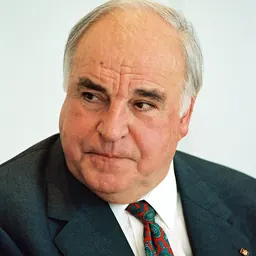
Lived 1934 – 2021 (aged 87). Hans-Wilhelm Ebeling was a German politician, metalworker, cleric, minister and parson.
Hans-Wilhelm Ebeling (15 January 1934 – 11 November 2021) was a German Lutheran clergyman and politician.
He served as a pastor at the Leipzig St. Thomas Church from 1976 to 1990. During the German Democratic Republic (GDR) transition period, he was the leader of the German Social Union (DSU) from January to May 1990 and, from April 1990 until German reunification in October 1990, the first and last Minister for Economic Cooperation in the cabinet of Lothar de Maizière.
Life and career Early career Ebeling's father was an officer with the Army High Command and was killed in 1945 near Danzig. A distant maternal ancestor was the poet Ernst Moritz Arndt.
He grew up in Greifswald, and after 1945 in Calau in Lower Lusatia. After completing his high school education in Forst (Lausitz), he briefly worked as a foundryman at the Eisenhüttenkombinat Ost and then completed a locksmith apprenticeship at the Reichsbahnausbesserungswerk Cottbus from 1952 to 1954.
East German pastor From 1954 to 1957, Ebeling studied mechanical engineering at the Dresden University of Technology and from 1957 to 1962, he studied theology at the Karl-Marx-University Leipzig. After obtaining a diploma in theology, he served as a vicar in Vetschau/Spreewald until 1964 and as a pastor in Lieberose from 1964 to 1976.
Political career East Germany Ebeling (first row, second from the right) in April 1990 signing the coalition agreement. During the peaceful revolution in the GDR, he, along with Peter-Michael Diestel, co-founded the Christian-Social Party of Germany (CSPD) in December 1989. The CSU financially supported it in hopes of establishing a presence outside of Bavaria.
He led the DSU into an alliance with the East German CDU and the Democratic Awakening, forming the Alliance for Germany, which won the first and final free election on 18 March 1990. Ebeling was co-lead candidate of his party alongside Hansjoachim Walther.
Ebeling was a member of the Volkskammer until the end of the GDR and German reunification. In the de Maizière government, Ebeling served as Minister for Economic Cooperation from April to October. Ebeling appeared at the UN General Assembly on 25 April 1990. but de Maizière adamantly refused. de Maizière initially did not want to include him in cabinet at all, doing so only after pressure from Helmut Kohl.
When his successor as DSU chairman, Hansjoachim Walther, shifted the party further to the right, Ebeling left the DSU on 2 July 1990, and joined the CDU, which he left in 1991.
Don’t just read it —
keep it.
Full-length biographies made to live with: read them, listen on the way to work, watch them tonight.
- E-book
- Audio
- Video
Instant download · yours to keep · every purchase keeps this site free
Important facts
People in Hans-Wilhelm Ebeling's life
Named in this biography and alive at the same time




Related people
Same field, nearest in time






Contemporaries
People whose lives overlapped Hans-Wilhelm Ebeling's





Frequently asked questions
Who was Hans-Wilhelm Ebeling?
German politician (1934–2021)
When was Hans-Wilhelm Ebeling born?
Hans-Wilhelm Ebeling was born on 15 January 1934 in Parchim.
When did Hans-Wilhelm Ebeling die?
Hans-Wilhelm Ebeling died on 11 November 2021 in Leipzig.
What was Hans-Wilhelm Ebeling's occupation?
Hans-Wilhelm Ebeling was a politician, metalworker, cleric, minister and parson.
What nationality was Hans-Wilhelm Ebeling?
Hans-Wilhelm Ebeling was German.
Sources & further reading
· Wikipedia: Hans-Wilhelm Ebeling
· DBpedia: Hans-Wilhelm Ebeling
Cite this page
APA: Biography.guide. (2026). Hans-Wilhelm Ebeling. https://biography.guide/hans-wilhelm-ebeling/
MLA: "Hans-Wilhelm Ebeling." Biography.guide, https://biography.guide/hans-wilhelm-ebeling/.
Chicago: "Hans-Wilhelm Ebeling." Biography.guide. https://biography.guide/hans-wilhelm-ebeling/.
Data last updated: 2026-09-20 · Spot an error? Report a correction.
Page generated 2026-09-27 05:22 UTC