
About Hans Schlange-Schöningen
Lived 1886 – 1960 (aged 73). Hans Schlange-Schöningen was a German politician, farmer, military officer and agronomist.
Hans Schlange-Schöningen (born 17 November 1886 in Schöningen, Pomerania; died 20 July 1960 in Bad Godesberg) was a German politician of the Christian Democratic Union (CDU) and a member of the German Bundestag.
Life Born to a Junker family in Pomerania, he attended a cadet academy and the University of Greifswald before serving as an officer in World War I, during which he was wounded several times.
A monarchist and conservative, his political career began as a member of the Prussian Landtag for the DNVP first joining the body in 1920 and serving until 1928. He became chairman of the Pomeranian DNVP in 1924. Originally Schöningen was a more radical member of the DNVP; he supported the stab-in-the-back myth, was an avowed anti-semite, and supported dictatorship over the Weimar Republic. Starting in 1926 he gradually moderated his stance, by 1928 Schöningen was a member of the DNVP's more moderate faction by 1928 and had come to accept, though not support, the republic. This moderation led him to lose support among the Pomeranian DNVP and so he resigned from his position as their leader. The election of the more radical Alfred Hugenberg as party leader led him to defect and co-found the CNBLP in 1930.
Schöningen and the CNBLP joined Heinrich Brüning's minority government out of a fear of the Nazis until it collapsed on June 1, 1932. Due to his skill in operating his own estate, Schöningen was named Osthilfe Commissioner in November 1931 by the Agricultural Minister Martin Schiele. In this role he drafted a plan to resettle unemployed German workers onto small farms which would be created by breaking up bankrupt Junker estates. The Agricultural League labelled this plan "agrarian bolshevism" and President Hindenburg used to plan as a pretext to have to sack Brüning and his government in May 1932. During the Third Reich he initially refocused his efforts on his estate, bit later on he was he was involved in the resistance and was the prospective Minister of Food during the 20 July plot but managed to survive the war.
In 1945 Schöningen fled from his estate as the Red Army approached, he would never return, spending the rest of his life in Schleswig-Holstein. After World War 2 he immediately began involving himself in politics, in the summer of 1945 he founded the Christian Democratic Reconstruction Party which merged into the CDU in early 1946. On February 1, 1946, he appointed as head of food and agriculture in the British occupation zone, despite his lack of powers he successfully managed to build good relations between the British, the SPD, and his CDU. He also used heavy handed tactics to ensure that farmers delivered the required amount of agricultural goods. But as time went on it became clear that he had isolated himself, the left distrusted him as a former Junker, for his capitalism, and his hesitancy on land reform; while the right and farmers disliked his heavy handed approach.
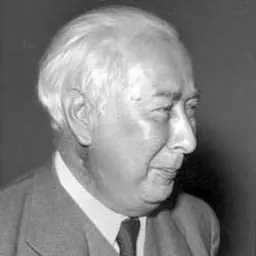
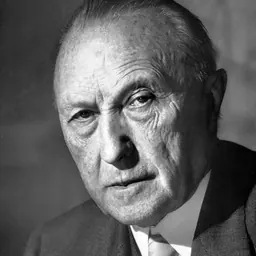
He was a member of the German Bundestag from its first election in 1949 until 9 June 1950, in this role he advocated for a CDU-SPD Grand Coalition but this was unsuccessful and a right-wing coalition was formed that Schöningen did not participate in. He was considered the leading presidential candidate CDU politicians who didn't want to enforce Theodor Heuss but Konrad Adenauer lobbied the party to support Heuss, and Schöningen's chances at the presidency where destroyed when he began personally attacking Heuss. After these failures he left politics and served as German consul to the UK and then from 1953 to 1955 as ambassador. He was married with Margarete von Nagy (1890–1975) and had four children. His son Ernst-Siegfried Schlange-Schöningen (1914–2005) was German ambassador.
Literature
Don’t just read it —
keep it.
Full-length biographies made to live with: read them, listen on the way to work, watch them tonight.
- E-book
- Audio
- Video
Instant download · yours to keep · every purchase keeps this site free
Important facts
People in Hans Schlange-Schöningen's life
Named in this biography and alive at the same time


Related people
Same field, nearest in time




Contemporaries
People whose lives overlapped Hans Schlange-Schöningen's




Frequently asked questions
Who was Hans Schlange-Schöningen?
German politician (1886-1960)
When was Hans Schlange-Schöningen born?
Hans Schlange-Schöningen was born on 17 November 1886 in Kamieniec, West Pomeranian Voivodeship.
When did Hans Schlange-Schöningen die?
Hans Schlange-Schöningen died on 20 July 1960 in Bad Godesberg.
What was Hans Schlange-Schöningen's occupation?
Hans Schlange-Schöningen was a politician, farmer, military officer and agronomist.
What nationality was Hans Schlange-Schöningen?
Hans Schlange-Schöningen was German.
Sources & further reading
· Wikipedia: Hans Schlange-Schöningen
· DBpedia: Hans Schlange-Schöningen
Cite this page
APA: Biography.guide. (2026). Hans Schlange-Schöningen. https://biography.guide/hans-schlange-schoningen/
MLA: "Hans Schlange-Schöningen." Biography.guide, https://biography.guide/hans-schlange-schoningen/.
Chicago: "Hans Schlange-Schöningen." Biography.guide. https://biography.guide/hans-schlange-schoningen/.
Data last updated: 2026-09-20 · Spot an error? Report a correction.
Page generated 2026-09-27 05:34 UTC