
About Hans Rohrbach
Lived 1903 – 1993 (aged 90). Hans Rohrbach was a German mathematician and university teacher.
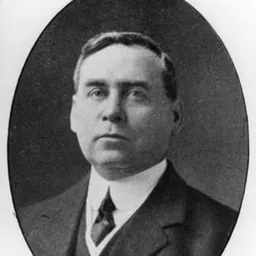
Hans Rohrbach (27 February 1903 – 19 December 1993) was a German mathematician. He worked both as an algebraist and a number theorist and later worked as cryptanalyst at Pers Z S, the German Foreign Office cipher bureau, during World War II. He was latterly known as the person who broke the American diplomatic O-2 cypher, a variant of the M-138-A strip cipher during 1943. Rohrbach wrote a report on the breaking of the strip cypher when he was captured by TICOM, the allied effort to roundup and seize captured German intelligence people and material.
Life Hans Rohrbach was a son of journalist Paul Rohrbach and his wife Clara (née Müller), who were married in Berlin in 1897. There was always confusion around Rohrbachs' name; one source gives his full name as Hans Joachim Albert Rohrbach, while the mathematician Bernhard Neumann believed this full name to be Hans Wolfgang Rohrbach, and was sure his middle initial was a 'W'.
Rohrbach entered the Gymnasium (school) at Berlin-Friedenau in the autumn of 1909 and studied there until Autumn 1917. He then entered the Fichte Gymnasium in Berlin-Wilmersdorf. After having successfully passed the school leaving exam in 1921, he entered the Friedrich-Wilhelm University in Berlin, where he studied mathematics, physics, and philosophy for two years. In 1923, as a head of the Berlin student organization Mathematisch-Physikalische Arbeitsgemeinschaft (Mathematics and Physics Working Group), he went with his father to the United States. The visit, which Rohrbach called his propaganda visit, was a tour of American universities to raise money for impoverished Berlin students. Germany's economy, which was undergoing a period of hyperinflation, was making life extremely difficult for students, who had to take employment to supplement their income.
In the autumn of 1924 Rohrbach resumed his studies at the University of Berlin and studied there until 1929. In the late 1920s he started work on his PhD thesis, titled Die Charaktere der binären Kongruenzgruppen mod p2 (The characters of the binary congruence groups mod p2), advised by Issai Schur. He submitted it and was awarded his doctorate on 25 July 1932.
Rohrbach was a member of the Nazi Party and the Sturmabteilung (the party's original paramilitary wing, later superseded by the SS), but was considered not fully reliable due to his friendship with Jewish colleagues.
He was awarded the War Service Cross 2nd Class (KVK II) in September 1944, for his work on the solution of the U.S. Diplomatic Strip System O-2.
Rohrbach had originally broken the cipher in 1943 after working on it for more than a year. The cipher was used by the US state department for diplomatic traffic, and the US Navy from 1940 to 1944. Rohrbach and his team used Hollerith punched card machinery and also built a special decoding machine called Automaton to aid cryptanalysis of the cipher. The Americans who made up the TICOM Team that investigated Pers Z S, ordered Rohrbach to write a report on 6 August 1945, in the form of homework to describe the process. The report was formulated as TICOM document I-89.
This is the introduction to the report:
In this report we are dealing with a field of applied mathematics which has been foreign to most mathematicians and on which practically nothing has been published up to now. Methods and results have generally been left in secrecy, existing largely in the minds of the people involved. For these reasons we must go into the basic concepts and principles of this field rather thoroughly. Further, we cannot expect this report, as a first approach, to be exhaustive. The written materials needed for a foundation, including in particular the only publication to my knowledge of the character of a scientific journal (Scientific papers of the Dahlem Special Service, published by the Foreign Office, Berlin, 1940–45), either have been destroyed or have been retained by the Allies; the workers concerned are known to me only in small part or cannot be contacted. Accordingly, I can bring only scattered examples to the best of my memory. They come largely from the work of the Foreign Office, the Department of Defense (OKW), and the Department of the Army (OKH). By agreement with those workers that I have been able to contact, I will not give any names – it's a chance selection at best. Naturally much more work in this field has been done in Germany than I am able to take into consideration here, for the reasons already given. It seems to me at least, as will be brought out sufficiently in the material that follows, that mathematical cryptology is a very attractive field of applied mathematics. With good reason have all larger nations selected mathematicians for special use, particularly for use in cryptanalysis.
Here is how Hans Rohrbach split his work between academia and the military:
I do not know what Rohrbach's group in Prague calculated. ... In my estimation of Rohrbach's character, the activity of the computing group could have been a [facade] for the rescue of human lives. ... I have treasured Rohrbach's human traits greatly, even if his missionary concerns got on my nerves
One of the people that Rohrbach saved was the mathematician Ernst Max Mohr from execution. On 12 May 1944 Mohr was arrested by the Gestapo along with his wife, at the Béranek Hotel in Prague. On 24 October 1944, his case was heard before the People's Court, the accusation was to listen to enemy foes, to denigrate Hitler and for expressing defeatism. He is said to have described the war as already lost, the destruction of the Jews as a mistake. His work was important for the war, especially the Luftwaffe. He was nevertheless found guilty and sentenced to death, but intervention by Rohrbach and Alexander Nikuradse resulted in his death sentence being suspended for six months; he was transferred to the Sachsenhausen concentration camp, later on 18 December 1944 to the Plötzensee Prison where he continued to undertake Mathematical calculations for the V-weapon programs. He survived the war.
Don’t just read it —
keep it.
Full-length biographies made to live with: read them, listen on the way to work, watch them tonight.
- E-book
- Audio
- Video
Instant download · yours to keep · every purchase keeps this site free
Important facts
People in Hans Rohrbach's life
Named in this biography and alive at the same time



Related people
Same field, nearest in time


Contemporaries
People whose lives overlapped Hans Rohrbach's
Frequently asked questions
Who was Hans Rohrbach?
German mathematician (1903–1993)
When was Hans Rohrbach born?
Hans Rohrbach was born on 27 February 1903 in Berlin.
When did Hans Rohrbach die?
Hans Rohrbach died on 19 December 1993 in Bischofsheim in der Rhön.
What was Hans Rohrbach's occupation?
Hans Rohrbach was a mathematician and university teacher.
What nationality was Hans Rohrbach?
Hans Rohrbach was German.
Sources & further reading
Cite this page
APA: Biography.guide. (2026). Hans Rohrbach. https://biography.guide/hans-rohrbach/
MLA: "Hans Rohrbach." Biography.guide, https://biography.guide/hans-rohrbach/.
Chicago: "Hans Rohrbach." Biography.guide. https://biography.guide/hans-rohrbach/.
Data last updated: 2026-09-20 · Spot an error? Report a correction.
Page generated 2026-09-27 05:26 UTC