
About Hans Otto
Lived 1900 – 1933 (aged 33). Hans Otto was a German stage actor, film actor, actor and german resistance to Nazism, known for Nazi Germany and Sturmabteilung.
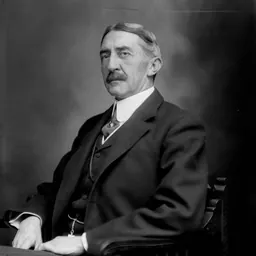
Hans Otto (10 August 1900 - 24 November 1933) was a German stage actor. He came to prominence at a relatively young age. From the world of theatre, one of the greatest admirers of his talents, on and off the stage, was Bertolt Brecht. Towards the end of 1933 he was murdered by Nazi paramilitaries, becoming one of the Hitler government's first victims from the world of the arts. At the time of his murder he had been a member of the Communist Party for almost ten years.
Life Provenance and early years Hans Otto was born in Dresden where Hermann August Theodor Otto, his father, worked in a managerial-clerical job for the government of Saxony. His father remarried almost at once.
As he grew up he came under parental pressure, which he firmly rejected, to make his way in the world as a businessman. Between June and December 1918 Hans Otto was called up for military service, but the timing was fortunate, in that he had still not been sent to the military front line when the war ended in November.
During 1919 Hans Otto took lessons in stage acting - including voice projection and singing - with Eduard Plate in Dresden and with Robert George.
Stage debut Otto made his 1920 debut at the Frankfurt Künstlertheater in a production by Adam Kuckhoff of Schiller's "Kabale und Liebe" (loosely, "Intrigue and Love"). Over the next few years he appeared with the Frankfurt theatre company in city theatres across the Rhein-Main region, specialising in classical roles. A theatre critic at the time commended his "cuttingly sharp artistic personality ... a perfect specimen of a thoroughly modern approach to [stage] art". Ten years his senior, Marie Kuckhoff was an actress, frequently identified in sources by her stage name as "Mie Paulun". The marriage was by some criteria childless, except that Marie's son by her former marriage stayed with his mother and thereby acquired Hans Otto as his apparently devoted step-father. Through the 1920s, as politics became more polarised, public figures in Germany came under growing pressure to "choose a side". There are indications that through her new young husband Marie Otto-Paulun became increasingly politicised, and that through the two of them the former dramaturge and successful theatre director Adam Kuckhoff also came to a heightened level of political awareness which in 1943 would lead to his execution under then Hitler government. The period was one of intensified economic hardship, accompanied by a peaking of the post-war hyperinflation. In October 1923 the economic collapse triggered the Hamburg Uprising. The northern port cities had a long tradition of left-wing political militancy, and Otto came into contact with the labour movement at this time, which left him with a deep commitment to many of the ideals of the Communist Party which had been founded in Berlin during 1918/19. Sources differ as to whether it was in 1923, Ziegel moved on after a couple of years, but Otto remained at the Hamburg Schauspielhaus under his successor, Hermann Röbbeling, for another year. A year after signing up with the "Theater in der Stresemannstraße" he moved on the work with Leopold Jessner at the Berlin Schauspielhaus on the Gendarmenmarkt square, An example in 1929 was his appearance at Berlin's "Theater in der Königgrätzer Straße" in the title role of "Winnetou, the Red [Indian] Gentleman", with Ludwig Körner, in a stage drama based on "wild-west fiction" by Karl May.
Movie work Early in his stage career Hans Otto turned down, on political grounds, the offer to work on Fridericus Rex (1922/23), a silent movie and, as matters turned out, the first in a series of four immensely popular films, directed by Arzén von Cserépy, which celebrated various episodes from the life of Frederick the Great.
Political engagement during a new decade In 1930, Otto became chairman of the Berlin district "Arbeiter-Theater-Bund" (loosely, "Theater Workers' Association") and a union representative for the "Gewerkschaft der Deutschen Bühnenangehörigen" ("Union of German Stage Performers" / GDBA). The more the social and political situation deteriorated in the aftermath of the Wall Street crash, the more clearly Hans Otto saw the dangers inherent in the rise of fascism in Germany, and the more energetically he worked in support of his own political convictions. As a high-profile and popular stage actor who was also a known Communist Party member, he found that his home was subject to regular visits and house searches by the police. Tirelessly he addressed political meetings, crafted newspaper articles and appeals, and contributed to the production political leaflets.
As soon as Hans Otto's problems with the Prussian state theater in Berlin became known, he received an urgent invitation from Max Reinhardt to come and work at the Reinhardt-Bühnen (Reinhardt's own theatre) in Vienna.
Arrest and murder On 13 November 1933 Hans Otto was detained by Nazi paramilitaries at a café by the Viktoria-Luise-Platz in west-central Berlin. He was taken, in the first instance, to the Café Komet in Berlin-Stralau a few kilometers to the east, where he found he was one of a number of detainees rounded up and gathered together in this improvised collection point and, as he now discovered, torture location. During an intense interrogation he suffered the first in a succession of brutal physical assaults. He was then taken with other detainees to a facility at nearby Berlin-Köpenick where he underwent further violent assault. He was beaten and kicked repeatedly, causing him to lose consciousness. His interrogators were determined - but unsuccessful - in their efforts to force him to disclose the identities of comrades in the underground anti-government resistance community. This served to enrage his attackers further. Despite his own injuries, comrades would later recall that Otto was unceasing in his own efforts to encourage fellow detainees, suffering similar treatment, with words of consolation and courage. Here, after a final session, interrogators noticed that he had "stopped moving": it is not clear whether or not they thought Hans Otto was still alive at this point. In order to avoid being thought to have killed him, the security services officer now carried him upstairs to the third floor, from where they threw him out of a window, intending to explain that he had "committed suicide", should they find themselves called upon to account for his condition. On 24 November 1933 Hans Otto died from his injuries in a "police hospital".
The killing of Hans Otto was one of the first atrocities performed on behalf of the Hitler government to gain widespread media coverage outside Germany. Within the country, however, the Minister for People's Enlightenment and Propaganda, Joseph Goebbels, placed a ban on the reporting of the death. There was also a general prohibition on attending Otto's funeral, which was paid for by Gustaf Gründgens, another star of the Berlin stage.
Gerhard Hinze The Hamburg actor Gerhard Hinze, usually identified by his later name as Gerard Heinz, was arrested at the same time as Hans Otto. Much of what is known of Hans Otto's final days came to public notice only twelve years later, after 1945, when Hinze felt at liberty to share his information.
Burial The physical remains of Hans Otto was laid to rest on 29 November 1933 at Berlin-Wilmersdorf not in the main cemetery there, but at the Stahnsdorf Cemetery close by. The cause of death, which had to be recorded before the burial could proceed, was entered as "suicide by jumping off the roof of a house"."Selbstmord durch Absprung vom Dach eines Hauses"
Celebration
Don’t just read it —
keep it.
Full-length biographies made to live with: read them, listen on the way to work, watch them tonight.
- E-book
- Audio
- Video
Instant download · yours to keep · every purchase keeps this site free
Important facts
People in Hans Otto's life
Named in this biography and alive at the same time




Related people
Same field, nearest in time


Contemporaries
People whose lives overlapped Hans Otto's



Frequently asked questions
Who was Hans Otto?
German actor (1900–1933)
When was Hans Otto born?
Hans Otto was born on 10 August 1900 in Dresden.
When did Hans Otto die?
Hans Otto died on 24 November 1933 in Berlin.
What was Hans Otto's occupation?
Hans Otto was a stage actor, film actor, actor and german resistance to Nazism.
What was Hans Otto known for?
Hans Otto was known for Nazi Germany and Sturmabteilung.
What nationality was Hans Otto?
Hans Otto was German.
Sources & further reading
Cite this page
APA: Biography.guide. (2026). Hans Otto. https://biography.guide/hans-otto/
MLA: "Hans Otto." Biography.guide, https://biography.guide/hans-otto/.
Chicago: "Hans Otto." Biography.guide. https://biography.guide/hans-otto/.
Data last updated: 2026-09-25 · Spot an error? Report a correction.
Page generated 2026-09-27 05:13 UTC