
About Gustaf Gründgens
Lived 1899 – 1963 (aged 63). Gustaf Gründgens was a German film director, stage actor, film actor, film producer, intendant and chansonnier.
Gustaf Gründgens (; 22 December 1899 – 7 October 1963), born Gustav Heinrich Arnold Gründgens, was one of Germany's most famous and influential actors of the 20th century, and artistic director of theatres in Berlin, Düsseldorf, and Hamburg. His career continued unimpeded through the years of the Nazi regime; the extent to which this can be considered as deliberate collaboration with the Nazis is hotly disputed.
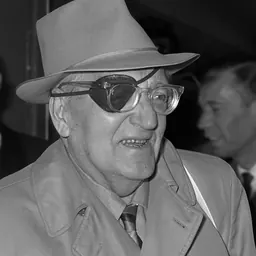
His best-known roles were that of Mephistopheles in Goethe's Faust in 1960, and as "Der Schränker" (The Safecracker) who is the chief judge of the kangaroo court presiding over Hans Beckert (Peter Lorre) in Fritz Lang's M.
Early life Born in Düsseldorf, Gründgens attended the drama school of the Düsseldorfer Schauspielhaus after World War I and started his career at smaller theaters in Halberstadt, Kiel, and Berlin.
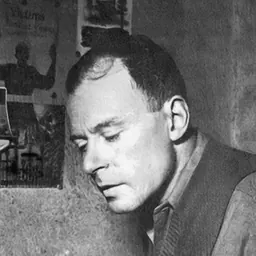
Career In 1923, he joined the Kammerspiele in Hamburg, where he changed his first name to Gustaf and appeared as a director for the first time. In 1925, Gründgens wrote to Klaus Mann to propose a Hamburg production of Mann’s play Anja and Esther. Mann agreed, and Anja and Esther was performed in Hamburg with Gründgens directing and playing the role of Jakob. Mann played the role of Kaspar, while his sister Erika and his fiancée Pamela Wedekind played the lead roles of Anja and Esther. The play marked the beginning of Gründgens’ collaborations with the Mann siblings and Wedekind, as well as the beginning of his romantic relationship with Klaus Mann. He also became a member of the Presidential Council of the Reichstheaterkammer (Theatre Chamber of the Reich), which was an institution of the Reichskulturkammer (Reich Chamber of Culture). In 1941, Gründgens starred in the propaganda film Ohm Krüger; he also played the title role in the fictional biographical film Friedemann Bach, which he also produced.
After Goebbels's total war speech on 18 February 1943, Gründgens volunteered for the Wehrmacht but was again recalled by Göring, who had his name added to the Gottbegnadeten list (Important Artist Exempt List).
Post-war life Imprisoned by the Soviet NKVD for 9 months in 1945 – 1946, Gründgens was released due to the intercession of the Communist actor Ernst Busch, whom Gründgens himself had saved from execution by the Nazis in 1943. During the denazification process, his statements helped to exonerate acting colleagues, including Göring’s widow, Emmy, and Veit Harlan, director of the film Jud Süß.
Gründgens returned to the Deutsches Theater, later became Intendant of the Düsseldorfer Schauspielhaus, and from 1955 directed the Deutsches Schauspielhaus in Hamburg. He again performed as Mephistopheles; the 1960 film Faust, directed by his adoptive son Peter Gorski, was made with the Deutsches Schauspielhaus ensemble.
Personal life Gründgens became romantically involved with Klaus Mann while the two of them were performing in the Hamburg production of Mann’s play Anja and Esther. In 1926, while in a relationship with Klaus, Gründgens married Klaus's sister Erika Mann, who was herself in a relationship with Klaus's fiancée Pamela Wedekind. Gründgens eventually became the basis of several characters in Klaus Mann’s fiction, including the character of Gregor Gregori in Treffpunkt im Unendlichen and the character of Hendrik Höfgen in the infamous novel Mephisto.
Death Grave of Gustaf Gründgens at the Ohlsdorf Cemetery in Hamburg. On 7 October 1963, while traveling around the world, Gründgens died in Manila of an internal hemorrhage. It has never been ascertained whether or not he committed suicide by an overdose of sleeping pills. His last words, written on an envelope, were, "I believe that I took too many sleeping pills. I feel a little strange. Let me sleep long." He is buried at the Ohlsdorf Cemetery in Hamburg.
Mephisto judgment Posthumously, Gründgens was involved in one of the more famous literary cases in 20th-century Germany as the subject of the novel Mephisto by his former lover Klaus Mann, who had died in 1949. The novel, a thinly veiled account of Gründgens's life, portrayed its main character Hendrik Höfgen as having shady connections with the Nazi regime. Gründgens' adopted son and heir Peter Gorski, who had directed Faust, successfully sued the publisher on his late father's behalf in 1966. The judgment was upheld by the Federal Court of Justice in 1968.
In the time-consuming lawsuit, the controversy over libel and the freedom of fiction from censorship was finally decided by the Federal Constitutional Court in 1971. It ruled that Gründgens' post-mortem personality rights prevailed and upheld the prohibition imposed on the publisher. However, the novel met with no further protests when it was published again in 1981 by Rowohlt.
In 1981, the novel was made into the film Mephisto, directed by István Szabó, with Klaus Maria Brandauer in the role of Hendrik Höfgen. The film was a huge commercial and critical success, and won the Academy Award for Best Foreign Language Film in 1981.
Filmography Director A City Upside Down (also actor, 1933) The Grand Duke's Finances (1934) Kapriolen (also actor, 1937) The False Step (1939) Two Worlds (1940) Friedemann Bach (also actor, 1940) Faust (also actor, 1960, co-director Peter Gorski)
Actor
Never Trust a Woman (1930) .... Jean Hocuspocus (1930) .... Public Prosecutor Dr. Wilke Va Banque (1930) .... Private detective John James Brown Fire in the Opera House (1930) .... Otto van Lingen Danton (1930) .... Robespierre M (1931) .... Der Schränker (The Safecracker) The Theft of the Mona Lisa (1931) .... Unbekannter Louise, Queen of Prussia (1931) .... King Frederick William III Yorck (1931) .... Hardenberg The Countess of Monte Cristo (1932) .... "The Baron", con artist Teilnehmer antwortet nicht (1932) .... Nikolai Liebelei (1933) .... Baron von Eggersdorff A Love Story (1933) .... Baron von Eggersdorf Happy Days in Aranjuez (1933) .... Alexander The Tunnel (1933) .... Woolf The Tunnel (1933, French version) .... Woolf Schwarzer Jäger Johanna (1934) .... Dr. Frost So Ended a Great Love (1934) .... Metternich The Legacy of Pretoria (1934) .... Eugen Schliebach Hundred Days (1935) .... Fouché Joan of Arc (1935) .... King Charles VII Pygmalion (1935) .... Professor Higgins A Woman of No Importance (1936) .... Lord Illingworth Capers (1937) .... Jack Warren Dance on the Volcano (1938) .... Jean-Gaspard Deburau Ohm Krüger (1941) .... Joseph Chamberlain Friedemann Bach (1941) .... Wilhelm Friedemann Bach Das Glas Wasser (1960) .... Sir Henry St John Faust (1960) .... Mephistopheles (final film role)
Don’t just read it —
keep it.
Full-length biographies made to live with: read them, listen on the way to work, watch them tonight.
- E-book
- Audio
- Video
Instant download · yours to keep · every purchase keeps this site free
Important facts
Family & relationships
People in Gustaf Gründgens's life
Named in this biography and alive at the same time






Related people
Same field, nearest in time


Contemporaries
People whose lives overlapped Gustaf Gründgens's



Frequently asked questions
Who was Gustaf Gründgens?
German actor, director, intendant (1899-1963)
When was Gustaf Gründgens born?
Gustaf Gründgens was born on 22 December 1899 in Düsseldorf.
When did Gustaf Gründgens die?
Gustaf Gründgens died on 7 October 1963 in Manila.
What was Gustaf Gründgens's occupation?
Gustaf Gründgens was a film director, stage actor, film actor, film producer, intendant and chansonnier.
What nationality was Gustaf Gründgens?
Gustaf Gründgens was German.
Sources & further reading
Cite this page
APA: Biography.guide. (2026). Gustaf Gründgens. https://biography.guide/gustaf-grundgens/
MLA: "Gustaf Gründgens." Biography.guide, https://biography.guide/gustaf-grundgens/.
Chicago: "Gustaf Gründgens." Biography.guide. https://biography.guide/gustaf-grundgens/.
Data last updated: 2026-09-20 · Spot an error? Report a correction.
Page generated 2026-09-27 05:32 UTC