
About Hans Kirschstein
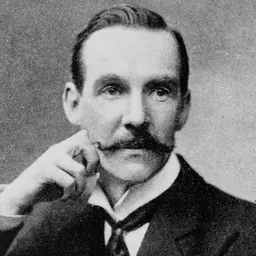
Lived 1896 – 1918 (aged 21). Hans Kirschstein was a German aircraft pilot and military personnel.
Hans Kirschstein (5 August 1896 – 16 July 1918), winner of the Pour le Merite, Royal House Order of Hohenzollern, and the Iron Cross, 1st and 2nd class, was a German lieutenant and World War I flying ace credited with 27 aerial victories.
Early life
Hans Kirschstein was born 5 August 1896 in Koblenz, in the Prussian Rhine Province of Germany. His father headed the provincial government. Hans first attended school in Gummersbach, from 1907 in Gross-Lichterfelde near Berlin. In August 1914 he joined the German Army as a combat engineer in the Prussian 3rd Pioneer Battalion von Rauch (1st Brandeburgian) in Spandau. He served in France and Galicia; in the latter assignment, he contracted malaria in 1915. He was invalided home to recuperate, returning to duty in December 1915.
Aerial service as bomber pilot
In February 1916, he applied for transfer to aviation duty. His transfer was granted and he took pilot's training at Schliessheim in May 1916. Upon graduation, he flew bombing raids for Flieger-Abteilung (Flier Detachment) 19. Some of these raids were among the earliest examples of air attacks upon tanks. One was on Dover, England. Kirschstein won an Iron Cross Second Class for his service. In 1917, he continued his service as a two-seater pilot, moving on to Flieger-Abteilung (Flier Detachment) 256, and from there to Flieger-Abteilung (Flier Detachment) 3.
He scored his first victory on 18 March, flying a Fokker Dr.I in one of the great aerial battles of the war, in which the entirety of Manfred von Richthofen's fighter wing was committed to battle en masse. Kirschstein began by shooting down a Sopwith Camel. He scored twice more in March, on the 27th. First of them was Armstrong Whitworth F.K.8, piloted by Alan McLeod and his observer Arthur Hammond, McLeod was during action wounded six times and received Victoria Cross, Hammond was three times, lost his leg and received bar to his Military Cross. He continued to score regularly; on 15 May, he shot down a Sopwith Camel and two Bristol F.2bs for his ninth, tenth, and eleventh triumphs. By the end of May, he was a triple ace, with 15 victories. Kirschstein would fly two of the new airplanes, both entirely painted with black and white stripes as an optical illusion to confuse enemy aim. His Fokker Dr.I was handed on to Ernst Udet, who would be Germany's highest scoring ace to survive the war. He would fly them to 12 more victories in June, with his final win being his 27th on 24 June 1918.
Inline citations
Don’t just read it —
keep it.
Full-length biographies made to live with: read them, listen on the way to work, watch them tonight.
- E-book
- Audio
- Video
Instant download · yours to keep · every purchase keeps this site free
Important facts
People in Hans Kirschstein's life
Named in this biography and alive at the same time



Related people
Same field, nearest in time

Contemporaries
People whose lives overlapped Hans Kirschstein's




Frequently asked questions
Who was Hans Kirschstein?
German flying ace (1896-1918)
When was Hans Kirschstein born?
Hans Kirschstein was born on 5 August 1896 in Koblenz.
When did Hans Kirschstein die?
Hans Kirschstein died on 16 July 1918 in Fismes.
What was Hans Kirschstein's occupation?
Hans Kirschstein was an aircraft pilot and military personnel.
What nationality was Hans Kirschstein?
Hans Kirschstein was German.
Sources & further reading
Cite this page
APA: Biography.guide. (2026). Hans Kirschstein. https://biography.guide/hans-kirschstein/
MLA: "Hans Kirschstein." Biography.guide, https://biography.guide/hans-kirschstein/.
Chicago: "Hans Kirschstein." Biography.guide. https://biography.guide/hans-kirschstein/.
Data last updated: 2026-09-20 · Spot an error? Report a correction.
Page generated 2026-09-27 05:25 UTC