
About Hans Benndorf
Lived 1870 – 1953 (aged 82). Hans Benndorf was an Austrian physicist and professor.
Hans Benndorf (13 December 1870 – 11 February 1953) was an Austrian physicist. He made several contributions in the field of seismology and in his research of atmospheric electricity.
Life and career Benndorf was born on 13 December 1870 in Zürich. He was the son of archaeologist Otto Benndorf (1838–1907) and the grandson of physiologist Rudolf Wagner (1805–1864).
In 1895 he earned his doctorate from the University of Vienna, and subsequently became an assistant to Franz Serafin Exner (1849–1926). In 1904 he became an associate professor of meteorology at the University of Graz. In 1910 he replaced Leopold Pfaundler (1839–1920) as professor of physics, a position he kept until 1936 (forced retirement). In 1945 he resumed his duties in physics at Graz.
In 1927 he was elected as a full member of the Austrian Academy of Sciences, and from 1932 to 1934 was university rector. From 1924 he worked closely with geophysicist Alfred Wegener (1880–1930) at Graz, also maintaining professional ties with physicist Victor Franz Hess (1883–1964) and climatologist Victor Conrad (1876–1962) during his career. With Hess he co-authored a comprehensive treatise on atmospheric electricity (1928).
In 1907 he founded a seismological observatory at the physical institute in Graz, and during the same year was awarded with the Ignaz Lieben Prize for his work on the propagation of seismic waves.
In a mine-shaft at Příbram he was able to differentiate between long-distance earthquakes and local microseismic activity with the use of seismometers. Also, he was the first scientist to solve the problem involving the refraction of seismic rays in spherical layers. The term Benndorfscher Satz (Benndorf's relationship) is used to describe the constancy of the ray parameter across the spherical layers.
He died on 11 February 1953 in Graz, at the age of 82.
A device known as a "Benndorf electrometer" is used for atmospheric electrical measurements.
Don’t just read it —
keep it.
Full-length biographies made to live with: read them, listen on the way to work, watch them tonight.
- E-book
- Audio
- Video
Instant download · yours to keep · every purchase keeps this site free
Important facts
People in Hans Benndorf's life
Named in this biography and alive at the same time
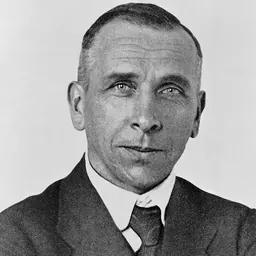
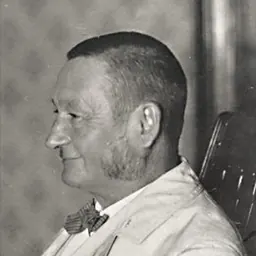



Related people
Same field, nearest in time
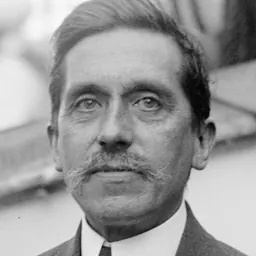

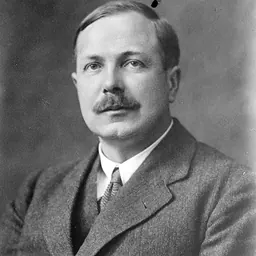
Contemporaries
People whose lives overlapped Hans Benndorf's





Frequently asked questions
Who was Hans Benndorf?
Austrian physicist (1870-1953)
When was Hans Benndorf born?
Hans Benndorf was born on 13 December 1870 in Zurich.
When did Hans Benndorf die?
Hans Benndorf died on 11 February 1953 in Graz.
What was Hans Benndorf's occupation?
Hans Benndorf was a physicist and professor.
What nationality was Hans Benndorf?
Hans Benndorf was Austrian.
Sources & further reading
Cite this page
APA: Biography.guide. (2026). Hans Benndorf. https://biography.guide/hans-benndorf/
MLA: "Hans Benndorf." Biography.guide, https://biography.guide/hans-benndorf/.
Chicago: "Hans Benndorf." Biography.guide. https://biography.guide/hans-benndorf/.
Data last updated: 2026-09-20 · Spot an error? Report a correction.
Page generated 2026-09-27 05:14 UTC