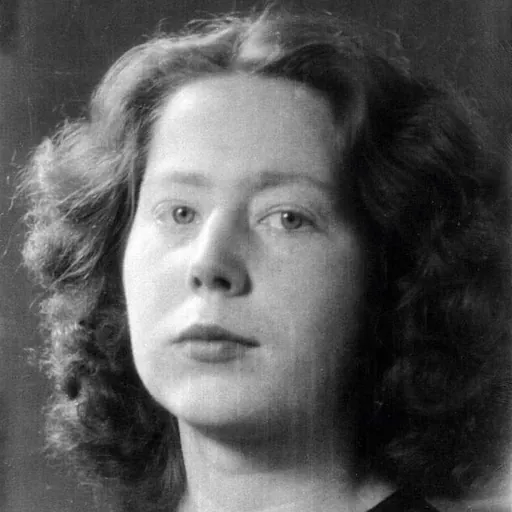
Hannie Schaft
Dutch communist resistance fighter and martyr
About Hannie Schaft
Lived 1920 – 1945 (aged 24). Hannie Schaft was a Dutch partisan, resistance fighter and law student, known for Resistance fighter.
Jannetje Johanna (Jo) Schaft (16 September 1920 – 17 April 1945) was a Dutch resistance fighter during World War II. She became known as "the girl with the red hair" (, ). Her secret name in the resistance movement was "Hannie".
Early life and education Hannie Schaft on the Kleverlaan, Haarlem, between 1938 and 1940. Noord-Hollands Archief / Fotoburo de Boer Jannetje Johanna Schaft was born in Haarlem, the capital of the province of North Holland. Her mother, Aafje Talea Schaft (born Vrijer) was a Mennonite and her father, Pieter Schaft, a teacher, was attached to the Social Democratic Workers' Party. The two were very protective of Schaft because of the death due to diphtheria of her older sister Anna in 1927.
Resistance work
Schaft's resistance work started with small acts. First, she would steal ID cards for Jewish residents (including her friends). Before facing her targets, Schaft put on makeup — including lipstick and mascara — and styled her hair. In one of the few direct quotations that have been attributed to Schaft, she explained to Truus Oversteegen: “I’ll die clean and beautiful.”
Schaft did not, however, accept every assignment. When asked to kidnap the children of a Nazi official she refused. If the plan had failed, the children would have to be killed, and Schaft felt that was too similar to the Nazis' acts of terror. When seen at the location of a particular assassination, Schaft was identified as "the girl with the red hair". Her involvement led "the girl with the red hair" to be placed on the Nazis' most-wanted list. The distress of this situation and her grief over Bonekamp's death forced Schaft to cease resistance work temporarily. Her parents were released after nine months. She was brought to a prison in Amsterdam. After much interrogation, torture, and solitary confinement, Schaft was identified by the roots of her red hair by her former colleague Anna Wijnhoff. took her to the execution site. Schmitz shot her in the head at close range. However, the bullet only grazed Schaft. She allegedly told her executioners: Ik schiet beter "I shoot better!", after which Kuiper delivered a final shot to her head. Schaft's execution was directly ordered by Willy Lages.
Funeral of Hannie Schaft in the presence of Queen Wilhelmina, Princess Juliana and Prince Bernhard on November 27, 1945. Image collection of the municipality of Haarlem Although Schaft's supposed final words became famous, they were never confirmed. A Dutch World War II historian said a search through the Dutch archives does not ever mention Schaft saying "I shoot better!" During a post-war interrogation, Kuiper said he had been talking to Schaft when he suddenly heard a gunshot after which she cried out in pain and started shaking. Realizing that Schmitz had only grazed her, Kuiper took out his submachine gun and fired a burst at Schaft, after which she immediately collapsed. One of the shots hit her in the head, killing her. It was the Dutch novelist Theun de Vries who added Hannie Schaft's last words as a poetic license in his book The Girl With the Red Hair (Het meisje met het rode haar, 1956).
On 27 November 1945, Schaft was reburied in a state funeral at the Dutch Honorary Cemetery Bloemendaal. Members of the Dutch government and royal family attended, including Queen Wilhelmina, who called Schaft "the symbol of the Resistance". With the Queen unwilling to change her mind, Lages's sentence was commuted to life in prison in 1952. He eventually became one of "The Breda Four", one of the last four Nazi war criminals, all of whom were on death row, but eventually reprieved due to Juliana's hesitance, still serving time in the Netherlands. In a decision which sparked public outcry, Lages was released from prison on health grounds in 1966, on the order of Minister of Justice Ivo Samkalden. Lages returned to Germany, where he died in 1971.
After the war, the remains of 422 members of the resistance were found in the Bloemendaal dunes, 421 men and one woman, Hannie Schaft.
Because the Communist Party of the Netherlands celebrated her as an icon, the commemoration at Hannie's grave was forbidden in 1951. A number of books and movies have been made about her. She features in The Assault (De Aanslag, 1982) by Harry Mulisch, also released as a movie directed by Fons Rademakers. Ineke Verdoner wrote a song about her. Author Theun de Vries wrote a biography of her life, The Girl with the Red Hair, which inspired the 1981 movie of the same title by Ben Verbong featuring Renée Soutendijk as Hannie Schaft. Her life is the basis of the 2023 historical novel, To Die Beautiful by Buzzy Jackson. She is remembered each year in November during a national event held in Haarlem.
In the early 1990s, thanks to the Hannie Schaft Memorial Foundation, commemorations were once again permitted. The last Sunday of each November in the Netherlands is a day of remembrance for Schaft's life and work.
Don’t just read it —
keep it.
Full-length biographies made to live with: read them, listen on the way to work, watch them tonight.
- E-book
- Audio
- Video
Instant download · yours to keep · every purchase keeps this site free
Important facts
People in Hannie Schaft's life
Named in this biography and alive at the same time





Related people
Same field, nearest in time




Contemporaries
People whose lives overlapped Hannie Schaft's




Frequently asked questions
Who was Hannie Schaft?
Dutch communist resistance fighter and martyr (1920–1945)
When was Hannie Schaft born?
Hannie Schaft was born on 16 September 1920 in Haarlem.
When did Hannie Schaft die?
Hannie Schaft died on 17 April 1945 in vogelzang.
What was Hannie Schaft's occupation?
Hannie Schaft was a partisan, resistance fighter and law student.
What was Hannie Schaft known for?
Hannie Schaft was known for Resistance fighter.
What nationality was Hannie Schaft?
Hannie Schaft was Dutch.
Sources & further reading
Cite this page
APA: Biography.guide. (2026). Hannie Schaft. https://biography.guide/hannie-schaft/
MLA: "Hannie Schaft." Biography.guide, https://biography.guide/hannie-schaft/.
Chicago: "Hannie Schaft." Biography.guide. https://biography.guide/hannie-schaft/.
Data last updated: 2026-09-23 · Spot an error? Report a correction.
Portrait: Wikimedia Commons · author & licence
Page generated 2026-09-27 05:07 UTC