
Hannah Swarton
Colonial Maine Puritan mother
About Hannah Swarton
Lived 1651 – 1708 (aged 57).
Hannah Swarton (1651 - 12 October 1708), née Joana Hibbert/Hibbard, was a New England colonial pioneer who was captured by Abenaki Indians and held prisoner for years, first in an Abenaki community and later in the home of a French family in Quebec. She was eventually freed and told her story to Cotton Mather, who used it as a moral lesson in several of his works.
Early life Joana Hibbert/Hibbard was the daughter of Robert and Joan Hibbard, baptized on 9 March 1651 at Salem, Massachusetts.
She married John Swarton in Beverly, Massachusetts on 8 January 1670 or 1671. They had five children in Beverly, Massachusetts:
Mary, died on 14 September 1674 Samuel, baptized 8 November 1674
In 1687, John Swarton of Beverly received a 50-acre land grant in North Yarmouth. In his petition he said he was from the channel island of Jersey and had fought with Charles II in Flanders in the Anglo-Spanish War (1654–1660). The family moved from Beverly to Casco Bay in 1689, and were visited there later that year by Benjamin Church.
Captivity, 1690-1695 Capture New England settlers defending a garrison house from attack by French and Native American forces. During King William's War, Louis de Buade de Frontenac, the Governor General of New France, launched a campaign to drive the English from the settlements east of Falmouth, Maine.
On 16 May 1690, the fortified settlement on Casco Bay was attacked by a war party of 50 French-Canadian soldiers led by Jean-Vincent d'Abbadie de Saint-Castin, about 50 Abenaki warriors from Canada, a contingent of French militia led by Joseph-François Hertel de la Fresnière, and 300-400 additional natives from Maine, including some Penobscots under the leadership of Madockawando. Fort Loyal was attacked at the same time. About 75 men in the Casco settlement fought for four days before surrendering on 20 May, on condition of safe passage to the nearest English town. Instead, most of the men, including John Swarton, were killed, and the surviving settlers were taken captive, including Hannah Swarton and her children Samuel, Mary, John, and Jasper Swarton.
Life with the Indians Hannah Swarton's narrative describes the hardships she experienced as a prisoner among the Indians. She was separated from her children at Norridgewock, Maine and later learned that her oldest son Samuel had been killed about two months after being taken prisoner. She never saw or heard of her son John again after they were separated, and she had only sporadic contact with her daughter Mary for the first three years of her captivity. She was reunited with her son Jasper in late 1695.
From May 1690, until February 1691, she traveled on "many weary journeys" with the Indians through the wilderness of northern Maine. She describes being starved and forced to work in the snow without adequate clothing. Hannah's native mistress was a Catholic who had been raised in an English community at Black Point (present-day Scarborough, Maine). She told Hannah that her captivity was punishment for her rejection of Catholicism. |group="Note"
He had her treated at a local hospital (probably the Hôtel-Dieu de Québec) and his wife paid a ransom to Hannah's Indian master. (Although it was common at the time for the French to "buy" English prisoners from the Indians, the French later discouraged this practice. ) He then employed Hannah as a housekeeper, although she was, in effect, a slave. She was fed and clothed well, but was subjected to pressure to convert to Catholicism, which she resisted. Hannah states in her narrative that her French family threatened to have her sent to France, where she would be burned as a heretic, but Hannah continued to refuse to convert, arguing with the "Nuns, Priests, and Friars" whom she met at church, using quotations from scripture. Hannah was forced to attend mass regularly until her mistress decided that she was not going to convert, and thereafter did not require her to go to church. Her daughter, "Mary Swarton, gerl of Cascow," is on the list of "thos remaining Still in the hands of the french at Canada." "Hannah Swarton widdow" is recorded as being "admitted to our communion" at the First Church in Beverly, Massachusetts on 15 November 1695.
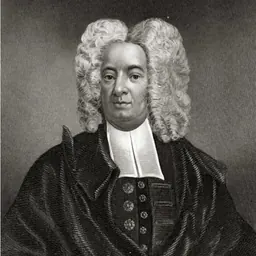
Mather emphasizes the dangers of living in an "ungospelized plantation", a reference to communities in rural Maine without an ordained minister, and which were prone to French (Catholic) influence. Swarton is therefore depicted as a sinner, but one who has atoned, and has been redeemed and returned to grace.
Mather uses the scene in which Swarton, a poorly-educated frontier woman, engages in a lively scriptural debate with the French attempting to convert her to Catholicism, to illustrate theological differences between English Protestantism and Catholicism, as a means of educating Mather's audience. Protestant and Catholic populations were in close contact across North America, and pressure to convert mirrored political and economic influences affecting these largely uneducated, agricultural communities. For women in particular, Mather felt it necessary to keep them from being swayed by males who held some leverage over them, such as priests, landlords, administrators, or employers, and who might use threats to coerce women into conversion. Hannah Swarton's resistance to the pressure from her French masters is exhibited as a prime example of loyalty to her Puritan faith, and has been referred to as "passive forbearance in the face of adversity."
Nonetheless, Mather diminishes his own narrator by dismissing her intellect and memory: "But it's bootless for me, a poor woman, to acquaint the world with what arguments I used, if I could now remember them; and many of them are slipt out of my memory." Mather depicts Duston as actively ending her captivity by killing her captors and escaping, although he avoided the moral problem raised by Duston's murder of six Indian children. Swarton makes no attempt to escape, but shows endurance in her faith and willingness to recognize and atone for her sins.
Death Hannah Swarton died on 12 October 1708, in Beverly, Massachusetts at the age of 57.
Don’t just read it —
keep it.
Full-length biographies made to live with: read them, listen on the way to work, watch them tonight.
- E-book
- Audio
- Video
Instant download · yours to keep · every purchase keeps this site free
Important facts
People in Hannah Swarton's life
Named in this biography and alive at the same time



Contemporaries
People whose lives overlapped Hannah Swarton's





Frequently asked questions
Who was Hannah Swarton?
colonial Maine Puritan mother
When was Hannah Swarton born?
Hannah Swarton was born on 9 March 1651 in Salem, Massachusetts.
When did Hannah Swarton die?
Hannah Swarton died on 12 October 1708 in Beverly, Massachusetts.
Sources & further reading
Cite this page
APA: Biography.guide. (2026). Hannah Swarton. https://biography.guide/hannah-swarton/
MLA: "Hannah Swarton." Biography.guide, https://biography.guide/hannah-swarton/.
Chicago: "Hannah Swarton." Biography.guide. https://biography.guide/hannah-swarton/.
Data last updated: 2026-09-20 · Spot an error? Report a correction.
Page generated 2026-09-27 05:10 UTC