
About Hani al-Rahib
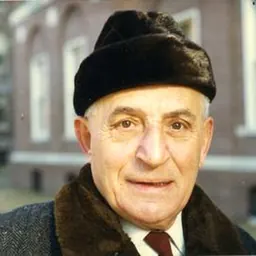
Lived 1939 – 2000 (aged 60). Hani al-Rahib was a Syrian novelist, short story writer, academic, literary critic and writer.
Hani Muhammad-Ali al-Rahib (; 30 November 1939 – 6 February 2000)
Biography and career
Biography Hani Muhammad Ali al-Rahib was born in the village of Mashqita in Latakia Governorate to a poor farming family.
Literary career According to Salah Salah, existentialism prevailed in al-Rahib's first novels, (1961) Al-Mahzūmūn and Sharkh fi tarikh tawil (1970), some of his novels were obsessed with formal experimentation and striving to invent new methods of narration, as in his 1977 novel Sharkh fi tarikh tawil and Alf layla wa-laylatān. The two novels seemed influenced by the French New Wave. Hot political issues were read in the two novels. In Alf layla wa-laylatān, he dealt with more disappointments that resulted from the defeat suffered in the Six-Day War.
Al-Rahib wrote his last novel, I Have Drawn a Line on the Sand, in 1999 after Kuwait University, where he had been teaching, refused to renew his contract because of an article he wrote about Salman Rushdie's novel The Satanic Verses in which he called for freedom of expression for writers. His last novel generated negative reactions among some Kuwaiti writers.
Hani the novelist
Hani Al-Rahib is considered a model for the renewed novelist. He worked on developing the Syrian narrative through his work and his tireless research on novelistic expression, a novel technique, and language economy. The linguistic tension for him derives its texture from a unified conception of language as being structural, still in the state of becoming, and on that Hani had said: "As long as the novel is an almost recent phenomenon in our literary heritage, it should contain a new linguistic and stylistic structure." His writing had a special effect on the Arabic novel, from structure to content, and formed a milestone in the development of the contemporary Arab novel.
One Thousand and Two Nights
In this novel, the writer tries to tell the story of 30 people who think they are on their own until the defeat of June hits them, and they discover that they are but a small part of a defeated society and the length of the defeat is 1000 years. The novel represented in its structure the shape of this society, and the time in it is contiguous or simultaneous. Hani said about the novel: " I felt confident enough to present the wreckage of a novel, I owe somewhat to the structure of A Thousand and One Nights, which tells a thousand tales".
The Hills
This novel was published in 1989 in Beirut. The writer didn't use conversations but used meanings instead. It talks about two opposite worlds, the world of myths, dreams, desires, and obsessions born of the torments and barrenness of society, as described by the novelist Hassan Hamid, and the world of real and known history. It is set in multiple timelines like the historical timeline (World war 1 and 2 and the year 1946) and the psychological timeline which is evident in many of the characters in the novel, then there is the mythical timeline (represented by Faidah) and there is what Al-Rahib called the timeline of no time, that is represented by Darwish. It's a novel that talks about Arabs, on the experience of progress in the contemporary history of the Arab nation, which is not specific to one Arab country, so he used the names of personalities and countries with special significance derived from the history of the region.
His position on the Nobel Prize
When once asked about his flirting with the and his position on the Nobel Prize, Al-Rahib answered: "As for the Nobel Prize, I am not a candidate for it, and what I have written so far are eight novels, only two of them are worth reading and the other six are OK, and I also have two collections of short stories. This prize, if we took away the financial aspect, which is the only positive thing about it, is a very notorious prize due to the interference of politics in it away from cultural considerations, and in particular its promotion of imperialist and capitalist values that do not suit me as the Arab who is proud of my heritage and civilization."
Don’t just read it —
keep it.
Full-length biographies made to live with: read them, listen on the way to work, watch them tonight.
- E-book
- Audio
- Video
Instant download · yours to keep · every purchase keeps this site free
Important facts
People in Hani al-Rahib's life
Named in this biography and alive at the same time

Related people
Same field, nearest in time






Contemporaries
People whose lives overlapped Hani al-Rahib's





Frequently asked questions
Who was Hani al-Rahib?
Syrian novelist and literary academic
When was Hani al-Rahib born?
Hani al-Rahib was born on 30 November 1939 in Mashqita.
When did Hani al-Rahib die?
Hani al-Rahib died on 6 February 2000 in Damascus.
What was Hani al-Rahib's occupation?
Hani al-Rahib was a novelist, short story writer, academic, literary critic and writer.
What nationality was Hani al-Rahib?
Hani al-Rahib was Syrian.
Sources & further reading
Cite this page
APA: Biography.guide. (2026). Hani al-Rahib. https://biography.guide/hani-al-rahib/
MLA: "Hani al-Rahib." Biography.guide, https://biography.guide/hani-al-rahib/.
Chicago: "Hani al-Rahib." Biography.guide. https://biography.guide/hani-al-rahib/.
Data last updated: 2026-09-20 · Spot an error? Report a correction.
Page generated 2026-09-27 05:18 UTC