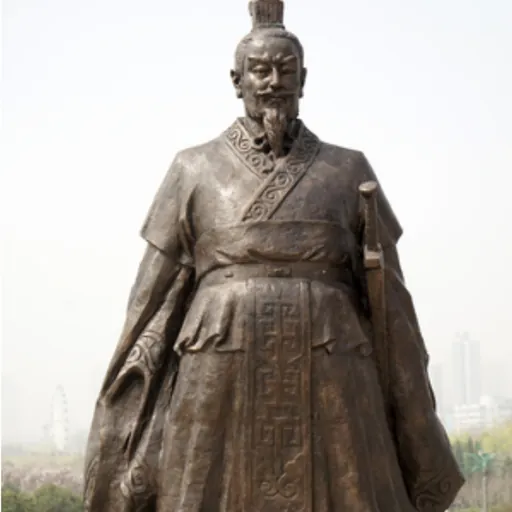
About Han Fei
Lived 279 BC – 232 BC (aged 46–47). Han Fei was a philosopher and politician.
Han Fei (233 BC), also known as Han Feizi or Han Fei Tzu, was a Chinese Legalist philosopher and statesman during the Warring States period. He was a prince of the state of Han.
Han Fei is often considered the greatest representative of Legalism for the Han Feizi, a later anthology of writings traditionally attributed to him, which synthesized the methods of his predecessors. author of The Prince. Zhuge Liang is said to have attached great importance to the Han Feizi.
After the early demise of the Qin dynasty, the Legalist school was officially vilified by the Han dynasty that succeeded it. Despite its outcast status throughout the history of imperial China, Han Fei's political theory and Legalist ideas continued to heavily influence every dynasty thereafter, and the Confucian ideal of rule without laws was never to be realized. In the Stratagems of the Warring States, Han Fei supposedly slanders Qin diplomat Yao Jia, and the Qin king orders Han Fei's execution after Yao Jia successfully defends himself.
Life The exact year of Han Fei's birth remains unknown, however, scholars have placed it at .
His works ultimately ended up in the hands of King Ying Zheng of Qin, who commented, "If I can make friends with this person [Han Fei], I may die without regrets." and invited Han Fei to the Qin court. Han Fei presented the essay "Preserving the Han" to ask the king not to attack his homeland, but his ex-friend and rival Li Si used that essay to have Han Fei imprisoned on account of his likely loyalty to Han. Han Fei responded by writing another essay named "In the first time of meeting Qin king", hoping to use his writing talent to win the king's heart. Han Fei did win the king's heart, but not before Li Si forced him to commit suicide by drinking poison. The Qin king afterward regretted Han Fei's death.
Summary of his legalism Xunzi formed the hypothesis that human nature is evil and virtueless, therefore suggesting that human infants must be brought to their virtuous form through social-class-oriented Confucian moral education. Without such, Xunzi argued, man would act virtueless and be steered by his own human nature to commit immoral acts. Han Fei's education and life experience during the Warring States period, and in his own Han state, contributed his synthesis of a philosophy for the management of an amoral and interest-driven administration, to which morality seemed a loose and inefficient tool. Han agreed with his teacher's theory of "virtueless by birth", but as in previous Legalist philosophy, pragmatically proposed to steer people by their own interest-driven nature.
Don’t just read it —
keep it.
Full-length biographies made to live with: read them, listen on the way to work, watch them tonight.
- E-book
- Audio
- Video
Instant download · yours to keep · every purchase keeps this site free
Important facts
more
Hane-tseePeople in Han Fei's life
Named in this biography and alive at the same time

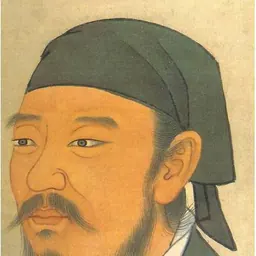
Related people
Same field, nearest in time





Contemporaries
People whose lives overlapped Han Fei's


Frequently asked questions
Who was Han Fei?
Chinese Legalist, 280–233 BCE
When was Han Fei born?
Han Fei was born in 279 BC in Xinzheng.
When did Han Fei die?
Han Fei died in 232 BC in Xianyang County.
What was Han Fei's occupation?
Han Fei was a philosopher and politician.
What nationality was Han Fei?
Han Fei's recorded nationality: Han.
Sources & further reading
Cite this page
APA: Biography.guide. (2026). Han Fei. https://biography.guide/han-fei/
MLA: "Han Fei." Biography.guide, https://biography.guide/han-fei/.
Chicago: "Han Fei." Biography.guide. https://biography.guide/han-fei/.
Data last updated: 2026-09-21 · Spot an error? Report a correction.
Portrait: Wikimedia Commons · author & licence
Page generated 2026-09-27 04:58 UTC