
About Halson V. Eagleson
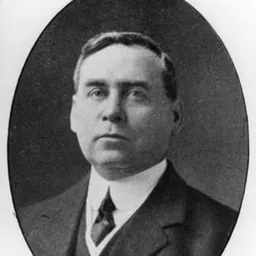
Lived 1903 – 1992 (aged 89). Halson V. Eagleson was an American physicist and university teacher.
Halson Vashon Eagleson Jr. (March 14, 1903 – September 23, 1992) was an American physicist and professor. Eagleson's research focused on acoustics and the behavior of sound.
Eagleson came from a prominent black family in Bloomington, Indiana. After earning his PhD from Indiana University in 1939, he was appointed professor of physics and head of the department of physics at Morehouse College and Clark College (now Clark Atlanta University) in 1940. In 1947, he became professor of physics at Howard University and served there for 24 years where he researched acoustics and the behavior of sound.
Early life Halson V. Eagleson Jr., was born on March 14, 1903, in Bloomington, Indiana.
Family Eagleson's father had been born into slavery and moved to Bloomington in the 1880s, where he operated Eagleson Shaving Parlors and was a well-known barber in the Bloomington area. The Eagleson family was prominent in the Bloomington and Indiana University communities, and five of six children attended the university. Eagleson's brother Oran became a pioneer black psychologist and educator. Another brother, Preston (1876–1911), became the first African American intercollegiate athlete at Indiana University Bloomington. Preston's son, Wilson Vashon Marshall, later married Frances Marshall Eagleson, who was the first Black woman graduate from Indiana University. Their son, Wilson V. Eagleson, became a decorated United States Army Air Force officer and combat fighter pilot with the 332nd Fighter Group's 99th Fighter Squadron, best known as the Tuskegee Airmen.
In February 2022, the city of Bloomington changed the name of the north–south street that cuts through the Indiana University campus to Eagleson Avenue, honoring the Eagleson family. The street had previously been named Jordan Avenue, after David Starr Jordan, a former president of the university who had been a proponent of eugenics.
Education Eagleson attended primary and secondary schools in the Bloomington area, and there he first developed an interest in physics and music. He then went on to attend Indiana University Bloomington, where he received his bachelor's degree in 1926. He remained at the university for his graduate studies, completing his master's degree in 1931 and his PhD in 1939. His thesis, publishing in 1939, was titled "The influence of certain atmospheric conditions upon sound transmission." Upon receiving his doctorate he became the first African American person in the history of the university to earn the degree in physics, and the fifth African American person in the country to receive a PhD in physics. Eagleson was preceded by Hubert Mack Thaxton (PhD 1938, University of Wisconsin–Madison), and received his degree the same year Herman Branson also graduated with a PhD, from University of Cincinnati.
As a student, Eagleson played in dance and string bands to help finance his tuition. He was the first African American student to be elected to Sigma Xi, the honorary science society. He was also the first African American person at the university to earn an "I" letter in band. However, in 1922 as Eagleson was preparing to receive the "I," he was kidnapped by white students affiliated with the Ku Klux Klan who attempted to prevent him from performing at a Purdue University game and earning the letter. Shortly before leaving to play in the November 10, 1922, Indiana-Purdue game in Lafayette, Indiana, three white students kidnapped Eagleson and took him to Spencer, Indiana, causing him to miss the bus to the game. At one point, a man posing as a detective appeared and arrested Eagleson. He was eventually found and his kidnappers were brought to trial in 1923, but the all-white jury did not charge any of the students. The Eagleson family later refiled the case, which was dismissed for lack of evidence. Sixty years passed before Eagleson formally received his "I" letter in band for his musical achievements, after a 1982 alumni meeting in Bloomington.
Career In 1927, while still pursuing his graduate studies, Eagleson began working as an instructor in mathematics and physics at Morehouse College. There, he also served as the college's band director.
He later was appointed professor of physics and head of the department of physics in 1940 in a joint appointment at Morehouse College and Clark College (now Clark Atlanta University). In 1947, he became professor of physics at Howard University and served there for 24 years. For three years he served as chairman of the department of physics at Howard.
Outside of his teaching duties, he also was a consultant for the Environmental Protection Agency on noise pollution, and a member of an advisory group that evaluated scientific instruments developed by Bell Labs.
Awards and legacy In 1972, the first formal meeting of African-American physicists was held at Fisk University in Nashville, Tennessee, in an event called the Day of Scientific Lectures and Seminars (DOSLAS). This first meeting was organized to honor the work of Eagleson, John McNeile Hunter, and Donald A. Edwards. About 40 physicists attended this meeting, and it was the impetus for the creation of the National Society of Black Physicists, which was formally established in 1977.
In 1985, Indiana University awarded Eagleson with an honorary degree in science. Silver Beaver award of the Boy Scouts of America First recipient of the National Physics Fellow's Award
Personal life Eagleson was married twice. His first wife, Eula Strong, died in childbirth. He later married Helen B. Clark and they had two children.
Outside of his teaching career and professional life, Eagleson was active in religious communities, as a member of the Mount Carmel Baptist Church in Washington, D.C., the Gideons International group, and the National Capital Area Council of Churches. He was also a member of the Anglers All group, a fishing club. He was fluent in Spanish, French, and German, and played numerous instruments, including the piano, saxophone, clarinet, and violin.
Don’t just read it —
keep it.
Full-length biographies made to live with: read them, listen on the way to work, watch them tonight.
- E-book
- Audio
- Video
Instant download · yours to keep · every purchase keeps this site free
Important facts
People in Halson V. Eagleson's life
Named in this biography and alive at the same time




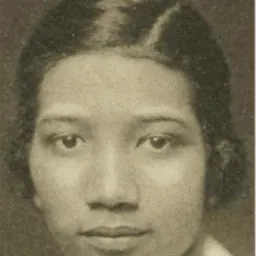


Related people
Same field, nearest in time

Contemporaries
People whose lives overlapped Halson V. Eagleson's
Frequently asked questions
Who was Halson V. Eagleson?
American physicist
When was Halson V. Eagleson born?
Halson V. Eagleson was born on 14 March 1903 in Bloomington.
When did Halson V. Eagleson die?
Halson V. Eagleson died on 23 September 1992 in Washington, D.C..
What was Halson V. Eagleson's occupation?
Halson V. Eagleson was a physicist and university teacher.
What nationality was Halson V. Eagleson?
Halson V. Eagleson was American.
Sources & further reading
· Wikipedia: Halson V. Eagleson
Cite this page
APA: Biography.guide. (2026). Halson V. Eagleson. https://biography.guide/halson-v-eagleson/
MLA: "Halson V. Eagleson." Biography.guide, https://biography.guide/halson-v-eagleson/.
Chicago: "Halson V. Eagleson." Biography.guide. https://biography.guide/halson-v-eagleson/.
Data last updated: 2026-09-26 · Spot an error? Report a correction.
Page generated 2026-09-27 05:14 UTC