
About Hal G. Evarts
Lived 1887 – 1934 (aged 47). Hal G. Evarts was a Swedish and American novelist and writer.
Hal G. Evarts (August 24, 1887 - October 18, 1934) was an American short story writer and novelist. Born in Kansas, he explored the West extensively soaking up everything about the natural world. Hal eventually wrote about his experiences and knowledge in his best-selling Western novels and magazine short stories. Several of his books were adapted to film.
Early life Named Harry at birth, he was quickly nicknamed Hal. His father, George, died of typhoid fever when he was 12 days old. His mother, Emma, and sister, Nellie, were left to raise the restless boy.
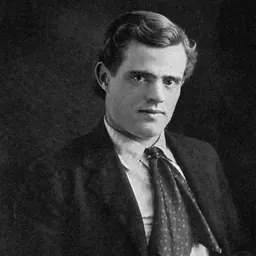
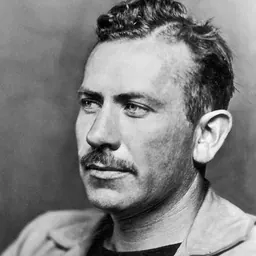
During the next three years, Hal said he was a "gypsy around the country" traveling on foot, sometimes with team and wagon, but always with "gun, blanket, a pot and frying pan, a little bacon, salt and flour and baking soda, with a fishline wound round my hat." It opened the flood gates for Hal as the Saturday Evening Post published a short story called "The Big Bull of Shoshone" in the November 1, 1919, then "The Bald Face" in the November 15, 1919, issue, followed by "The Cross Pull" serialized in the next four weekly issues starting November 22, 1919. Hal had quickly joined the likes of Joseph Conrad, O. Henry, Rudyard Kipling, Ring Lardner, Jack London, F. Scott Fitzgerald, John Steinbeck, Edith Wharton, and Owen Wister whose stories were read in the Post by millions each week.
At that time it was common for authors to contract with a book publisher expanding the serialized version in the Big Slicks. Hal’s first full-length book came out in 1921. All but one of his 15 novels were serialized in magazines prior to being published in book form.
Wanderlust, Hollywood, and family Hollywood was eager to adapt The Cross Pull into a film. The movie, retitled The Silent Call, was the first to feature a dog as the main character. Strongheart (the dog) became wildly popular with the public, starring later in other movies like Jack London's White Fang in 1925. As filming began, he and Sylvia headed to Canada's Northwest Territories and the Mackenzie River, a long trip that he detailed in a two-part story called "End of Steel" published in the Saturday Evening Post.
Over the years Hal was always on the go, sometimes alone and sometimes with Sylvia and young Hal. He frequently went hunting. He took a 3-month voyage with his son to many islands in the South Pacific via Honolulu and Australia. The family moved to the Florida Keys for several months but had to return to Los Angeles. Hal was entranced with the California desert, taking many trips to Death Valley and around the Mojave Desert. And he traveled north to Kodiak Island and other parts of Alaska.
Automobile travel was still in its infancy. But Hal was not deterred by rough travel and lack of amenities. The three of them found their way in a seven passenger Buick throughout the West to Vancouver, Canada, then back through the Cascades and Mount Rainier, Idaho, Lake Tahoe, to Las Vegas and back to Los Angeles with a minimum of breakdowns and misadventures.
All the while, these were escapes from the Hollywood life he had no interest in but had to tolerate. Hollywood was paying many of the bills. In 1930, Hal's book The Shaggy Legion was under film studio development with a $2 million budget, one of the largest since The Birth of a Nation in 1915. Raoul Walsh was the director. Renamed The Big Trail, it was the first starring role for a handsome young man named Marion Morrison. When the studio asked Walsh to suggest a new name for the actor, Walsh asked Hal for ideas. The name John Wayne emerged from that discussion.
Legacy Hal's writings had a significant influence on the public's view regarding many environmental and conservation issues of the times:
In 1922, Stephen Mather and Horace Albright, directors at the fledgling National Park Service, were trying to promote public awareness of parks and supported the Post's George Lorimer's assigning Hal to write about them. Some two dozen articles appeared in 1923 and 1924 with Hal's observations, opinions, and recommendations regarding places such as Sequoia Park and Kings Canyon in California's High Sierra, Glacier in Montana, plus Zion and the Grand Canyon in the Southwest. Albright, who would remain a life-long friend, wrote Hal "...you have done a great thing for the American people and made things easier for us. We are all grateful to you and appreciate your fine public-spirited stand on our policies and principles." argued that government regulation was necessary to prevent the fur trade from "committing suicide" since fur-bearing animals were being taken faster than they could regenerate their populations. In that article, Hal extended that argument to fishing, lumbering, and other industries that use formerly abundant natural resources. He recommended the expansion of Yellowstone into the Tetons and General Grant into King's Canyon by requiring the Forest Service to turn over some of its land, permanently closing it to private enterprise. Long after his death both expansions were achieved. Although not an eager public speaker, Hal actively crusaded against a government agency and Stockgrower's Association lobby who were promoting the use of poisons to control the wild "nuisance" animals such as coyotes and ground squirrels. He gave a keynote speech in Philadelphia to a group of conservation-minded people. He submitted a long, passionate piece to the Post laying out his first-hand observations of the many negative impacts of the use of poisons. Unfortunately Lorimer rejected the manuscript as too long and too controversial. His words were noted by government officials at the time. Secretary of Agriculture Henry Wallace asked him to serve on a committee formed to study problems with Kaibab deer in Arizona and the Isaac Walton League urged him to become a member of a conservation advisory board formed by President Calvin Coolidge.
Novels and other publications Source:
The Cross Pull. New York: Alfred A. Knopf, 1920. (Serialized first in the Saturday Evening Post, 4 parts: November 22, 1919 – December 13, 1919. Illustrated by Frank B. Hoffman) The Bald Face. New York: Alfred A. Knopf, 1921. (Short story first published in the Saturday Evening Post: November 15, 1919) The Yellow Horde. Boston: Little, Brown, 1921. (Serialized first in The Redbook, 3 parts: August–October 1920. Illustrated by Charles Livingston Bull.) The Settling of the Sage. Boston: Little, Brown, 1922. (Serialized first in The Redbook, 5 parts: October 1921-February 1922. Illustrated by Douglas Duer.) Fur Sign. Boston: Little, Brown, 1922. (Short story first published in The Country Gentleman: December 17, 1921) The Passing of the Old West. Boston: Little, Brown, 1923. Tumbleweeds. Boston: Little, Brown, 1923. (Serialized first in the Saturday Evening Post, 4 parts: September 2, 1922 – September 23, 1922. Illustrated by W.H.D. Koerner.) Spanish Acres. Boston: Little, Brown, 1925. (Serialized first in the Saturday Evening Post, 5 parts: June 27, 1925 – July 25, 1925. Illustrated by J. Clinton Shepherd.) The Painted Stallion. Boston: Little, Brown, 1926. (Serialized first in the Saturday Evening Post, 3 parts: September 26, 1925 – October 10, 1925. Illustrated by W.H.D. Koerner.) The Moccasin Telegraph. Boston: Little, Brown, 1927. (Serialized first in the Saturday Evening Post, 5 parts:July 23, 1927 – August 20, 1927. Illustrated by Albin Henning.) Fur Brigade. Boston: Little, Brown, 1928. (Serialized first in the Saturday Evening Post, 6 parts: April 21, 1928 – May 26, 1928. Illustrated by W.H.D. Koerner.) Tomahawk Rights. Boston: Little, Brown, 1929. (Serialized first in the Saturday Evening Post, 4 parts: April 6, 1929 – April 27, 1929. Illustrated by W.H.D. Koerner.) The Shaggy Legion. Boston: Little, Brown, 1930. (Serialized first in the Saturday Evening Post, 6 parts: November 30, 1929 – January 4, 1930. Illustrated by W.H.D. Koerner.) Shortgrass. Boston: Little, Brown, 1932. (Serialized first in the Saturday Evening Post, 5 parts: May 21, 1932 – June 18, 1932. Illustrated by W.H.D. Koerner.) Wolf Dog. Garden City, NY: Doubleday, Doran, 1935. (Serialized first in the Saturday Evening Post, 6 parts: July 14, 1934 – August 18, 1934. Illustrated by W.H.D. Koerner.)
Special 4-book animal series Jerbo the Jumper; Kobi of the Sea; Phantom the White Mink; Swift the Kit Fox. Whitman Publishing Co., 1930. All illustrated by Don Nelson.
Magazine articles From 1919 through 1935, in addition to those listed above, Hal had nearly 100 other stories or articles appear in magazines such as The Red Book, Collier's, Saturday Evening Post, Country Gentleman, and Outdoor Life.
Film adaptations and screenplays
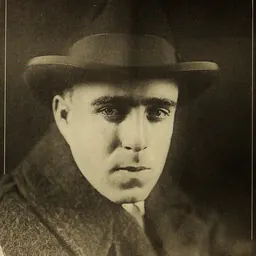
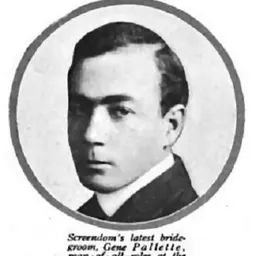
The Silent Call, 1921. Based on The Cross Pull. Directed by Laurence Trimble. Starring Strongheart the Dog, John Bowers, and Kathryn McGuire. Tumbleweeds, 1925. Based on Tumbleweeds. Directed by King Baggot. Starring William S. Hart in his last movie. The Big Trail, 1930. Based on The Shaggy Legion. Directed by Raoul Walsh. Starring John Wayne in his first lead role, Marguerite Churchill, and El Brendel. The Santa Fe Trail, 1930. Based on Spanish Acres. Directed by Otto Brower. Starring Richard Arlen, Rosita Moreno, and Eugene Pallette. Born to Fight, 1932. Directed by Walter Mayo. Starring El Brendel, Janet Chandler, and Onslow Stevens.
Don’t just read it —
keep it.
Full-length biographies made to live with: read them, listen on the way to work, watch them tonight.
- E-book
- Audio
- Video
Instant download · yours to keep · every purchase keeps this site free
Important facts
People in Hal G. Evarts's life
Named in this biography and alive at the same time




Related people
Same field, nearest in time


Contemporaries
People whose lives overlapped Hal G. Evarts's



Frequently asked questions
Who was Hal G. Evarts?
American novelist (1887-1934)
When was Hal G. Evarts born?
Hal G. Evarts was born on 24 August 1887 in Topeka.
When did Hal G. Evarts die?
Hal G. Evarts died on 18 October 1934.
What was Hal G. Evarts's occupation?
Hal G. Evarts was a novelist and writer.
What nationality was Hal G. Evarts?
Hal G. Evarts was Swedish and American.
Sources & further reading
Cite this page
APA: Biography.guide. (2026). Hal G. Evarts. https://biography.guide/hal-g-evarts/
MLA: "Hal G. Evarts." Biography.guide, https://biography.guide/hal-g-evarts/.
Chicago: "Hal G. Evarts." Biography.guide. https://biography.guide/hal-g-evarts/.
Data last updated: 2026-09-22 · Spot an error? Report a correction.
Page generated 2026-09-27 05:25 UTC