
Hajo Meyer
German-Dutch physicist and political activist
About Hajo Meyer
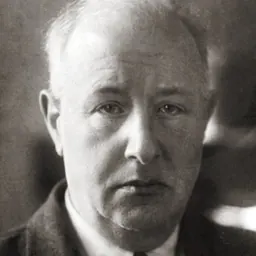
Lived 1924 – 2014 (aged 90). Hajo Meyer was a Dutch and German physicist, writer, musical instrument maker, political activist, violin maker and opinion journalist.
Short movie My good fortune in Auschwitz. Mostly about his friendship with fellow prisoner Jos Slagter (1907–1977) Hajo Meyer (; ; born Hans-Joachim Gustav Meyer, ; 12 August 1924 – 23 August 2014) was a German-born Dutch physicist, Holocaust survivor and political activist. While primarily known for his public commentaries in terms of the European Jewish community, he is also noted for his work directing the facility Philips Natuurkundig Laboratorium for many years. In this capacity Meyer played a role in developing the ASML wafer stepper, a photolithography machine used in the production of integrated circuits (ICs) on silicon wafers.
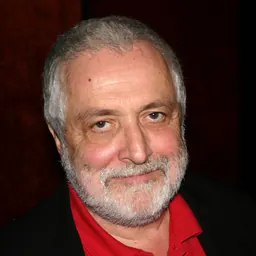
Early life Meyer was born on 12 August 1924, as the youngest of three brothers, in Bielefeld, Germany, to Therese ( Melchior) and Gustav Meyer, a notary who had fought in the First World War. Meyer was Jewish. Aged 14, he was sent by his parents from Nazi Germany to the Netherlands on 4 January 1939 as part of a Kindertransport convoy, and settled in Holland on his own. Their decision was made after Hajo was no longer permitted to attend school in the aftermath of Kristallnacht, His parents' maxim was: 'We do not dote to death on children' (bei uns gibt es keine ). He went into hiding in 1943, but was arrested after a year and spent ten months in Auschwitz. After Auschwitz he swore would never speak German again. He broke the rule at a scientific conference in Amsterdam after the war, when he happened to be speaking on a similar topic to that discussed by Hermann Haken.
His parents had originally been deported to Theresienstadt concentration camp in 1943, and after his father succumbed to an illness on 15 May 1944, it was decided that there was no more reason to allow his widow Therese to stay on, and that she should be deported to Auschwitz. She had hidden a cyanide capsule in a piece of bread and chose suicide, knowing that the chances of survival there were non-existent. His correspondence with his parents while in exile during the war were published. The autobiography of his elder brother, Alfred, also dwells on their experiences during the war.
Post-Holocaust After the war, Meyer returned to the Netherlands, and studied theoretical physics. He eventually became director of the Phillips Physics Laboratory (NatLab). He built about 50 of them. founded in 2008 and the Dutch political party GroenLinks.
He was the first signatory of a statement by 250 Holocaust survivors and descendants of Holocaust survivors protesting the killings that were taking place during the 2014 Israel-Gaza Conflict.
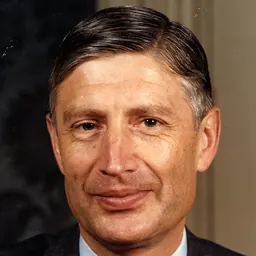
Visit to Gaza and the West Bank In 2005 Meyer visited the Occupied Palestinian territories, together with former Dutch prime minister Dries van Agt and other former ministers from Germany and Ireland. Meyer concluded that the Gaza Strip was "one big concentration camp". The situation in Hebron he found even worse. Israeli settlers came to live in the middle of the city, which meant that thousands of Palestinian shops and businesses had to close. Palestinians who live in the city are being assaulted there on a regular basis. Meyer witnessed one assault that could easily have become deadly.
Book Meyer wrote a book titled Het einde van het Jodendom (The End of Judaism) in 2003. In 2007 an English language edition of the book was published.
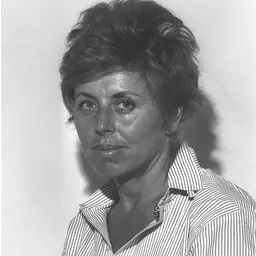
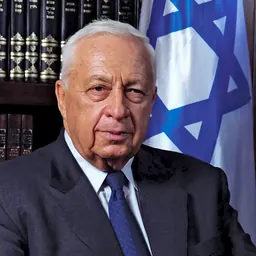
In his book Meyer draws a comparison between the way Jews were treated in the 1930s by the Germans in Germany and later in The Netherlands and what Israel is doing to the Palestinians, in Israel itself as well as in the occupied territories. All with the objective of making them leave the country. It was not until this strategy turned out not to work that Hitler began to consider other solutions. Elements of this treatment were: Dehumanizing Jews by referring to them as animals, parasites or a plague. The then Israeli Chief of Staff Moshe Ya'alon is quoted as speaking of the Palestinians as "cancer". Prime Minister Ariel Sharon later corroborated this statement as "true and correct". Former Minister of Education, Shulamit Aloni, confirmed the demonization of the Arabs in Israeli schoolbooks. Exaggerating the threat. Hitler was obsessed by the notion that Jews were planning to sweep Germany from the map. Likewise Israelis insist that the Palestinians not only want to drive Israel into the sea, but actually have the capability to do so. Intimidation and harassment by the armed forces. Meyer finds it particularly painful that his "own people" are now involved in similar behaviour towards the Palestinians. Applying collective punishment. For instance: If a Jew did something that displeased the regime, his or her relatives could be punished for it. Likewise if a member of Hamas blows himself up, his family home may be destroyed.
The book accuses the successive governments of Israel of using the Holocaust to downplay the suffering and injustices they inflict on the Palestinians.
"Contrary to what Israel's government would have everyone believe, criticism of Israel is not the same as anti-Semitism", Meyer writes. In fact: "...at present the only reason to expect a revival of dangerous anti-Semitism is Israel's increasingly reprehensible policies".
In the epigraph of his book Meyer quotes Rabbi Hillel: "That which is hateful to you do not do to your neighbor. That is the whole of the Torah." In the last chapter he states: "A people that has betrayed the basic ethical foundation of its long and astonishing survival will lack the vitality to preserve an identity of its own in the midst of an increasingly homogenous world".
Lectures During his lectures Meyer repeatedly argued that there are parallels between the Nazi treatment of Jews leading to (but not including) the Holocaust, and Israel's dehumanization of Palestinians. He expanded on this sense of an analogy in an article in the Huffington Post: "I cannot help but hear echoes of the Nazi mythos of "blood and soil" in the rhetoric of settler fundamentalism which claims a sacred right to all the lands of biblical Judea and Samaria. The various forms of collective punishment visited upon the Palestinian people - coerced ghettoization behind a "security wall"; the bulldozing of homes and destruction of fields; the bombing of schools, mosques, and government buildings; an economic blockade that deprives people of the water, food, medicine, education and the basic necessities for dignified survival - force me to recall the deprivations and humiliations that I experienced in my youth."
At one of his talks, organized and hosted by the leader of the UK's Labour Party, Jeremy Corbyn, in 2010, Meyer was later reported to have repeatedly likened Israel's actions against the people of the Gaza Strip to the mass killing of Jews in the Holocaust and likened the government of Israel to that of Nazi Germany. During the talk, Meyer said that "Judaism in Israel has been substituted by the Holocaust religion, whose high priest is Elie Wiesel."
Meyer claimed Zionism predates fascism, that Zionists and fascists had a history of cooperation, charging, among other things, that Israel wants to foment anti-Semitism in the world to encourage more Jews to migrate to Israel.
Meyer spoke in favor of the Boycott, Divestment and Sanctions movement against Israel.
Accusation of antisemitism Henryk Broder publicly accused Meyer and his editor Abraham Melzer as being "capacities for applied Judeophobia" (Kapazitäten für angewandte Judäophobie) and producing "brown garbage" (braunen Dreck). Meyer and Melzer sued and in 2007 a court forbade Broder to make these statements. On appeal, a court mostly cleared Broder and Melzer saying that the statements were "legally admissible criticism" and stating that "Jewish anti-Semitism" exists.
Death On 23 August 2014, Meyer died in his sleep in Heiloo, Netherlands at the age of 90.
Don’t just read it —
keep it.
Full-length biographies made to live with: read them, listen on the way to work, watch them tonight.
- E-book
- Audio
- Video
Instant download · yours to keep · every purchase keeps this site free
Important facts
People in Hajo Meyer's life
Named in this biography and alive at the same time




Related people
Same field, nearest in time


Contemporaries
People whose lives overlapped Hajo Meyer's


Frequently asked questions
Who was Hajo Meyer?
German-Dutch physicist and political activist
When was Hajo Meyer born?
Hajo Meyer was born on 12 August 1924 in Bielefeld.
When did Hajo Meyer die?
Hajo Meyer died on 23 August 2014 in Heiloo.
What was Hajo Meyer's occupation?
Hajo Meyer was a physicist, writer, musical instrument maker, political activist, violin maker and opinion journalist.
What nationality was Hajo Meyer?
Hajo Meyer was Dutch and German.
Sources & further reading
Cite this page
APA: Biography.guide. (2026). Hajo Meyer. https://biography.guide/hajo-meyer/
MLA: "Hajo Meyer." Biography.guide, https://biography.guide/hajo-meyer/.
Chicago: "Hajo Meyer." Biography.guide. https://biography.guide/hajo-meyer/.
Data last updated: 2026-09-26 · Spot an error? Report a correction.
Page generated 2026-09-27 05:16 UTC