
Habib Usman bin Yahya
Mufti of Batavia
About Habib Usman bin Yahya
Lived 1822 – 1913 (aged 90–91). Habib Usman bin Yahya was an Indonesian mufti.
Uthman bin Yahya (; full name: 17 Rabi' al-awwal 1238 AH – 21 Safar 1331 AH; 1822 – 1913) was an Islamic scholar who served as Grand Mufti of Batavia in 19th century of Dutch East Indies.
History Habib Uthman bin Yahya was born in Pekojan, Batavia in 1822 (17 Rabi' al-awwal 1238 AH). Uthman came from the Ba 'Alawi sada family from his father, Sayyid Abdullah bin Aqil bin Umar bin Yahya. His mother was Aminah, a daughter of Shaykh Abdurrahman, who was the cousin to the scholar Abdullah al-Misri. His father, Abdullah, and his grandfather, Aqil, were born in Mecca, while his great grandfather, Umar, was born in the village of Qarah al-Shaikh in Hadhramaut, who later moved and died in Medina. Snouck Hurgronje explained that his grandfather was a respected scholar as Sheikh of Sadah for 50 years and died in Mecca in 1823 (1238 AH).
His father moved to Mecca when Uthman was 3 years old, so Uthman was taken care of by his grandfather, Aqil. His grandfather has many other sons, besides the father of Uthman. Many of his sons became scholars in Mecca, such as Sayyid Ishaq, who died in the city of Ta'if, and Sayyid Qasim who continued Agil's leadership as Shaikh of Sada in Mecca.
Education Uthman studied Qur'an, Tafsir and other Islamic sciences such as Akhlaq, Tawhid, Fiqh, Sufism, Nahwu Sharaf, Hadith and Astronomy under the care of his maternal grandfather, Shaykh Abdurrahman bin Ahmad Al-Mishri. After the death of his grandfather when he was 18 years old, Uthman went for hajj and met his father and relatives in Mecca. There, for seven years he studied Islamic sciences under his father and Ahmad Zayni Dahlan, the Mufti of Mecca at the time. Uthman continued his journey in the pursuit of knowledge to Hadhramaut in 1848. There, he studied under Habib Abdullah bin Umar and his maternal uncle Habib Husein bin Abdullah (later on, one of his teacher's grandson, Sayyid Muhammad bin Agil which was married to Uthman's daughters).
He also opened his Majelis Taklim (a gathering to seek religious knowledge) which was attended by many people including some other scholars from all over Batavia and surrounding areas, Among his students was Habib Ali Alhabsyi. As a mufti, many parties criticized Uthman for his closeness with the Dutch orientalist, Snouck Hurgronje. Hamid Algadri in his book wrote that his proximity to Snouck was based on his belief at that time that he (Snouck) was a Muslim. He did not know that Snouck only pretended to convert to Islam. The cooperation between Snouck and Uthman began when Snouck was still in Leiden as suggested in one of Snouck's letter on 8 July 1888 (28 Shawwal 1305 AH). After his arrival in Batavia in May 1889, Snouck discussed with the newly appointed Governor General Cornelis Pijnacker Hordijk the possibility to employ Uthman in colonial administration. Snouck also nominated Uthman as his assistant with an allowance of 100 guilders. Snouck suggested for himself to pay Uthman discreetly to avoid diminishing his authority among Muslims. All of Snouck's requests were granted by the colonial administration
Uthman was also active in local politics. Along with Hugronje he interfered with the appointment of a new Kapten Arab in Batavia in 1901 by supporting and pushing 'Umar Manqush instead of Balwael as candidate. On 27 March 1905, he was appointed as a native member of the municipal council of Batavia in 1905, but resigned on 27 July 1905. He most probably accepted the brief position under pressure from Snouck.
Controversies Habib Uthman's attitudes in politics were sometimes quite controversial, especially in his position on jihad and Holy War, particularly concerning a riot against the Dutch in Cilegon, Banten. Many scholars accused him of being a colonial stooge. Moreover, he was also hard against mystical practices, as he wrote in the book Manhaj al-Istiqamah. In a letter dated March 26, 1891, Snouck wrote about Sayyid Uthman's opinions in regards to jihad which was interpreted incorrectly by some Indonesian Muslims: "Many people were 'misled' by some law doctrines of jihad, and they thought that a Muslim person is justified in the presence of God to do acts such as to take possessions of the unbelievers, Chinese or Dutch people for himself ... "
His work
Uthman published religious books in Arabic and Malay (written in Jawi script) on his own lithographic press.
Don’t just read it —
keep it.
Full-length biographies made to live with: read them, listen on the way to work, watch them tonight.
- E-book
- Audio
- Video
Instant download · yours to keep · every purchase keeps this site free
Important facts
People in Habib Usman bin Yahya's life
Named in this biography and alive at the same time


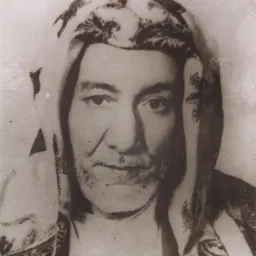
Related people
Same field, nearest in time
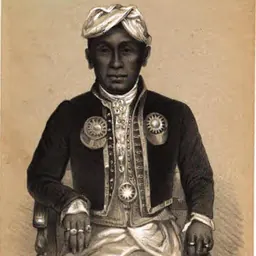



Contemporaries
People whose lives overlapped Habib Usman bin Yahya's



Frequently asked questions
Who was Habib Usman bin Yahya?
Mufti of Batavia
When was Habib Usman bin Yahya born?
Habib Usman bin Yahya was born in 1822 in Tambora.
When did Habib Usman bin Yahya die?
Habib Usman bin Yahya died in 1913 in Batavia.
What was Habib Usman bin Yahya's occupation?
Habib Usman bin Yahya was a mufti.
What nationality was Habib Usman bin Yahya?
Habib Usman bin Yahya was Indonesian.
Sources & further reading
· Wikipedia: Habib Usman bin Yahya
Cite this page
APA: Biography.guide. (2026). Habib Usman bin Yahya. https://biography.guide/habib-usman-bin-yahya/
MLA: "Habib Usman bin Yahya." Biography.guide, https://biography.guide/habib-usman-bin-yahya/.
Chicago: "Habib Usman bin Yahya." Biography.guide. https://biography.guide/habib-usman-bin-yahya/.
Data last updated: 2026-09-20 · Spot an error? Report a correction.
Page generated 2026-09-27 05:28 UTC