
About H. Bruce Franklin
Lived 1934 – 2024 (aged 90). H. Bruce Franklin was an American historian, author, journalist, scientist, university teacher and scholar of English.
Early life Born to a working-class family in Brooklyn on February 28, 1934, Franklin held numerous jobs while working his way through college.
In 1956, he married Jane Morgan, a graduate of Duke University. They had three children together and were married until her death in 2023. He was also a lecturer in San Jose, California's municipal adult education department from 1963 to 1964. At one point, he served as president of the Melville Society. His first book, The Wake of the Gods: Melville's Mythology, examined Melville's use of mythologies and intellectual milieu from Meso-American to Sanskrit. Franklin wrote a scholarly edition of Melville's The Confidence Man: His Masquerade, which traced obscure classical and "alien" references embedded in Melville's prose.
Franklin and his family spent a year in France from 1966 to 1967. He taught for six months at Stanford's campus in Tours, France, and then moved in Paris. There he and his wife Jane studied Marxist theory, helped organize the Free University of Paris, and participated in setting up the European network of GI deserters, who were primarily young men opposed to the Vietnam War. When he returned to the United States in the late 1960s, he became a prominent activist in the movement against the Vietnam War.
Maoism, Revolutionary Union, and Venceremos In 1968, Franklin was one of twenty-four founders of the Revolutionary Union. After Franklin left the RU, the organization became the Revolutionary Communist Party.
The organization was infiltrated by the FBI, which planted informers within the leadership of the group to heighten members' "suspicions of each other". Detailed information about this period and the FBI's attempts to "neutralize" (their word) Franklin can be found in the thousands of pages which he later collected under the Freedom of Information Act (FOIA). He donated this material to the Bancroft Library. Doctrinal differences soon emerged between followers of Franklin and followers of Robert Avakian over revolutionary strategy.
In a matter of months Franklin, along with roughly half of RU's members, left to join a Chicano-based leftist group in Palo Alto called Venceremos.
A report in The Stanford Daily student publication suggested that Franklin urged protestors to "resist police efforts" with the effect of "inciting a riot". After his speech, students occupied the Stanford computer center, and more than 100 riot police were summoned. A tenure-review committee was chosen, with professors from assorted academic departments. A lecture hall was converted into a makeshift courtroom. Stanford hired a major Los Angeles law firm, with lead attorney Paul Valentine, to argue the university's case, while Franklin, lacking funds as he was unemployed, had to defend himself with advice from a law student. Evidence was heard, witnesses were cross-examined, summations were given, and the panel left to consider its verdict.
Franklin was found guilty of three charges of "inciting student disruptions". Accordingly, Stanford fired Franklin in 1972. He was the only tenured professor to be fired from Stanford.
For a period, he continued to be active with Venceremos, and in December 1972 was arrested on charges of harboring Ronald Beaty, a federal fugitive. Other Venceremos members had helped Beaty escape during a transfer to court, killing one prison guard and wounding another in the process. At the time of his arrest Franklin praised Beaty's escape as a revolutionary act but denied involvement. Beaty was recaptured a month later. Charges against Franklin were ultimately dropped, but other members of Venceremos were tried and convicted in connection with this crime, and the group dissolved soon after.
After being terminated from Stanford, Franklin was out of work for the next three years.
Rutgers years In 1975, Franklin was hired by Rutgers University–Newark as a full professor with tenure. In 1987, he was appointed as the John Cotton Dana Professor of English and American Studies, a title he retained until his retirement in 2015. Franklin's academic career has diverse areas of scrutiny, which relate mostly to the topic of American cultural history. In 2014, he was influential in organizing Rutgers faculty to block the choice of former United States Secretary of State Condoleezza Rice as commencement speaker: Franklin's political views softened in later life. and has been a guest curator on topics about Star Trek and Star Wars. His book War Stars was cited by leftist philosopher and linguist Noam Chomsky, who bemoaned the prevalence of a recurring theme in popular literature that "we're about to face destruction from some terrible, awesome enemy." Franklin's research explored America's fascination with superweapons. When the movie Independence Day appeared in 1996, Franklin said "Fundamental to the historical experience of [American] culture are alien invaders who came armed with a superior technology and wiped out the culture that was here." His book Future Perfect: American Science Fiction of the Nineteenth Century (1966) identified American authors including Washington Irving, Edgar Allan Poe, Nathaniel Hawthorne and Herman Melville as pioneers of this genre who wrote science fiction, contrary to popular understanding. and contributed to Franklin receiving the Pilgrim Award for lifetime scholarship in 1983. In his 1988 War Stars: The Superweapon and the American Imagination selected by Choice as the Outstanding Academic Book of 1989, Franklin turned his interest in science fiction to an examination of the American fascination with superweapons. His book presents a view that, ironically, from Robert Fulton's submarine Nautilus in the 18th century to the death-dealing weaponry of the late 20th century, superweapons ostensibly designed to end war have proved capable of exterminating the human species. The expanded 2008 edition explores how this cultural history led to the seemingly permanent state of warfare of the 21st century. War Stars is informed by Franklin's own earlier experience as a navigator and intelligence officer in the Strategic Air Command. In 1990 he was named the Distinguished Scholar for the International Association for the Fantastic in the Arts. In 1991, he was Guest Curator for the Star Trek and the Sixties exhibit at the National Air and Space Museum of the Smithsonian Institution; this show subsequently traveled to the Hayden Planetarium.
Vietnam and its aftermath A recurring subject area for Franklin was the history of the Vietnam War and its role in American literature and culture since 1966. His books M.I.A., or Mythmaking in America and Vietnam and America: A Documented History (which he co-edited) have been used in courses on the Vietnam War. His Vietnam and Other American Fantasies (2000) synthesized his previous work and extended it into an overview of 21st-century American culture.
One of Franklin's themes in writing about Vietnam is that the supposed existence of surviving American prisoners of war in Vietnam after the war was a myth created after 1980 with the tacit approval of the Reagan administration, and that the psychological foundations of the myth arguably originated from justifications for the war offered by the Nixon administration before 1973, in that the war had to continue in order to bring the prisoners of war home. In the 1980s and 1990s, many Americans believed, incorrectly, that there were many "prisoners of war are still being held in Indochina" and that the American government was lying to the public about their existence. His book Vietnam and America: A Documented History, which he co-edited with his wife Jane Franklin and Marvin Gettleman and Marilyn Young, was described by The New York Times as a "valuable anthology of crucial texts and records" which "tersely replays the bitter conflict." A reviewer in The Nation described Franklin's writing about the M.I.A. issue as using "elegant economy". Franklin believed that his students had incorrect ideas about the American involvement in Vietnam, such as that the United States lost the war because it "didn't try hard enough"; Franklin felt that his students were unaware of the extent of bomb damage. His book chronicled how the supposed "missing" American soldiers were "known to be dead" but were "kept alive for bureaucratic reasons that backfired." He described the post-war belief in still-held prisoners of war as a "manufactured issue" and criticized presidential contender Michele Bachmann for bringing up the issue as "pure opportunism." Franklin was pivotal in helping to debunk the "Missing in Action" myths. New York Times reviewer Todd Gitlin described Franklin's M.I.A. as "meticulously researched."
In 2018, at the age of 85, Franklin published Crash Course: From the Good War to the Forever War, a history of America from the 1930s to the present, in the form of a memoir. He showed that many species of fish, which humans eat, depend for their well-being on eating menhaden, and therefore their role in the food chain was vital. Franklin's analysis was an interdisciplinary study in American environmental, economic, social, political, and cultural history from the 17th into the 21st centuries. It led to the introduction of two nature conservation bills in Congress. In a review in The Washington Post, his book was described as an "exhaustive examination of issues" using lucid prose "infused with an urgency that depends little on hyperbole and largely on careful documentation". His work was cited in the Supreme Court's decision to overturn New York State's Son of Sam law. He has been an outspoken critic of the American penal system, in terms of violations of human rights. His anthology Prison Writing in 20th-Century America about "criminals turned raconteurs" has been called the best anthology of the genre.
Death Franklin died from corticobasal degeneration at his home in El Cerrito, California, on May 19, 2024, at the age of 90. (Island Press/Shearwater Books, 2007) Star Trek and History, edited by Nancy R. Reagin (Chapter 6: "Vietnam, Star Trek, and the Real Future"; Wiley, 2013) Crash Course: From the Good War to the Forever War (Rutgers University Press, 2018)
Don’t just read it —
keep it.
Full-length biographies made to live with: read them, listen on the way to work, watch them tonight.
- E-book
- Audio
- Video
Instant download · yours to keep · every purchase keeps this site free
Important facts
Family & relationships
People in H. Bruce Franklin's life
Named in this biography and alive at the same time
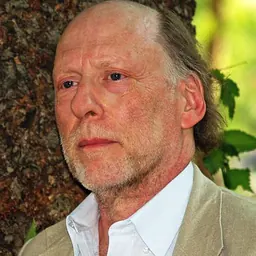





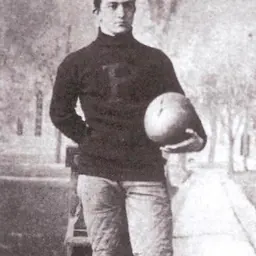
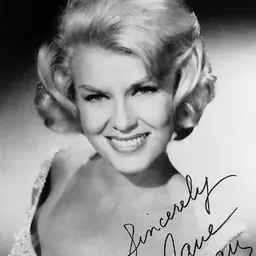
Related people
Same field, nearest in time

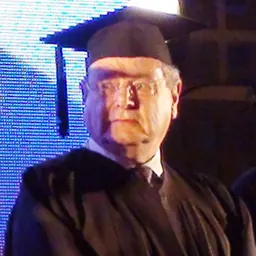

Contemporaries
People whose lives overlapped H. Bruce Franklin's




Frequently asked questions
Who was H. Bruce Franklin?
American historian (1934–2024)
When was H. Bruce Franklin born?
H. Bruce Franklin was born on 28 February 1934 in United States.
When did H. Bruce Franklin die?
H. Bruce Franklin died on 19 May 2024 in El Cerrito.
What was H. Bruce Franklin's occupation?
H. Bruce Franklin was a historian, author, journalist, scientist, university teacher and scholar of English.
What nationality was H. Bruce Franklin?
H. Bruce Franklin was American.
Sources & further reading
· Wikipedia: H. Bruce Franklin
Cite this page
APA: Biography.guide. (2026). H. Bruce Franklin. https://biography.guide/h-bruce-franklin/
MLA: "H. Bruce Franklin." Biography.guide, https://biography.guide/h-bruce-franklin/.
Chicago: "H. Bruce Franklin." Biography.guide. https://biography.guide/h-bruce-franklin/.
Data last updated: 2026-09-26 · Spot an error? Report a correction.
Page generated 2026-09-27 05:14 UTC