
About Gyula Szekfű
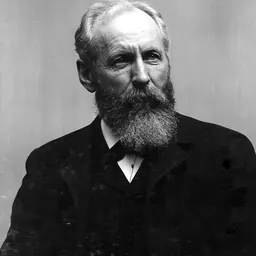
Lived 1883 – 1955 (aged 72). Gyula Szekfű was a Hungarian historian and politician.
Gyula Ignac Szekfű (23 May 1883 – 28 June 1955) was a Hungarian historian, university professor, diplomat and public figure.
Biography Szekfű was born in to a Catholic middle-class family of a lawyer. From 1905 to 1906 he worked at the National Museum of Hungary, and from 1908 to 1910 he was an intern at the National Archives. He spent seventeen years in Vienna, studying documents from the 16th to 18th centuries. From 1925 he was a professor at the Department of Modern Hungarian History at the University of Budapest.
Influenced by Leopold von Ranke, Wilhelm Dilthey, and Friedrich Meinecke, he became the founder of the "spiritual-historical" school in Hungarian historiography, which advocated the idea of a conservative development of his country in the spirit of a "Christian community". In 1920, he published a work entitled "Three Generations" (Hungarian: Három nemzedék. Egy hanyatló kor története), which became one of the most influential works in Hungary during the interwar period. He blamed the division of the country on Hungary's liberal past, which, in his opinion, was alien to its traditions. In his opinion, Hungary would enter an era of nationalist renewal, during which it would be necessary to abandon liberalism, which had “seduced” the Hungarian nobility, in alliance with the Jewish bourgeoisie, to usurp economic and cultural unity and leadership from the Hungarian people. Having an antisemitic viewpoint, he named the anti-national “Jewish spirit” as one of the main reasons for the decline and proposed that Hungary should rid itself not only of communism, but also of “the liberalism that gave birth to it".
While in hiding, he established contacts with representatives of the Communist, Social Democratic and other anti-fascist parties of Hungary. He remained non-partisan, although he was invited to lead the Christian Democratic People's Party. On 2 April 1945 he was elected to the Provisional National Assembly.
On October 15, 1945, he was appointed Ambassador Extraordinary and Plenipotentiary to Hungary, remaining the ambassador of Hungary to the USSR until September 1948. Preparing the Treaty of Friendship, Cooperation and Mutual Assistance between the USSR and the Hungarian Republic, Szekfű gave multiple lectures praising the leadership of Lenin and Stalin in the Soviet Union. He was a member of parliament from May 1953, and a member of the Presidium of the Hungarian People's Republic in 1954-1955. Szekfü's work "After the Revolution", published in 1947, reflected his desire to critically reconsider his previous views, moving to more progressive democratic positions.
Selected works A száműzött Rákóczi (1913) Három nemzedék (1920) Három nemzedék és ami utána következik (1934) Valahol utat vesztettünk (1943) Nép, nemzet, állam. Válogatott tanulmányok (2002)
Don’t just read it —
keep it.
Full-length biographies made to live with: read them, listen on the way to work, watch them tonight.
- E-book
- Audio
- Video
Instant download · yours to keep · every purchase keeps this site free
Important facts
People in Gyula Szekfű's life
Named in this biography and alive at the same time


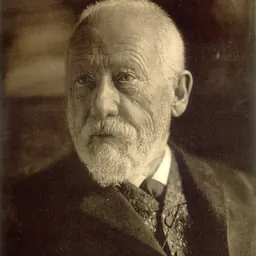
Related people
Same field, nearest in time

Contemporaries
People whose lives overlapped Gyula Szekfű's




Frequently asked questions
Who was Gyula Szekfű?
historian, politician (1883-1955)
When was Gyula Szekfű born?
Gyula Szekfű was born on 23 May 1883 in Székesfehérvár.
When did Gyula Szekfű die?
Gyula Szekfű died on 28 June 1955 in Budapest.
What was Gyula Szekfű's occupation?
Gyula Szekfű was a historian and politician.
What nationality was Gyula Szekfű?
Gyula Szekfű was Hungarian.
Sources & further reading
Cite this page
APA: Biography.guide. (2026). Gyula Szekfű. https://biography.guide/gyula-szekfu/
MLA: "Gyula Szekfű." Biography.guide, https://biography.guide/gyula-szekfu/.
Chicago: "Gyula Szekfű." Biography.guide. https://biography.guide/gyula-szekfu/.
Data last updated: 2026-09-27 · Spot an error? Report a correction.
Page generated 2026-09-27 05:16 UTC