
About Gyula Justh
Lived 1850 – 1917 (aged 67). Gyula Justh was a Hungarian politician and jurist.
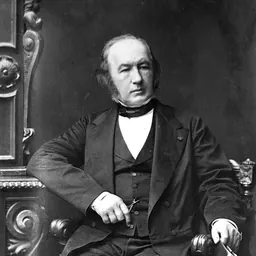
Gyula Justh (13 January 1850 – 9 October 1917) was a Hungarian jurist and politician, who served as Speaker of the House of Representatives between 1905 and 1909.
Biography He was born in Necpál, Turóc County (today: Necpaly, Slovakia) as a child of István Justh and Margit Pákozdy. After finishing law studies he became Chief Constable of Gyula District however the governing Liberal Party overthrew him because of his thoughts of independence against Austro-Hungarian Compromise. After that he returned to his estate in Tornya (today Turnu, Romania). Later he farmed in his property in Csanád County.
He was elected Member of Parliament for Makó in 1884. He held this position until his death. He often spoke out for civic democratic reforms. He served as deputy chairman of the Independence Party since 1891 and as chairman from 1893 when the previous leader Dániel Irányi died. He had a significant role in the developing of the Church Policy Act during the first cabinet of Sándor Wekerle in 1894-1895. After the division of "48 factions" he broke up with the faction which was led by Gábor Ugron.
He became chairman again when the party reunited, but soon resigned from his position for Ferenc Kossuth's benefit. Two years later, he had a role in the protests against Press Criminal Procedure. He was one of the leaders of the filibuster in 1898 which led to the resignation of Prime Minister Dezső Bánffy.
Justh was appointed Speaker of the House of Representatives in 1905 when his party won a majority in the lower house. Unlike Ferenc Kossuth, he proved to be understanding in the case of Croatian representatives' obstruction who convicted the Hungarian service language among the Croatian Railways. He fought for the introduction of universal suffrage on the side of the Hungarian Social Democratic Party and Civil Radicals (Oszkár Jászi). He resigned in 1909 when he came into conflict with Kossuth in the issue of an independent national bank (the Hungarian National Bank was created only in 1924). He led the obstruction against István Tisza in 1912. One year later he was the co-chairman, along with Kossuth, of the united opposition against the Prime Minister's policy, but the real power was concentrated in the hands of Count Mihály Károlyi. Justh agreed with the radical programs of Károlyi.
In the last years he suffered from illness and lived in retreat. He is an honorary citizen of Makó.
Don’t just read it —
keep it.
Full-length biographies made to live with: read them, listen on the way to work, watch them tonight.
- E-book
- Audio
- Video
Instant download · yours to keep · every purchase keeps this site free
Important facts
People in Gyula Justh's life
Named in this biography and alive at the same time





Related people
Same field, nearest in time






Contemporaries
People whose lives overlapped Gyula Justh's



Frequently asked questions
Who was Gyula Justh?
Hungarian politician (1850-1917)
When was Gyula Justh born?
Gyula Justh was born on 13 January 1850 in Necpaly.
When did Gyula Justh die?
Gyula Justh died on 9 October 1917 in Budapest.
What was Gyula Justh's occupation?
Gyula Justh was a politician and jurist.
What nationality was Gyula Justh?
Gyula Justh was Hungarian.
Sources & further reading
Cite this page
APA: Biography.guide. (2026). Gyula Justh. https://biography.guide/gyula-justh/
MLA: "Gyula Justh." Biography.guide, https://biography.guide/gyula-justh/.
Chicago: "Gyula Justh." Biography.guide. https://biography.guide/gyula-justh/.
Data last updated: 2026-09-26 · Spot an error? Report a correction.
Page generated 2026-09-27 05:16 UTC