
About Gwyneth Bebb
Lived 1889 – 1921 (aged 31). Gwyneth Bebb was a British women's rights activist, known for Bebb v. The Law Society.
Gwyneth Marjorie Bebb, OBE (27 October 1889 – 9 October 1921) (later Mrs Thomson) was an English lawyer. She was the claimant in Bebb v. The Law Society, a test case in the opening of the legal profession to women in Britain. She was expected to be the first woman to be called to the bar in England; in the event, her early death prevented that, and Ivy Williams was the first woman to qualify as a barrister in England, in May 1922.
Early life
Bebb was born in Oxford. She was the third of seven children of Llewellyn John Montford Bebb, a fellow of Brasenose College, Oxford. Her mother, Louisa Marion (née Traer), was the daughter of the obstetrician James Reeves Traer. She moved to Wales with her family after her father was appointed principal of St David's College, Lampeter in 1898.
She was educated at St Mary's School in Paddington, London (which later became St Mary's College, Lancaster Gate, before moving to Gerrards Cross) and then studied jurisprudence at St Hugh's College, Oxford, from 1908. She was the sixth woman to study law at Oxford: her predecessors included Cornelia Sorabji and Ivy Williams. She completed her studies with First-Class degree marks in 1911, but at that time women were not awarded degrees or allowed to graduate.
She became an investigating officer for the Board of Trade.
Bebb v. The Law Society
In 1913, forty years after women first tried to become practicing professional lawyers,
Bebb became the first named party for the reported case, Bebb v. The Law Society. She was represented by Stanley Buckmaster KC and R. A. Wright, instructed by Withers, Bensons, Birkett & Davies when her test case was heard in the Chancery Division on 2 and 3 July 1913, before Mr Justice Joyce, seeking a declaration that she was a "person" within the meaning of the Solicitors Act 1843 as amended, and was therefore entitled to be admitted to the preliminary examination of the Law Society. ruled in Bebb in 1914 that women were incapable of carrying out a public function in common law. The judge also stated that this disability must remain "unless and until" Parliament changed the law; in other words, that women could not be solicitors because no woman had ever been a solicitor.
She was represented by Lord Robert Cecil KC and R. A. Wright when the decision was upheld in the Court of Appeal in December 1913, heard by the Master of the Rolls Lord Cozens-Hardy, Lord Justice Swinfen Eady and Lord Justice Phillimore (included in the law reports in 1914), a key statement in the Court's view was the "long uniform and interrupted usage, which we ought … to be very loth to depart from" that only men had become solicitors, therefore women were not able to do so.
Bebb continued with political and feminist activism. The publicity from her case – the press was mostly in her favour – helped the campaign for women's admission to the legal profession in Britain, and the passage of the Sex Disqualification (Removal) Act 1919 allowed women to be lawyers.
Bebb was permitted with 51 other Oxford women, to graduate in 1920, then the only woman who had obtained a First Class Degree in Law.
A second daughter, Marion, was born on 10 August 1921, but the pregnancy was affected by placenta praevia. The premature baby died on 12 August, and Bebb herself died
A century after the passing of the law permitting women to be solicitors, one view is that there 'still work to be done to achieve real equality in law',
Law Society president in 2019, Christina Blacklaws said: "The legal profession owes an enormous debt of gratitude to Gwyneth Bebb and her fellow aspiring female lawyers."
Don’t just read it —
keep it.
Full-length biographies made to live with: read them, listen on the way to work, watch them tonight.
- E-book
- Audio
- Video
Instant download · yours to keep · every purchase keeps this site free
Important facts
People in Gwyneth Bebb's life
Named in this biography and alive at the same time
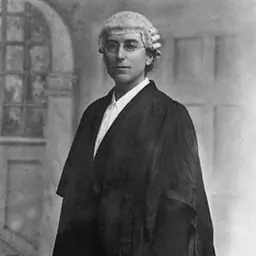
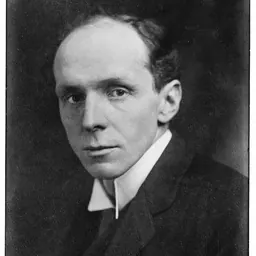


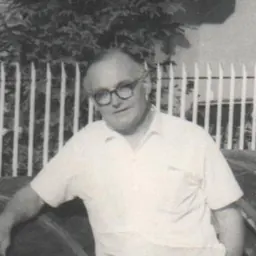
Related people
Same field, nearest in time

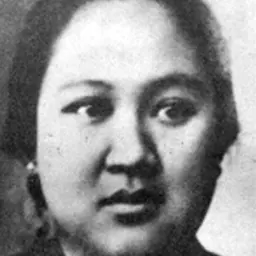


Contemporaries
People whose lives overlapped Gwyneth Bebb's


Frequently asked questions
Who was Gwyneth Bebb?
English lawyer
When was Gwyneth Bebb born?
Gwyneth Bebb was born on 27 October 1889 in Oxford.
When did Gwyneth Bebb die?
Gwyneth Bebb died on 9 October 1921 in Edgbaston.
What was Gwyneth Bebb's occupation?
Gwyneth Bebb was a women's rights activist.
What was Gwyneth Bebb known for?
Gwyneth Bebb was known for Bebb v. The Law Society.
What nationality was Gwyneth Bebb?
Gwyneth Bebb was British.
Sources & further reading
Cite this page
APA: Biography.guide. (2026). Gwyneth Bebb. https://biography.guide/gwyneth-bebb/
MLA: "Gwyneth Bebb." Biography.guide, https://biography.guide/gwyneth-bebb/.
Chicago: "Gwyneth Bebb." Biography.guide. https://biography.guide/gwyneth-bebb/.
Data last updated: 2026-09-20 · Spot an error? Report a correction.
Page generated 2026-09-27 05:24 UTC