
About Guy Murchie
Lived 1907 – 1997 (aged 90). Guy Murchie was an American journalist and artist.
Guy Murchie (Jr.) (25 January 1907 – 8 July 1997) was an American writer about science and philosophy: aviation, astronomy, biology, and the meaning of life. He was, successively, a world traveler; a war correspondent; a photographer, staff artist, and reporter for the Chicago Tribune; a pilot and flight instructor; a teacher; a lecturer; an aerial navigator; a building contractor; and founder and director of a summer camp for children. He was a practising member of the Baháʼí Faith. His books included Men on the Horizon, Song of the Sky (1954), Music of the Spheres (1961), and The Seven Mysteries of Life (1978). The latter three books were chosen for promotion by the Book of the Month Club. He illustrated his books with etchings and woodcuts of his own design.
Early life
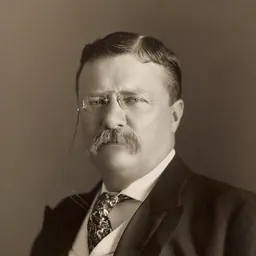
Murchie was the son of Ethel A. Murchie—who designed the interior of a seaplane for Sikorksy Aircraft —and Guy Murchie, Sr.: a graduate of Harvard Law School, a former member of Theodore Roosevelt's Rough Riders, a U.S. Marshal, and a prominent Boston attorney who at one time served as attorney to Winston Churchill. Sitting President Theodore Roosevelt and his wife attended Guy Jr.'s christening. His parents held him to high standards.
Murchie, who as an adult stood 6'6" tall and weighed 225 lbs., was raised as an Episcopalian, attended Kent School—which at the time was just "for boys"—and graduated from Harvard in 1929. From this heritage of privilege and physical capacity he instead turned to traveling and making his own way, never to return to the arena of Bostonian privilege. Instead he left before receiving his credentials on a trip headed to the Far East. Murchie returned to the States in 1930. From the experience, he gained a deep-seated appreciation for the basic commonality of humanity across any divide of culture, and London, dedicating it to his mother. In the same year he married Eleanor Forrester Parker Cushman,
In China, Murchie was exposed to some of the signs of the coming Communist revolution in China, for instance contrasts of starvation and gluttony, and frequent reports of conflict which Murchie reported as comically harmless. He summarizes, "China is not nearly so unstable politically as it seems." In Russia, Murchie saw the Russian Communists under Stalin as similar to Christian missionaries, and Communism itself a kind of religion. The account does not mention the economic crisis that was deepening in America at the time (1930).
Rear Admiral Richard E. Byrd wrote the foreword on the heels of his first Antarctic expedition—and wrote of first being interested in the "clean man" of Murchie, and did not take sides in Murchie's views on the governments of the day but was very struck by the encounter with people. Great Britain, Australia, and New Zealand.
Saint Croix, the Sentinel River
Named and about the history of the Saint Croix River today forming part of the border between Maine and New Brunswick. Saint Croix, the Sentinel River was well received academically and popularly at the time. However it continues to be of relevance as it was noted in the 1970s and then cited in post-2000 work on the internet.
Song of the Sky
Murchie got the material for his breakthrough work Song of the Sky from his experience and investigations as an aviator and flight instructor. Though the subject of the book is largely science (with some references to spiritual matters), the content is delivered in Murchie's characteristically poetic way. The book does not address religion at length, but it does mention Baháʼu'lláh, founder of Murchie's religion, the Baháʼí Faith.
Song of the Sky was a Book of the Month Club selection for December 1954. The American Museum of Natural History awarded him the John Burroughs Medal in 1956 for Song of the Sky.
Song of the Sky was plagiarized by writer Alexander Theroux in 1994, apparently because Theroux failed to source his notes.
Music of the Spheres Originally published in 1961 it was revised and printed in 1967 and then reprinted in 1979.
Music of the Spheres was named as one of the American Library Association's Top 50 Books of 1961. The Society of Midland Authors awarded one of its "Thormond Monsen" awards to Music of the Spheres. As Murchie was then residing in Spain, the managing director of the US Baháʼí Publishing Trust accepted the award on his behalf. It was generally positively reviewed.
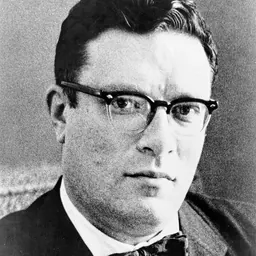
Of it Isaac Asimov is reported to have said "One can only stand amazed at the breadth of Mr. Murchie's understanding and his ability to put the facts and speculations of science into colorful and nontechnical language."
The Seven Mysteries of Life
In 1978 he published The Seven Mysteries of Life; it was reprinted in 1981 and 1999.
The Seven Mysteries are:
The Abstract Nature of the Universe The Interrelatedness of All Creatures The Omnipresence of Life The Polarity Principle Transcendence The Germination of Worlds Divinity
The book also discusses super-organism, language, properties of the mind, and individual consciousness. His review of literature identifies some 32 senses, as noted online. In it he quotes a Serbian proverb which is seen as part of the heritage of the idea put forth as We are made of star stuff: "Be humble for you are made of dung. Be noble for you are made of stars."
Passages from The Seven Mysteries of Life appeared in Baháʼí News as well as other periodicals like the Old Farmer's Almanac. It was Murchie's most Baháʼí book, not merely for mentioning the religion a number of times, but for discussing Baháʼí principles in somewhat disguised detail, advocating notions of personal immortality, and portraying the present life as a "soul school" that prepares humans for the afterlife. Furthermore, Murchie maintains that many of the boundaries in normal science are arbitrary; between planet and moon, between plant and animal and between life and non-life. He often makes it very clear when his examples are based on empirically verified science, and when they are not. Verifiable sources and references are frequently mentioned, making this (arguably) an effort of journalistic objectivity, despite its overtly philosophical, religious and poetic content and style. The subjects covered, however, are often exotic and unusual. While deeply concerned with religious philosophy, The Seven Mysteries of Life was a finalist for the 1982 National Book Award for science (paperback).
In hindsight, many of the "fringe" or discontinued areas of research that the book covers have recently been verified (or rediscovered) by modern experiments. Examples include the highly refined communication method seen in the waggle dance of honey bees, the regeneration and immortality properties of the tiny Hydra (genus), and the existence of Quasi-crystals (supramolecular).
Other examples, on the other hand, remain a scientific dead-end; the existence of interstellar ambiplasma and the so-called science of cymatics.
The visionary architect Buckminster Fuller is quoted as saying The Seven Mysteries of Life contains "... all the most important information about everything humanity needs to know …".
Journalist
A newspaper story of Murchie's was published in the Winnipeg Tribune in 1934, and a piece in New Zealand in 1935, but his steady job was at the Chicago Tribune. Some 37 news stories were then printed in the Chicago Tribune under his name. The first story under his name at the Chicago Tribune was in 1934, followed by three in 1935, 1 in 1936, (the same year he earned his pilot's license,) He co-wrote Soldiers of Darkness with Thomas R. Gowenlock, published in 1937.
Murchie's further interest in the Baháʼí religion began in this period when he was tasked with writing an article about the Baháʼí House of Worship at Wilmette, Illinois around 1938, and then officially joined the religion 1939. He had been impressed with the unique qualities of the temple being a blend of east and west styles, and extended his interest when his insights of the biological unity of humanity was raised to a spiritual affirmation. three in 1941, five in 1942. Then he was back in the States.
Aviator, camp founder, and teacher In 1942 Murchie left the Tribune to work as a flight instructor and aerial navigator. A relative tried to visit him in January 1944 back in the States but he had already moved. In 1944 Murchie married Barbara Cooney; during the three years of their marriage they had two children (Gretel and Barnaby). In 1946 the Murchie family moved to Pepperell, Massachusetts and worked with the high school. In 1947 the book Saint Croix, the Sentinel River was published and it is likely that this was written during time spent in St. Andrews at the house, Holocaust survivor Alex Levy recalls working for Murchie at the camp.
Baháʼí
Murchie became a Baháʼí in 1939, after covering the Baháʼí House of Worship that was under construction at the time and in May 1938 had been featured by a US stamp. He remained largely silent on the subject of his religion, only mentioning it in passing in his 1954 title Song of the Sky. In his autobiography, The Soul School, he alluded to a perceived distance between himself and the Baháʼí community during the war, as he imagined that his connection to the war effort put him at odds with the sentiments of many of them.
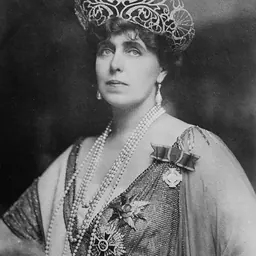
About a decade after the war, and immediately after Murchie's book Song of the Sky won him acclaim as a Book of the Month Club author, he began to be more public about his religion. Several news stories in the wider media noted it, and the official Baháʼí news outlet noted the publicity. In 1964, he toured Iran visiting several sites holy to Baháʼís. Diary notes of his travels became the basis of a series of articles in the 1960s and later. In 1958 he became even more public with his proclamation in the Chicago Tribune "I am a Baháʼí". reportedly caused a boost in visitors to the Baháʼí House of Worship in Wilmette, Illinois, and liked so much that it was then released as a pamphlet, as well as in letters to the editors for correction. In it he noted the impressive history of the Báb, Tahirih, the encounter of Edward G. Browne with Baháʼu'lláh, the position and example of ʻAbdu'l-Bahá and appointed Guardian, and the religion's presence in the life of historically notable people like Marie of Romania and was close to President Wilson.
Murchie then set about studying Baháʼí history, researching for a book on the subject which he intended to publish under the name The Veil of Glory which is part of a collection of papers at the Howard Gotlieb Archival Research Center of Boston University. Murchie would be visible aiding various Baháʼí talks and classes of study on the religion occasionally from the 1960s into the 1980s, and would publish many more articles related to the religion printed in Baháʼí News: A visit to Persia across 5 issues(again, further from his 1964 trip) The House of Quddus in Mashhad, Journey through Northern Iran, Máh-Kú and Tabriz – Imprisonment and Martyrdom. The Flowering of the Planet (in 1974)
Don’t just read it —
keep it.
Full-length biographies made to live with: read them, listen on the way to work, watch them tonight.
- E-book
- Audio
- Video
Instant download · yours to keep · every purchase keeps this site free
Important facts
People in Guy Murchie's life
Named in this biography and alive at the same time




Related people
Same field, nearest in time


Contemporaries
People whose lives overlapped Guy Murchie's


Frequently asked questions
Who was Guy Murchie?
American journalist (1907–1997)
When was Guy Murchie born?
Guy Murchie was born on 25 January 1907.
When did Guy Murchie die?
Guy Murchie died on 8 July 1997.
What was Guy Murchie's occupation?
Guy Murchie was a journalist and artist.
What nationality was Guy Murchie?
Guy Murchie was American.
Sources & further reading
Cite this page
APA: Biography.guide. (2026). Guy Murchie. https://biography.guide/guy-murchie/
MLA: "Guy Murchie." Biography.guide, https://biography.guide/guy-murchie/.
Chicago: "Guy Murchie." Biography.guide. https://biography.guide/guy-murchie/.
Data last updated: 2026-09-20 · Spot an error? Report a correction.
Page generated 2026-09-27 05:16 UTC