
About Guy Endore
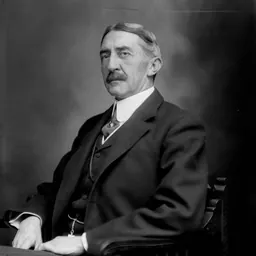
Lived 1900 – 1970 (aged 69). Guy Endore was an American screenwriter, novelist, writer, science fiction writer and translator.
Samuel Guy Endore (July 4, 1901 – February 12, 1970), born Samuel Goldstein and also known as Harry Relis, was an American novelist and screenwriter. During his career he produced a wide array of novels, screenplays, and pamphlets, both published and unpublished. A cult favorite of fans of horror, he is best known for his novel The Werewolf of Paris, which occupies a significant position in werewolf literature, much in the same way that Dracula (1897) does for vampire literature. Endore is also known for his left-wing novel of the Haitian Revolution, Babouk: The Story of a Slave. He was nominated for a screenwriting Oscar for The Story of G.I. Joe (1945), and his novel Methinks the Lady . . . (1946) was the basis for Ben Hecht's screenplay for Whirlpool (1949).
Early life and education Endore was born Samuel Goldstein in Brooklyn, New York, to Isidor and Malka Halpern Goldstein. His father was a coal miner, inventor, and investor from Pittsburgh who often had difficulty making ends meet. His mother died by suicide when he was four, possibly due to the family's unstable and often insufficient livelihood. According to his own account, he scraped together the money to attend, even renting out his bed to a wealthier student while he slept on the floor. He unsuccessfully pursued a PhD.
Writer Endore's first novel was The Man From Limbo (1930), about an impoverished college graduate obsessed with acquiring wealth; it was influenced by Robert Louis Stevenson.
His most famous work was The Werewolf of Paris (1933), a violent horror story set during the Franco-Prussian War and the Paris Commune and inspired by the work of Hanns Heinz Ewers, whom Endore had translated. The Werewolf of Paris is described by Brian Stableford as "entitled to be considered the werewolf novel".
After his work as a screenwriter, Endore published several other Freudian-tinged mysteries (Methinks the Lady..., Detour at Night) and also returned to his love of French history for biographical novels on Voltaire (Voltaire! Voltaire! ), the Marquis de Sade (Satan's Saint ) and Rousseau. Endore struggled, however, to produce significant works of leftist fiction and he often felt resigned to composing what he believed would sell, especially after the public failure of his anti-slavery novel Babouk, with its more explicitly sympathetic depiction of the Haitian Revolution. Endore retained his profound interest in historical subjects throughout his career.
He had strong related interests, intellectual and moral, in mysticism, yoga, vegetarianism, theosophy and anti-vivisectionism. In the "About the Author" section that concludes the 1941 Pocket Books edition of The Werewolf of Paris Endore describes himself as "to a large extent a vegetarian, a teetotaler, a non-smoker. In giving up, with occasional exceptions, the use of meat, liquor, and tobacco, I feel that I have added to the happiness I derive from living." He concludes, "In politics I tend toward communism and the establishment of the classless society."
Activism Two teenagers in 1943 wearing Zoot suits like associated with the Sleepy Lagoon case, precursor to the Zoot Suit riots (1943) Although more famous for his fiction, Endore was a committed activist, attempting to protect with words those who were mistreated by the American culture and legal system and using literature to illuminate what he considered to be historical oversights. A fierce critic, like his friend Lillian Smith, He proceeded to write a pamphlet entitled The Sleepy Lagoon Mystery which went over in detail the mistakes and oversights involved in the case. Giving a speech on the Al Jarvis radio show, Endore referred to Sleepy Lagoon as "the name of a disgrace which should be on the conscience of every decent American – and especially every decent person who lives in Los Angeles – because we allowed it to happen here." To bring his readers over to his way of thinking Endore used scare tactics, threatening his readers that, should they allow this to happen, they could, in essence, be next. For the next year he corresponded often with the defense, gave interviews and spoke on radio shows in an attempt to help the teens. In the end his attempts were a success and, with the information exposed in his pamphlet and a change in common opinion, the verdict was reversed.
Endore supported non-governmental drug rehab programs and became a devoted proponent of the Synanon Foundation, a controversial southern California commune dedicated to reforming and rehabilitating drug addicts and alcoholics (later, as the Church of Synanon, it started its own utopian social movement). He composed pamphlets and a published history of the commune, Synanon. He also taught fiction writing at the Los Angeles People's Education Center, a CPUSA offshoot of the New York Workers School.
Works An except from Endore's The Crime at Scottsboro (1938) on the Scottsboro Boys case now appears on the Digital Public Library of America.
Literary work Fiction literature:
The Man from Limbo (New York: Farrar & Rinehart, 1930) The Werewolf of Paris (New York: Farrar & Rinehart, 1933) (New York: Pocket Books, 1941) Babouk, (New York: Vanguard Press, 1934) (Monthly Review: New York, 1991) foreword by Jamaica Kincaid, afterword by David Barry Gaspar and Michel-Rolph Trouillot
Methinks the Lady... (New York: Duell, 1946) aka Nightmare (New York: Dell, 1956) Detour at Night (Simon & Schuster, 1958) also known as Detour Through Devon (London: Gollancz, 1959)
Tales
The day of the dragon Collected in the anthology Alfred Hitchcock’s monster museum, Random House (1965) Lazarus Returns Collected in Dennis Wheatley, A century of horror, Londres Hutchinson. Men of Iron Collected in the anthology A decade of Fantasy and Science Fiction. Doubleday/SFBC. (1960).
Fictionalized biographies Casanova: His Known and Unknown Life (New York: John Day, 1929, biography) The Sword of God: Joan of Arc (Garden City Publishing Co.: New York, 1933 biography) King of Paris : A Novel (Book-of-the-Month Club selection) (New York: Simon & Schuster, 1956) Voltaire! Voltaire! : A Novel (New York: Simon & Schuster, 1961) also known as The Heart and the Mind (W. H. Allen, 1962) Satan's Saint: A Novel About the Marquis De Sade (New York: Crown, 1965)
Play
Call Me Shakespeare: A Play in Two Acts (Dramatists Play Service, 1966)
Pamphlets
The Crime at Scottsboro (Hollywood Scottsboro Committee, 1938) The Sleepy Lagoon Mystery (Sleepy Lagoon Defense Committee, 1944) another edition is The Sleepy Lagoon Mystery (R & E Research Associates, 1972) Synanon (New York: Doubleday, 1968)
Translations:
Alraune by Hanns Heinz Ewers (John Day: New York, 1929) An Iceland Fisherman by Julien Viand (P. A. Norstedt, 1931) Alraune by Hanns H. Ewers, edited by R. Reginald and Douglas Menville (Arno, 1976)
Don’t just read it —
keep it.
Full-length biographies made to live with: read them, listen on the way to work, watch them tonight.
- E-book
- Audio
- Video
Instant download · yours to keep · every purchase keeps this site free
Important facts
People in Guy Endore's life
Named in this biography and alive at the same time







Related people
Same field, nearest in time



Contemporaries
People whose lives overlapped Guy Endore's


Frequently asked questions
Who was Guy Endore?
American writer (1901-1970)
When was Guy Endore born?
Guy Endore was born on 4 July 1900 in New York City.
When did Guy Endore die?
Guy Endore died on 12 February 1970 in Los Angeles.
What was Guy Endore's occupation?
Guy Endore was a screenwriter, novelist, writer, science fiction writer and translator.
What nationality was Guy Endore?
Guy Endore was American.
Sources & further reading
Cite this page
APA: Biography.guide. (2026). Guy Endore. https://biography.guide/guy-endore/
MLA: "Guy Endore." Biography.guide, https://biography.guide/guy-endore/.
Chicago: "Guy Endore." Biography.guide. https://biography.guide/guy-endore/.
Data last updated: 2026-09-20 · Spot an error? Report a correction.
Page generated 2026-09-27 05:13 UTC