
About Gustavo Arias Murueta
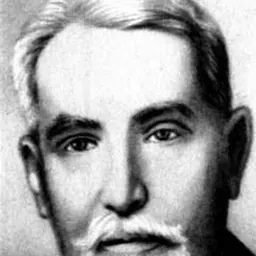
Lived 1923 – 2019 (aged 95). Gustavo Arias Murueta was a Mexican sculptor and painter.
Gustavo Arias Murueta (May 26, 1923 – April 15, 2019) was a Mexican painter, sculptor and poet, a member of the Salón de la Plástica Mexicana best known for his work in drawing, graphic arts and oil painting. He originally studied architecture at the Universidad Nacional Autónoma de México where he met artists such as Rufino Tamayo, David Alfaro Siqueiros and José Clemente Orozco. In the 1950s, he began to produce artworks, with his first exhibition in 1961. From then until his death he had a career as an artist with individual and collective exhibitions in both Mexico and abroad. While his work had been heavily influenced by Orozco, he was considered part of the Generación de la Ruptura movement.
Life Gustavo Arias Murueta was born in Los Angeles, California and was of Spanish descent. His parents were Esteban Arias Renovato and Elisa Murueta Andrade. In 1934, he entered primary school in Torreón, Coahuila, but changed schools when the family moved to Mexico City in 1939. He entered the Universidad Nacional Autónoma de México in 1946 to study architecture where he met a number of important painters such as Rufino Tamayo, David Alfaro Siqueiros and José Clemente Orozco. He married Lourdes Chávez Correa in 1949. The couple had four children: Lila (1953), Gustavo (1954), Hugo (1956) and Livia (1965).
He was an artist, writer, sculptor and poet.
Among his teachers was Japanese artist Yukio Fukasawa, through a seminar on printmaking in Mexico City.
Career
Most of his career had been focused on drawing, graphic arts and oil painting although he was a poet and sculptor. and an exhibition called Cosmogonía at the German Club of Mexico City in 2011.
He participated in numerous collective exhibitions starting in 1961 including those in the Universidad Autónoma de Puebla, University of Concepción, Chile, the Mexican embassy in Tel Aviv, Israel, Museo de Arte Moderno, the cultural program of the Mexico City Olympic Games Casa de las Américas in Havana, Texas Institute Educational Development in San Antonio, Museo Carrillo Gil, Mexico City, Palacio de Bellas Artes and the Centro Experimental de Arte Gráfico in Madrid.
His work can be found in museums, libraries and galleries in both Mexico and abroad. These figures appear several times in his first drawings between 1960 and 1963 . The abstract artwork of Arias Murueta can be understood in Picasso's statement: "In the old days the paintings followed a stepwise process ended. A painting almost always is the sum of elements. I make a painting, then I destroyed it. But at the end, nothing is lost: the red I took away from a place finishes elsewhere". Although generally conducts large-scale works on canvas, Arias Murueta also uses polypropylene because it retains more of the oil painting.
The artwork of Master Arias Murueta received various reviews, including those of the poet, publisher, editor and proofreader Ali Chumacero and curator Toby Eric Joysmith.
In early 1999, the Deputy Director of Programming of the University Museum of Arts and Sciences (MUCA) Jorge Reynoso, in his own words, twined the work of Arias Murueta with his contemporaries Miguel Aldana, Manuel Felguérez and Vicente Rojo Almazán.
Collective Mural, 1968 student uprising
Arias Murueta collaborated with other artists in the realization of a collective mural to support student demands during the student uprising at Mexico in 1968. The mural was a work performed on corrugated zinc sheets covering the ruins of the monument to Miguel Alemán Valdés. The execution was carried out over several Sundays when the National Strike Committee in the forecourt of the popular festivals organized by the National Autonomous University of Mexico (UNAM). In addition to Arias Murueta, other artists participated like Guillermo Meza, Lilia Carrillo, Benito Messeguer, José Luis Cuevas, Fanny Rabel, Manuel Felguérez, Pedro Preux, Ricardo Rocha, Carlos Olachea, José Muñoz Medina, Francisco Icaza, Adolfo Pérez Mexiac and Manuel Coronado, among others.
The mural itself was created without unity among the different representations of artists, highlighting the colors and strong lines, similar to a collage of images that not all were related to the social events at the time. Arias Murueta chose to honor a young woman killed in the crackdown on the Zocalo (Plaza de la Constitución, Mexico City) on August 28 of that year. Her death, by rupturing of the bowel, was represented by Arias Murueta with a hanging doll, from whose womb torn out colored laces.
Don’t just read it —
keep it.
Full-length biographies made to live with: read them, listen on the way to work, watch them tonight.
- E-book
- Audio
- Video
Instant download · yours to keep · every purchase keeps this site free
Important facts
People in Gustavo Arias Murueta's life
Named in this biography and alive at the same time





Related people
Same field, nearest in time

Contemporaries
People whose lives overlapped Gustavo Arias Murueta's




Frequently asked questions
Who was Gustavo Arias Murueta?
Mexican artist (1923-2019)
When was Gustavo Arias Murueta born?
Gustavo Arias Murueta was born on 26 May 1923 in Mexico.
When did Gustavo Arias Murueta die?
Gustavo Arias Murueta died on 15 April 2019 in Mexico City.
What was Gustavo Arias Murueta's occupation?
Gustavo Arias Murueta was a sculptor and painter.
What nationality was Gustavo Arias Murueta?
Gustavo Arias Murueta was Mexican.
Sources & further reading
· Wikipedia: Gustavo Arias Murueta
· DBpedia: Gustavo Arias Murueta
Cite this page
APA: Biography.guide. (2026). Gustavo Arias Murueta. https://biography.guide/gustavo-arias-murueta/
MLA: "Gustavo Arias Murueta." Biography.guide, https://biography.guide/gustavo-arias-murueta/.
Chicago: "Gustavo Arias Murueta." Biography.guide. https://biography.guide/gustavo-arias-murueta/.
Data last updated: 2026-09-20 · Spot an error? Report a correction.
Page generated 2026-09-27 05:24 UTC