
About Gustave Strauven
Lived 1878 – 1919 (aged 40–41). Gustave Strauven was a Belgian architect.
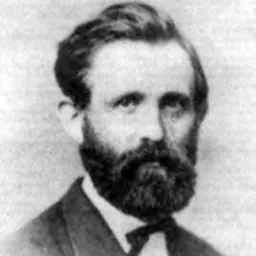
Gustave Strauven (23 June 1878 – 19 March 1919) was a Belgian architect of the Art Nouveau style. He created more than 30 buildings, using new technologies and incorporating wrought iron floral motifs.
Biography Gustave Strauven was born in Schaerbeek, Brussels, on 23 June 1878, the son of Arnold Strauven, a gardener from Limburg, Belgium, and Catherine Backaert. He began his career when he was 18 years old, as an assistant designer working with Victor Horta, helping him with the Hôtel van Eetvelde and the Maison du Peuple/Volkshuis in Brussels. Two years later, he spent one year in Zurich as a draftsman in an architectural office. He then returned to Brussels, where he became a prominent architect in the Art Nouveau movement.
Mobilised during World War I, Strauven died of his injuries on 19 March 1919 in a hospital in Haute-Savoie, France. He was only forty years old. All his work was completed in less than twenty years.
Saint-Cyr House
The Saint-Cyr House is Strauven's most important building, built between 1901 and 1903 in a flamboyant Art Nouveau style. It was built to serve as a private residence for the painter and decorator . The house is situated at 11, / in the Squares Quarter (eastern part of the City of Brussels). It is only wide, but was given extraordinary height through Strauven's elaborate architectural inventions.
More works Houses of Mme Spaak, rue Saint-Quentin/Sint-Quintensstraat, 30–32, Squares Quarter, Brussels (1899) Van Dijck House, boulevard Clovis/Clovislaan, 85, Squares Quarter, Brussels (1899–1901) Private house, rue Van Campenhout/Van Campenhoutstraat, 51, Squares Quarter, Brussels (1901) De Beck building, avenue Paul de Jaer/Paul de Jaerlaan, 9, Saint-Gilles (1902) Private house, rue Souveraine/Opperstraat, 52, Ixelles (1902) Strauven House, rue Luther/Lutherstraat, 28, Squares Quarter, Brussels (1902) Van den Heede House, rue de l'Abdication/Troonsafstandsstraat, 4, Squares Quarter, Brussels (1904) Apartment and shop building, avenue Louis Bertrand/Louis Bertrandlaan, 55–65 and rue Josaphat/Josaphatstraat, 338–340, Schaerbeek (1906) Private house, Chaussée de Wavre/Waversesteenweg, Etterbeek Private house, avenue des Volontaires, 2, Tournai Private house, avenue Van Cutsem, 29, Tournai Apartment building, rue Rasson/Rassonstraat, 43–45, Schaerbeek (1906, attributed to Strauven on the basis of strong analogy with his other works )
Don’t just read it —
keep it.
Full-length biographies made to live with: read them, listen on the way to work, watch them tonight.
- E-book
- Audio
- Video
Instant download · yours to keep · every purchase keeps this site free
Important facts
People in Gustave Strauven's life
Named in this biography and alive at the same time
Related people
Same field, nearest in time



Contemporaries
People whose lives overlapped Gustave Strauven's



Frequently asked questions
Who was Gustave Strauven?
Belgian architect (1878–1919)
When was Gustave Strauven born?
Gustave Strauven was born in 1878.
When did Gustave Strauven die?
Gustave Strauven died in 1919 in Faverges.
What was Gustave Strauven's occupation?
Gustave Strauven was an architect.
What nationality was Gustave Strauven?
Gustave Strauven was Belgian.
Sources & further reading
Cite this page
APA: Biography.guide. (2026). Gustave Strauven. https://biography.guide/gustave-strauven/
MLA: "Gustave Strauven." Biography.guide, https://biography.guide/gustave-strauven/.
Chicago: "Gustave Strauven." Biography.guide. https://biography.guide/gustave-strauven/.
Data last updated: 2026-09-20 · Spot an error? Report a correction.
Page generated 2026-09-27 05:32 UTC