
Gustav Parthey
German classical philologist and art historian
About Gustav Parthey
Lived 1798 – 1872 (aged 73). Gustav Parthey was a German art historian, classical philologist, philologist and bookseller.
Gustav Friedrich Konstantin Parthey (27 October 1798 – 2 April 1872) was a German philologist and art historian.
Life Born in Berlin, Parthey was the son of (1745–1822), Geheimrat in the General Finance Directorate in Berlin, and Wilhelmine Nicolai (-1803), the eldest daughter of Friedrich Nicolai. His sister, the diarist Lili (1800–1829), married the composer Bernhard Klein.
Parthey graduated from the Gymnasium zum Grauen Kloster in Berlin. Later, he studied philosophy and archaeology in Berlin and Heidelberg, where he graduated in 1820. In the following years, he traveled through France, England, Italy, Greece and the Orient. In 1824, he married Wilhelmine Mitterbacher from Karlovy Vary. From 1825, he lived again in Berlin. Due to the privileged position of his family, he never knew about material worries.
Parthey was in charge of the , and as a private scholar, he was engaged in art and cultural history studies. He published several works.
In 1857, he became a member of the Prussian Academy of Sciences. He died in Rome.
Publications Alexander von Humboldt[:] Vorlesungen über physikalische Geographie. Novmbr. 1827 bis April,[!] 1828. Nachgeschrieben von G. Partheÿ. [Berlin], [1827/28]. De Philis insula commentatio (1830) Siciliae antiquae tabula (1834) Wanderungen durch Sicilien und die Levante, 2 vol. and picture boards (1834—1840) Das alexandrinische Museum (1837. price pamphlet crowned with a gold medal) Vocabularium copticolatinum et lat-copt. (1844) Itinerarium Antonini Augusti (1847, together with Pinder) Wenzel Hollar. Beschreibendes Verzeichniß seiner Kupferstiche and Kurzes Verzeichniß der Hollar'schen Kupferstiche (1853) Hermetis Trismegisti Poemander (1854) Die Bildersammlung in Rudolstadt (1857) Iamblichi demysteriis liber (1857) Ravennas und Guido (1860, together with Pinder) Deutscher Bildersaal (1861—1864) Eusebii Pamphili Onomasticon (1862, together with Larsow) Hieroclis synecdemus (1866) P. Melas de chorographia libri tres (1866) Mirabilia Romae (1869) Dicuili liber de mensura orbis terrae (1869) Jugenderinnerungen. Handschrift für Freunde. 2 volumes, Berlin Schade 1871; reissued as Das Haus in der Brüderstraße: Aus dem Leben einer berühmten Berliner Familie published by Gabriele Koebel; Berlin: Verl. Das Neue Berlin 1957 Ein verfehlter und ein gelungener Besuch bei Goethe (1862, new edition 1883) Die Mitarbeiter an Friedrich Nicolai's Allgemeiner Deutscher Bibliothek nach ihren Namen und Zeichen in zwei Registern geordnet Hildesheim: Gerstenberg, 1973, Reprograph. Nachdr. d. Ausg. Berlin 1842.
Don’t just read it —
keep it.
Full-length biographies made to live with: read them, listen on the way to work, watch them tonight.
- E-book
- Audio
- Video
Instant download · yours to keep · every purchase keeps this site free
Important facts
People in Gustav Parthey's life
Named in this biography and alive at the same time


Related people
Same field, nearest in time
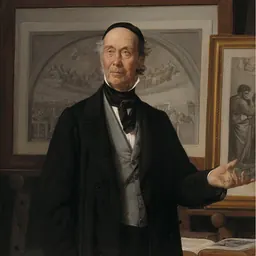




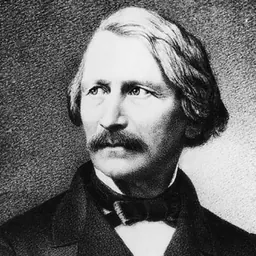
Contemporaries
People whose lives overlapped Gustav Parthey's






Frequently asked questions
Who was Gustav Parthey?
German classical philologist and art historian (1798–1872)
When was Gustav Parthey born?
Gustav Parthey was born on 27 October 1798 in Berlin.
When did Gustav Parthey die?
Gustav Parthey died on 2 April 1872 in Rome.
What was Gustav Parthey's occupation?
Gustav Parthey was an art historian, classical philologist, philologist and bookseller.
What nationality was Gustav Parthey?
Gustav Parthey was German.
Sources & further reading
Cite this page
APA: Biography.guide. (2026). Gustav Parthey. https://biography.guide/gustav-parthey/
MLA: "Gustav Parthey." Biography.guide, https://biography.guide/gustav-parthey/.
Chicago: "Gustav Parthey." Biography.guide. https://biography.guide/gustav-parthey/.
Data last updated: 2026-09-20 · Spot an error? Report a correction.
Page generated 2026-09-27 05:14 UTC