
About Gustav Halmhuber
Lived 1862 – 1936 (aged 74). Gustav Halmhuber was a German architect, university teacher, exlibrist and painter.
Gustav Halmhuber (23 March 1862 – 25 August 1936) was a German architect and university teacher. His style reflected the flamboyance and brittle optimism of the early 20th century. Perhaps his best-known surviving work – also one of his earliest commissions – is the WaterTower (1886–1889) in Mannheim.
Early life and education
Gustav Friedrich Halmhuber was born and died in Stuttgart. At the same time, he was attending courses at the Stuttgart Fine Arts Academy ("Staatliche Akademie der Bildenden Künste Stuttgart"). Subsequently, he also studied at the Fine Arts Academies in Berlin and Karlsruhe. At Karlsruhe, he studied with the painter-professor Ferdinand Keller.
Career Following the conclusion of his formal training, Halmhuber worked briefly in Nuremberg with the architect Adolf Gnauth.
In 1885, a nationwide competition was launched for the design of a large water tower for Mannheim. The organisers included the stipulation that the exterior of the tower should be both simple and worthy to fit in with the surrounding city architecture. This was in a quarter of Mannheim full of modern houses, many of them representative of the richly forthright Willhelmine style. Most of the 74 submissions considered by the jury were content to feature iron structures. Gustav Halmbuber was only 23, but his 60-meter-tall winning design, which earned him a 1,000 Mark prize, as well as considerable fame in the appropriate quarters, featured a yellow sandstone facing and drew unapologetically on models from Roman antiquity. The tower was constructed between 1886 and 1889, by which time Halmhuber had relocated to Berlin and, it would appear, lost interest in attempting to oversee the tower's construction. The city authorities sent him several requests, seeking his support over problems with the building contractors, but Halmhuber seems to have been unable to help: it is not known whether he responded to an invitation from the city fathers to visit Mannheim and see the tower after the scaffolding had been removed during or shortly after March 1889. While he was engaged on the Reichstag project he was "spotted" by the sculptor Reinhold Begas, at whose instigation in 1894 he was offered, and accepted, a commission to draw up plans for the National Kaiser Wilhelm Monument in central Berlin. While Begas himself led up a small team creating the equestrian figure of the late emperor, Halmhuber dealt with the extensive architectural aspects of the structure. The bombastic layout and overwhelmingly masculine selection of sculptures were revealing, possibly in ways that the designers did not intend. It was (and more than a century later remains) controversial.
During his later career, Halmhuber was increasingly, though never exclusively, focused on teaching. Between 1897 and 1906, he taught at the Stuttgart Institute of Technology ("Technische Hochschule Stuttgart"). Moving to Cologne, he found time to produce a design for an extensive redevelopment of the "Fine Arts Museum" ("Kunstgewerbemuseum") while serving, till 1909, as director at the institution then known as the "Kunstgewerbeschule" ("School of Arts and Crafts"). He also taught at Cologne's recently relaunched "Commercial Academy" ("Handelshochschule"). Eggert was conspicuously absent on 20 June 1913 when the emperor visited Hannover to attend the celebration for the inauguration of the new city hall. He also received, in 1921, an honorary doctorate (eine "Ehrendoktorwürde") from his alma mater and former employer, the Stuttgart Institute of Technology ("Technische Hochschule Stuttgart ").
Principal commissions 1884–1894: Employed on the Reichstag building in Berlin under Paul Wallot 1886–1889: Water Tower Friedrichsplatz, Mannheim 1894–1897: National Kaiser Wilhelm Monument opposite the Berlin Palace 1895–1901: Architectural design for the Siegesallee (Tiergarten), Berlin 1906: Fine Arts Museum ("Kunstgewerbemuseum"), Cologne 1909–1913: Interiors for the Hannover City Hall
Don’t just read it —
keep it.
Full-length biographies made to live with: read them, listen on the way to work, watch them tonight.
- E-book
- Audio
- Video
Instant download · yours to keep · every purchase keeps this site free
Important facts
People in Gustav Halmhuber's life
Named in this biography and alive at the same time

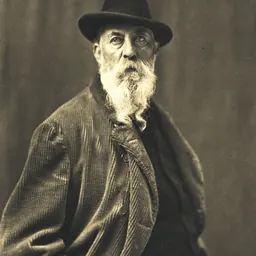

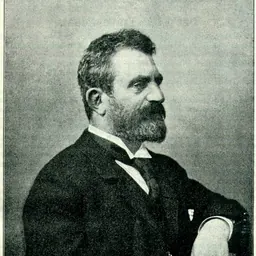
Related people
Same field, nearest in time

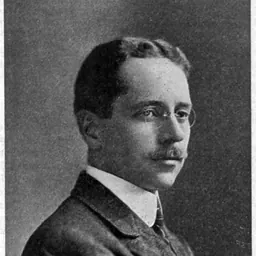



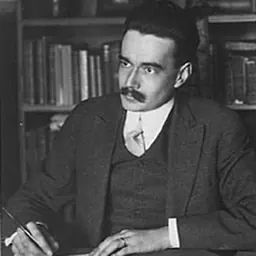
Contemporaries
People whose lives overlapped Gustav Halmhuber's




Frequently asked questions
Who was Gustav Halmhuber?
German architect (1862–1936)
When was Gustav Halmhuber born?
Gustav Halmhuber was born on 23 March 1862 in Stuttgart.
When did Gustav Halmhuber die?
Gustav Halmhuber died on 25 August 1936 in Stuttgart.
What was Gustav Halmhuber's occupation?
Gustav Halmhuber was an architect, university teacher, exlibrist and painter.
What nationality was Gustav Halmhuber?
Gustav Halmhuber was German.
Sources & further reading
Cite this page
APA: Biography.guide. (2026). Gustav Halmhuber. https://biography.guide/gustav-halmhuber/
MLA: "Gustav Halmhuber." Biography.guide, https://biography.guide/gustav-halmhuber/.
Chicago: "Gustav Halmhuber." Biography.guide. https://biography.guide/gustav-halmhuber/.
Data last updated: 2026-09-20 · Spot an error? Report a correction.
Page generated 2026-09-27 05:32 UTC